
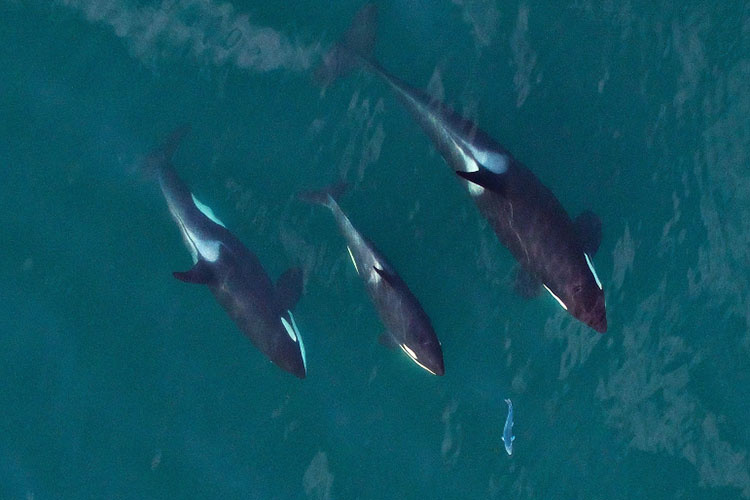
Here in the kelp-strewn waters of the Salish Sea, we share the tides with many creatures: sea otters, brightly-beaked puffins, moon jellyfish, and salmon with their glittering scales. But it’s the orca who feels like our neighbor; our friend.
And that’s not to say that these smaller species are “other.” No, they’re all neighbors to those of us who dwell on the shores, all equally bound to this Cascadian waterway in the Pacific Ocean. But the orca is closer. They’re more kin than one who simply shares the same space. So it feels personal when we lose one of them.
This week, J31, a Southern Resident orca mother named Tsuchi, lost her baby. We’ve mourned with her, watching her carry her deceased child through the cold currents for many days now, in the manner of all orca funeral processions. As saltwater sprays from her spout, the plumes sparkle with the waning sunlight. I can’t help but feel that it’s her grief, shattering into rainbows.
Another one of Tsuchi’s children passed away in 2016. The loss caught the attention of faraway audiences, and the world watched, dumbstruck, as the mother carried her baby around Puget Sound. Here in the Salish Sea, we feel a sickeningly familiar ache; an anger and a deep sorrow for those who are dying in the wake. Tears burn my cerulean eyes, just as they did 10 years ago. I feel my stomach churn like the seawater I watch on my weekly ferry rides from the sundeck. There’s a hardness to this kind of ache.
Too many children have died here in the Salish Sea. Too many parents have carried them through the gaps between the islands.
Our Mother, our Earth
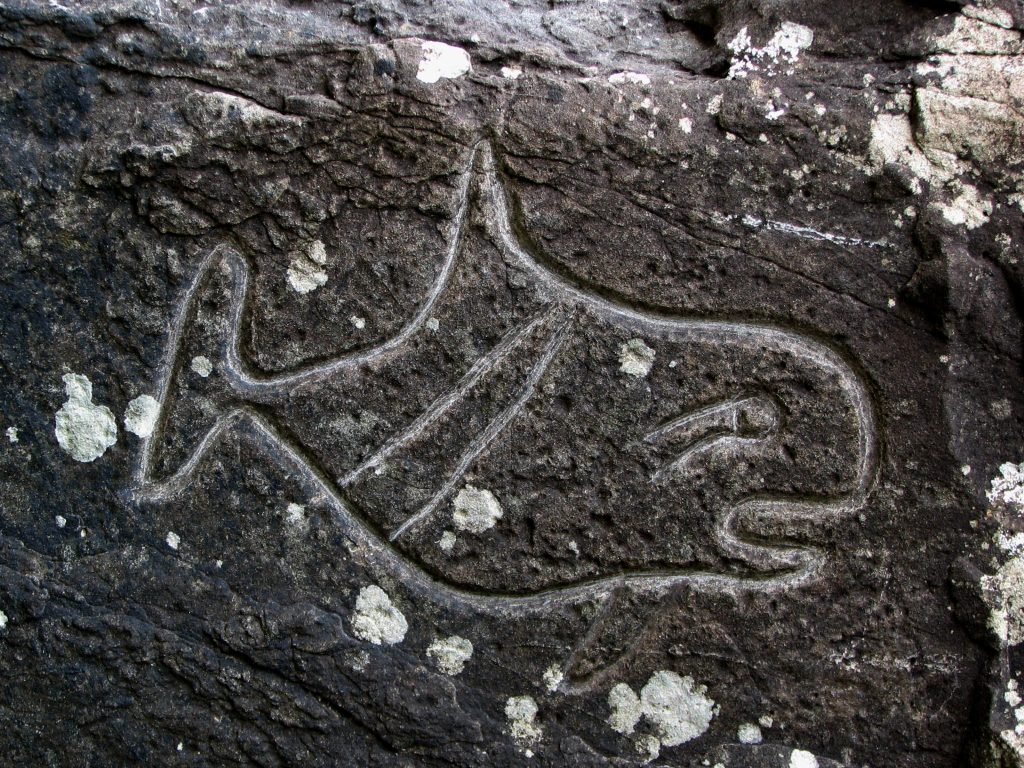
Tsuchi was born a year before I was.
Entering the Southern Resident J11 matriline and the physical world in 1995, she became a mother when she was 20. But at the same age that I was losing my religion and watching the world I knew disintegrate around me, she was losing her baby. At the same age that I was trying to hold my brilliant and kind grandfather together as he lost his beautiful mind to dementia and paranoia, Tsuchi was holding her child and carrying their beautiful body around the inlets outside our home. Saltwater defined our 20th year of life.
Tsuchi is written as 土 in kanji. It means Earth.
In 2008, before her first child was even born, Tsuchi ‘s mother, Blossom (J11), went missing. She and her older brother, Blackberry (J27), stepped in to raise their youngest brother, Mako (J39). He was only 5 years old, an age that usually spells death for orcas if they are orphaned that young. But he wasn’t alone. His siblings and their care saved his life. But in 2023, Mako was spotted by researchers who, seeing his low body mass, felt that assigning him a “vulnerable” label was desperately needed. He’s starving.
Tsuchi and Blackberry still do what they can for Mako, and they’re all very close.
Blossom, who was never found, would have been a grandmother to Tsuchi’s 3 children, only one of whom is still alive. Tofino (J56), born in 2019 after 3 calf-less years for J-Pod, is the middle child. She’s named after the island in British Columbia where she was spotted by humans for the first time. She’s also famously a fan of the sea’s surface, playing in the foam and breaching more often than any of her family members. She’s also starving.
Like her Uncle Mako, she drew concern from researchers in 2023. This is the third year in a row that her body mass has been given the same status, BC1: very poor condition.
Like her Uncle Blackberry, Tofino’s birth followed the death of a sibling. Blackberry was a secondborn too, having come 2 years after his mother carried her dead firstborn around in the water in 1988. This was exactly 10 years before Blossom would lose another child; the fourth baby and fifth sibling who Blackberry, Tsuchi, and Mako never got to know. This was exactly 20 years before Blossom would go missing. This was 28 years before her daughter would likewise carry the body of her firstborn, holding up the remains for weeks on her rostrum.
Tsuchi was born the same year that her grandmother, Blossom’s mother, went missing.
If you look at Tsuchi’s cheekline, the black line that stretches across her body, you’ll notice that it’s jagged below her eye patch. Like winter waves, the shape is sharp and flowing at once. It’s jagged like rock; like Earth.
Taken, starved, deafened, poisoned
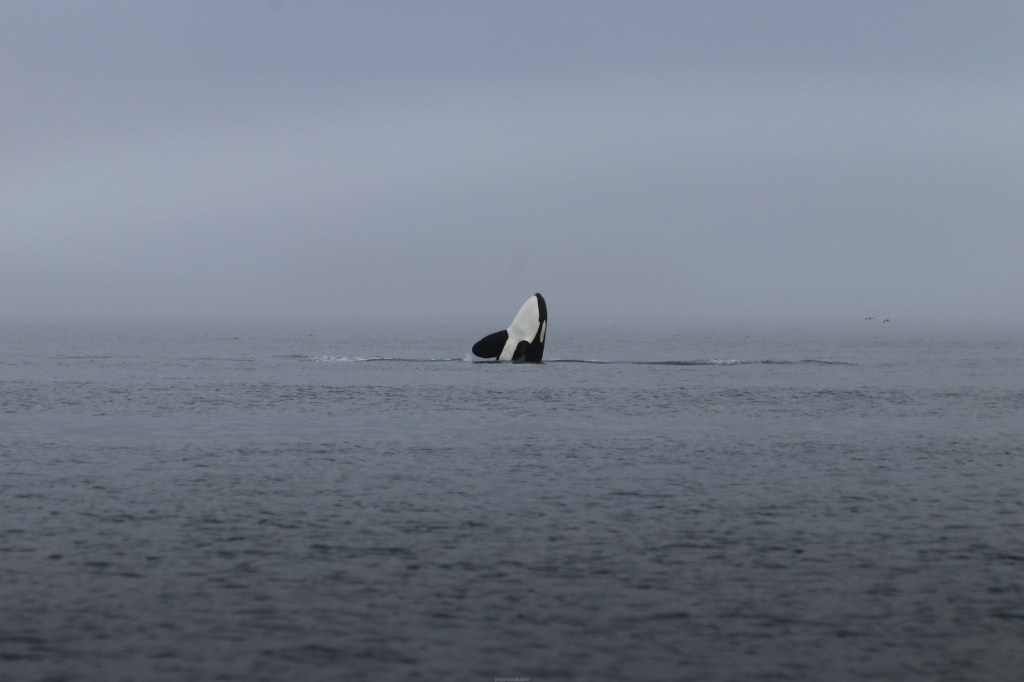
Tsuchi’s J-Pod, 1 of 3 Southern Resident orca whale pods in the Salish Sea, lost a member of their family many decades ago: Moby Doll.
This ancestor was stabbed with harpoons, captured, and taken to Vancouver Harbor, marking the first time that humans kidnapped a living orca whale. From 1964 to 1976, dozens of Southern Residents were ripped away from their families by captors. Many whales died, cornered in tight places like Penn Cove where their blood turned the mussel-studded beaches black.
Today, you’ll find dedications to those lost around the shorelines, including inside the red wharf perched above Penn Cove. You can feel the outrage in these markers; these sprawling walls of photographs and the names of the dead from the days when half of the Southern Residents were killed. You can feel the anger when you talk to those who were there. An entire generation was eradicated, erased from their beloved waters that are still lined with bells. Their signs read, “Spy a whale, ring the bell.”
Today, there are 75 Southern Residents, 27 of whom belong to the J-Pod family. With so few left, each whale is, individually, 1.33% of the Southern Resident population. Each death results in the loss of 1.33% of the total population. And in J-Pod, every death is the loss of 3.7% of that family’s population. This is comparable to the total loss of life experienced during the Spanish influenza outbreak of 1918. It’s a massive and disastrous death toll, even outside of the emotional devastation.
They stopped taking the whales decades ago. But, generations later, the damage and death are still playing out like the light we see of ancient stars long obliterated into the cosmos.
After taken, starved
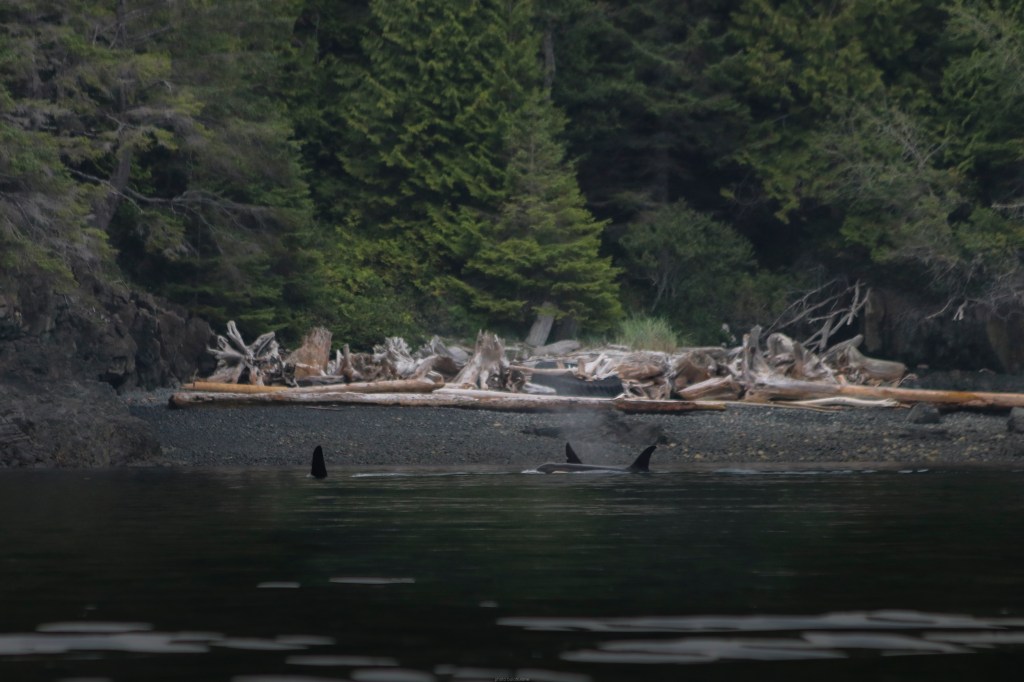
We’re watching our neighbors starve.
Mako and Tofino aren’t the only ones struggling to find food. There just isn’t enough to eat. Chinook, the salmon Southern Residents have relied on for time immemorial, is dwindling. Wild salmon run stocks on the West Coast are only 10% of what they used to be, and that’s on the high end.
And the fish themselves are smaller. In the 20th century, Chinook were 100 pounds, a figure unheard of now (the males don’t usually even get heavier than 20 pounds). As a result, Southern Residents have to eat more of them in order to get their bellies full.
Then there’s the hatcheries, which distill diseases into the wild populations of fish. Weakened by the ailments, it’s getting harder to exist, let alone reproduce.
Despite being a fraction of the size and strength of their grandparents, Chinook have farther to swim. Because now, in order to get to their breeding grounds, the salmon have to swim through physical barriers like logging and dams, as well as pollution from development. It’s not just making the journey along the Fraser, Columbia-Snake, and Klamath River Basins more difficult. In many cases, it’s making it impossible. The Chinook just aren’t making it home to the orca.
When a pregnant member of the Southern Resident population isn’t eating enough, her body aborts the baby.
Deafened and poisoned
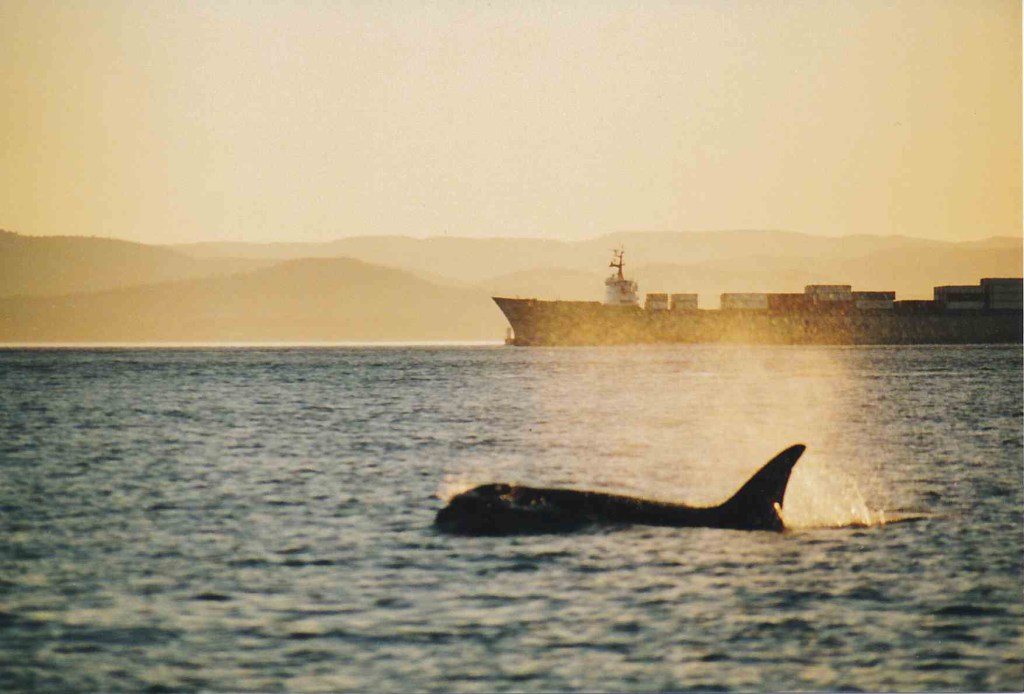
Food is dwindling, and Southern Residents are trying to find it. But they’re doing so in a wall of noise, their echolocation drowned out by vessels slicing through Puget Sound. They can’t even hear each other, let alone the shrinking fish they’re forced to feed on to survive. They have to scream.
Then there’s the poison.
Out of all of the marine mammal families in the world, the orcas in our waters carry some of the highest loads of toxins. These POPs (persistent organic pollutants) spill into the Salish Sea from the same marine vessels that are deafening them; taking away their ability to talk to each other. Pollution from the air and runoff from urban spaces, sewage, wastewater, and agricultural plots are also to blame. When these poisons are in the water, they seep into the blubber of orcas, stored there until the whale is starving and the POPs metabolize. And right now, there’s not much to eat.
When that metabolization process starts, so too does the destruction of the whale’s fertility.
If the Southern Resident can get pregnant, the POPs will pass to the calf through the milk supply. It damages the development of her baby, weakening the child in a landscape where even the strongest are having a hard time not dying.
Less than a third of Southern Resident whales live to see their first birthday.
This place we leave for our children
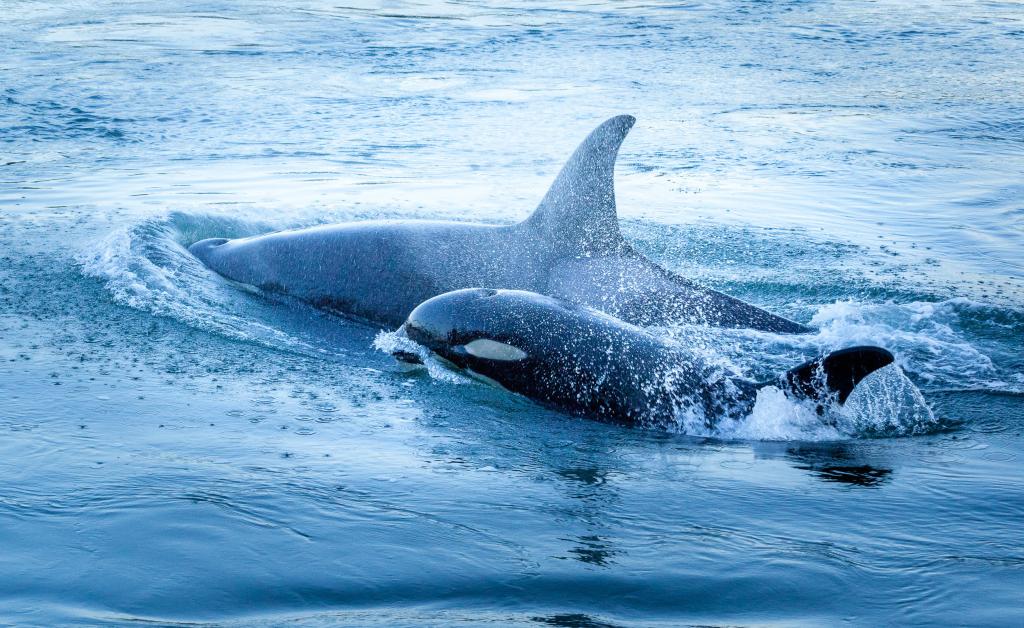
Orcas carry their babies for 17 months before giving birth. But lately, they’ve been carrying them after too.
The limbic part of orcas’ brains, the part that keeps emotion and memory, is extremely developed and more complex than our own. When they feel, it’s deeply. I’ve been chewing on this fact as I’ve watched Tsuchi swim for yet another funeral procession. I’ve been aching for the loss I know she feels, clinging to the body of her baby for days in the darkening waters. How long can she carry that deeply felt pain without fading into the starved sea?
Nearly 20 years ago, Tsuchi saved her little brother; a boy born into a place so loud, I’m not even sure his birth was heard. But mothers like Tsuchi can’t save their children, just as their mothers couldn’t save the siblings they didn’t get to grow up with. They can’t keep the poison from killing them. They can’t turn the noise off. They can’t bring the Chinook home. But they keep looking for them.
As I watch another mother lose her child and do her funeral march with her baby on her head, I see her carrying the world on her shoulders. I see her carrying the future we promised to our children.
RESOURCES:
orcaconservancy.org | orcanetwork.org | whalemuseum.org | bewhalewise.org | orca.wa.gov | whaleresearch.com
If you see a stranding, file a report at fisheries.noaa.gov/report
If you see a spill, call 1-800-645-7911
If you see derelict gear, call 1-855-542-3935

