
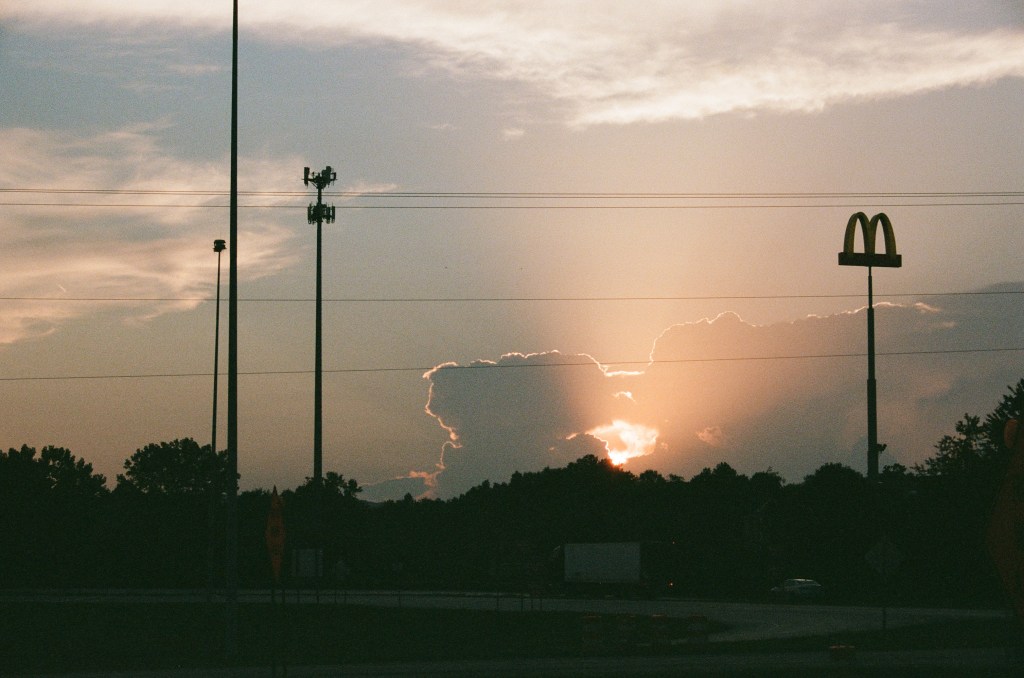
I was born to bicoastal parents, as if my indecisiveness to live between the East and West Coasts were intrinsic to my being. Born in Arizona, raised in Massachusetts, vacations in San Diego, summers in Baltimore. The line between what to call “home” has always been blurred. Until now, at least.
The last time I did this road trip, I was 7. I am 21. What changed over a decade?
The journey, not the destination
The classic ‘American’ road trip is a coveted trip shared by families across the country. But what makes it such a formative experience? Hands covered in potato chip dust, oral storytelling, listening to an artist’s discography? I believe the point is in the journey. Being stuck in the car for extended hours at a time, with shotty cell service, has a way of bringing people close together. And I believe it’s something the current generation needs to embrace.
Is driving my preferred method of travel? Nope. However, choosing to eat gas station meals, having cramped legs, and a dead phone isn’t anyone’s idea of a dream vacation.
I think my generation’s interest in driving, in choosing the inconvenient route, is a lost art. No one inconveniences themselves anymore for the sake of a story or a memory waiting to happen. We fly, or take the train, or expect others to meet us halfway.
Sleeping in Best Westerns and eating free hotel breakfast aren’t what make these trips special. But given that our families have done them before, there is a legacy that deserves to be upheld and is contingent on people getting behind the wheel for a long haul. It broadens your understanding of the country you live in, to see epic sights from the comfort of your seat alongside others. It creates an irreplaceable memory – something that is worthy of passing down.
Roadtripping reminds you of our diverse country – one we are lucky to be able to see in a single trip.
East Coast
In the suburbs of central Massachusetts, my parents and I began to pack up our belongings. Massachusetts was stifling with its humid summers, cruel winters, and a sort of lonely ache that can only be described by individuals who have lived there.
My mother wanted something more from her career, and my dad wanted something different. Then came his promotion in Phoenix; the very thing that allowed us to move from Phoenix, Arizona, to Massachusetts in the first place. And how ironic that our reason for leaving was now the reason to return.
I had just graduated from university with a liberal arts degree and a vague concept of what I wanted to pursue. Something involving writing, photography, and reading. Without a commitment larger than myself, I packed up alongside my parents, ready to undertake the chore that was preparing to sell our house. It sold in 6 days.
So there I am with my parents. Each family member was allowed 2 duffels for the truck. A strict rule that we barely adhered to. Remaining necessities were stored in my sedan, which was stored in a trailer only accessible by key and the slim chance we scored a parking spot large enough to accommodate the fold-out ramp.
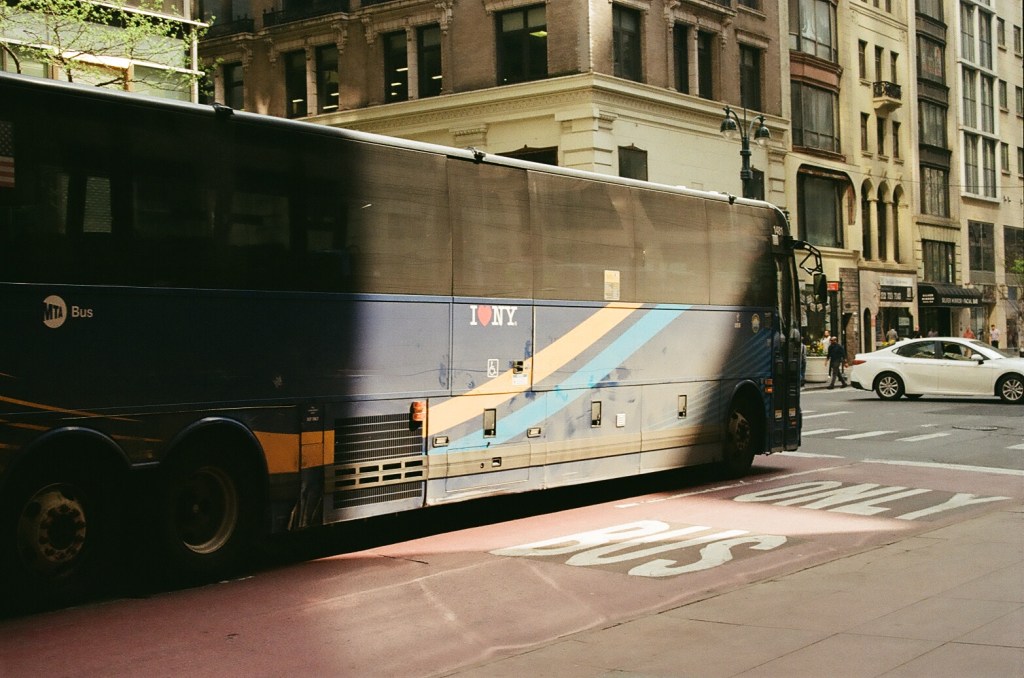
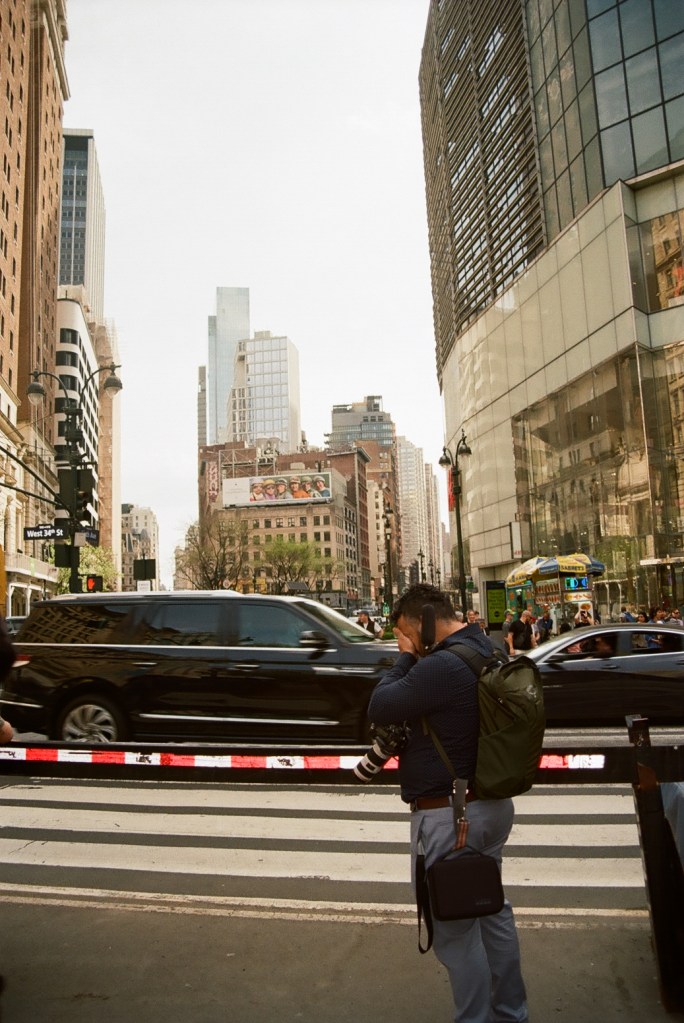
The drive started in Massachusetts, down through Connecticut, into New Jersey. To escape the confines of a car for a day, I took the train into New York City. An extra state to add to the list. From there, back up to Jersey, and through Pennsylvania, taking our first official stop in Ohio.
Midwest
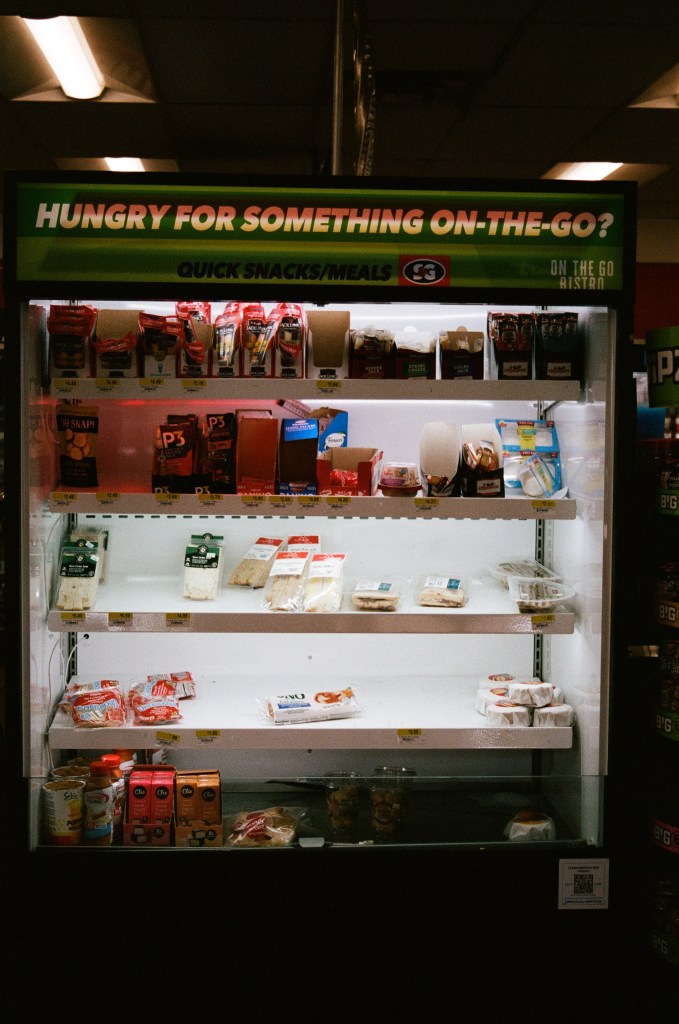
It was smooth-ish, the transition from living in a big house where you couldn’t hear each other between floors, and our dogs constantly running around the locked rooms, my parents wary of getting hair in the newly staged spaces. But the car was cramped. I sat in the jump seat of my father’s truck, my Kindle, MacBook, camera equipment, and snacks boxing me into the already minuscule seat.
Pennsylvania proved to be a gorgeous drive. Large green trees shrouded the highway for hundreds of miles, fresh yellow paint strips, and warm air.
It was here that I told myself to note the differences between the modern-day road trip and the one I did as a child before technology became a huge part of our lives. In the early 2000s, my parents had a small hand-held GPS that was mounted to the dash. Now sits an iPhone, which allows multitasking. It plays music, calls loved ones to let them know we made it safely on the road, and, of course, it Maps.
Upon moving through Pennsylvania, my parents and I devised a plan: capture content in each state, notice what has changed over the years, and what hasn’t been altered by the evolving technology around us.
I opted to use my film cameras for such a task. What better way to capture a nostalgic essence from each place?
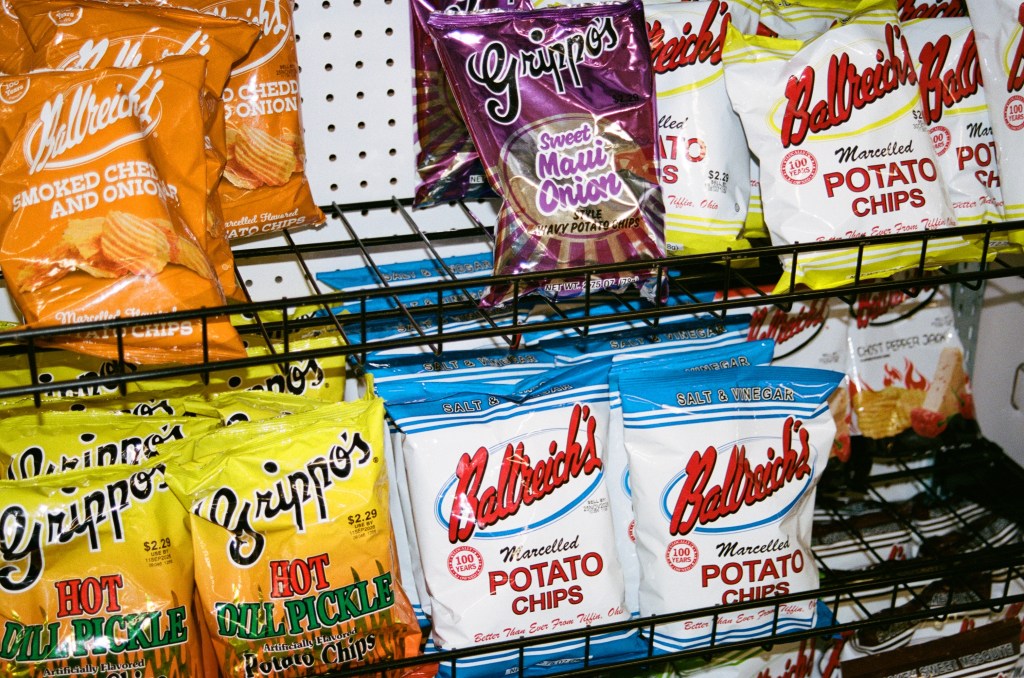
The beloved snacks: endless supplies of chips, meat sticks, flavored waters, sodas, cheese trays, and candy bars. Each gas station I stopped at impressed me more than the last. Even the labels seemed to be the same as I recalled from childhood.
Everything we ate seemed to be an ode to the past.
Aside from the wireless earbuds I used in the car and my Kindle to read, it all felt like the classic pastime, “The Family Road Trip.” But something always has to go wrong on these journeys. Otherwise, there’s no story to tell.
Halfway through Chicago, our trailer tires exploded on the highway (both on the right side).
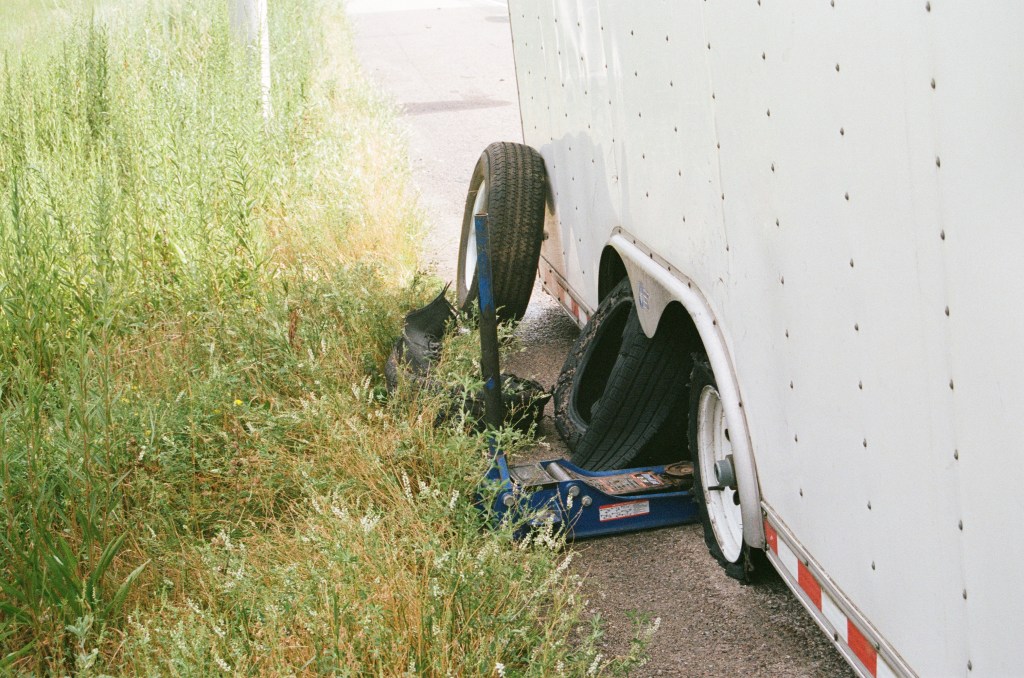
We were stranded on the highway for 4 hours with nothing to do but laugh, call a tow truck, and take a poorly exposed photograph.
I think roadblocks like this are classic examples of road trip storytelling. Something always changes your plans and disrupts your focus from the destination, allowing you to better observe your current environment. Had we not stopped here, gotten out to take a photograph, my family and I never would have met individuals from a local town. We might not have been able to spend an entire day with family members in Wisconsin the next day, whom I’d never met.
Road trips have a unique way of meeting you where you are and pushing you to seek the good in a bad situation.
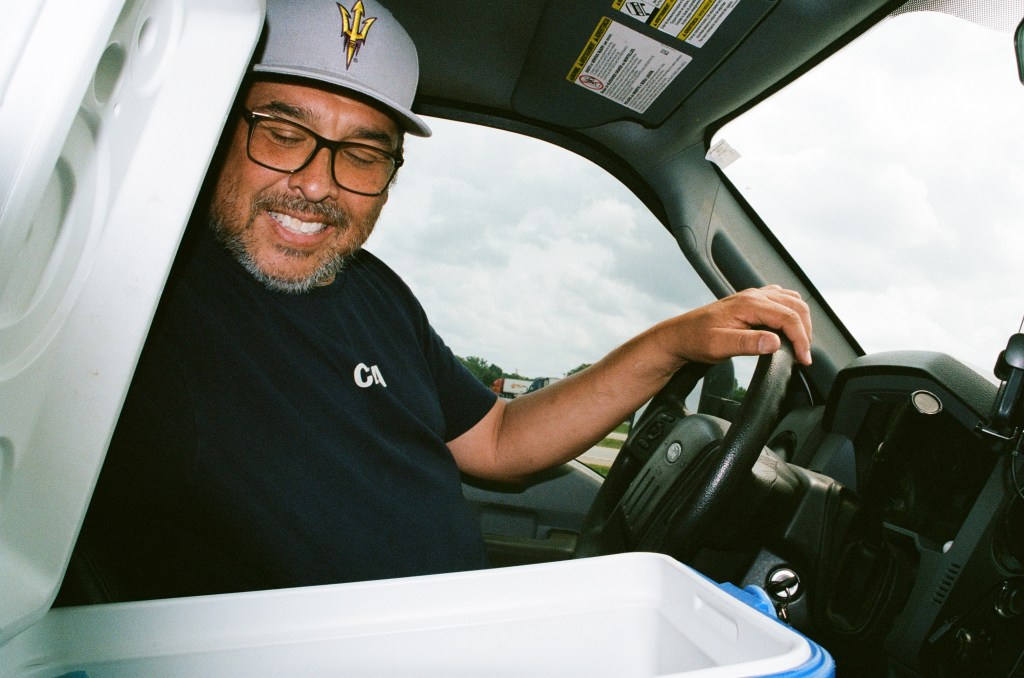
Thus far, we only covered half of the United States: Massachusetts, Connecticut, New Jersey, New York, Pennsylvania, Ohio, Indiana, Illinois, Wisconsin, Minnesota, and, finally, South Dakota.
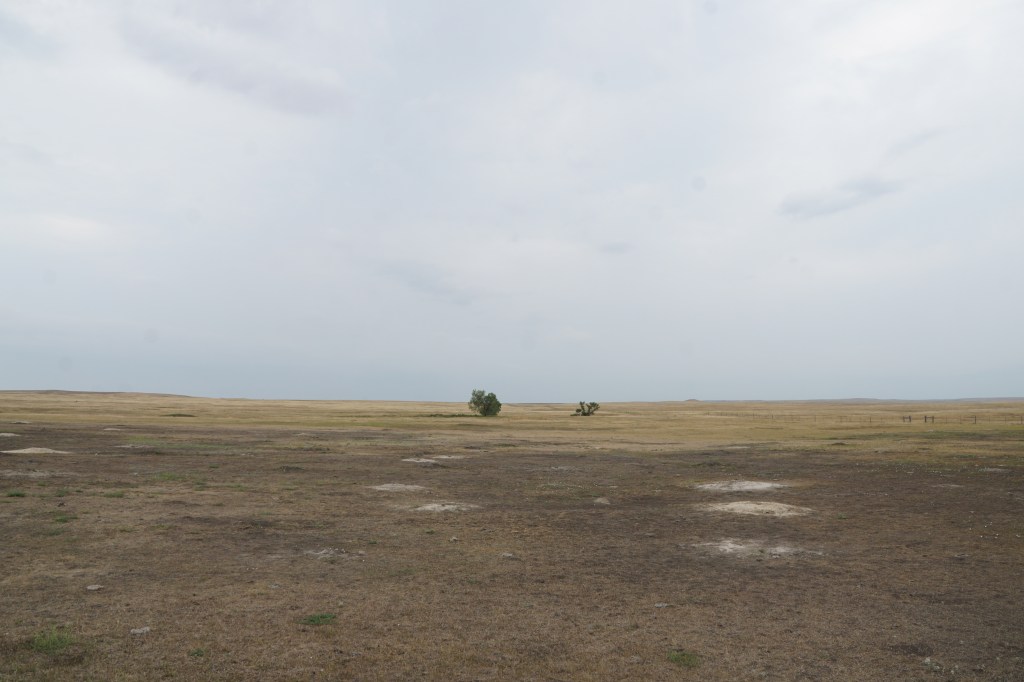
And the Badlands of South Dakota had been on my bucket list for ages. There was something so peaceful about the drive there – vast and warm. Heat lightning struck all around us throughout the evening drive into Wall, a very small town, but a huge tourist attraction nearby.
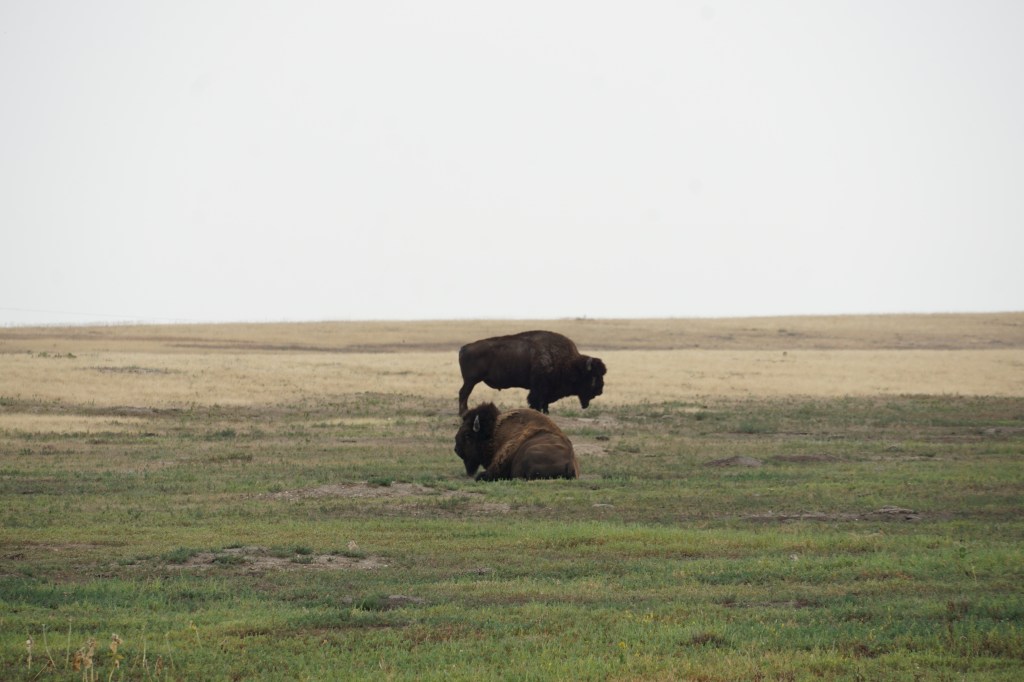
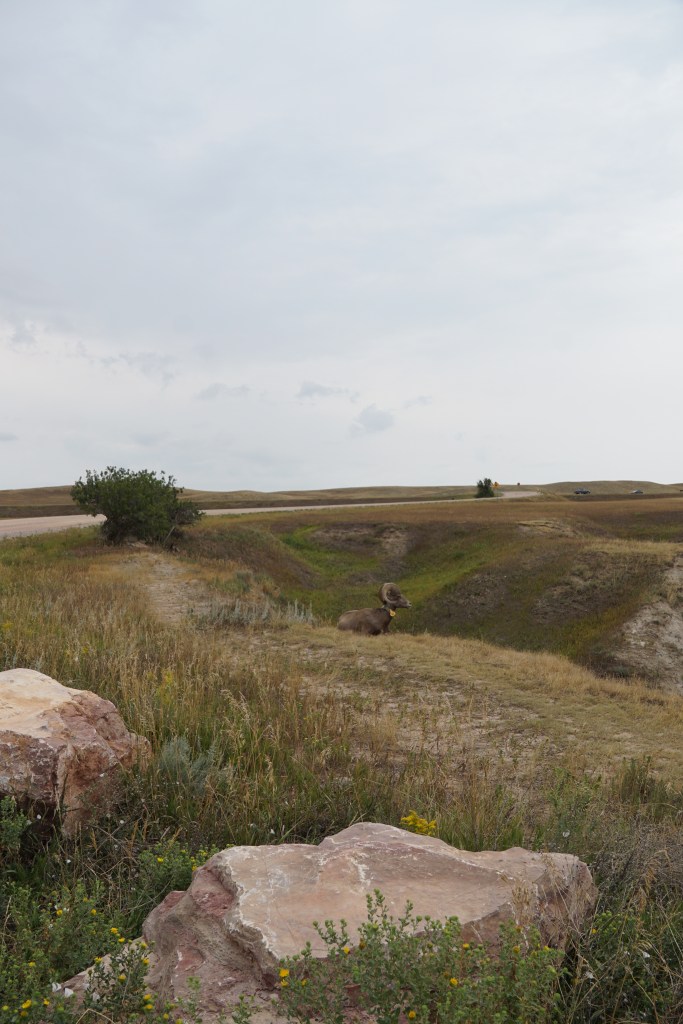
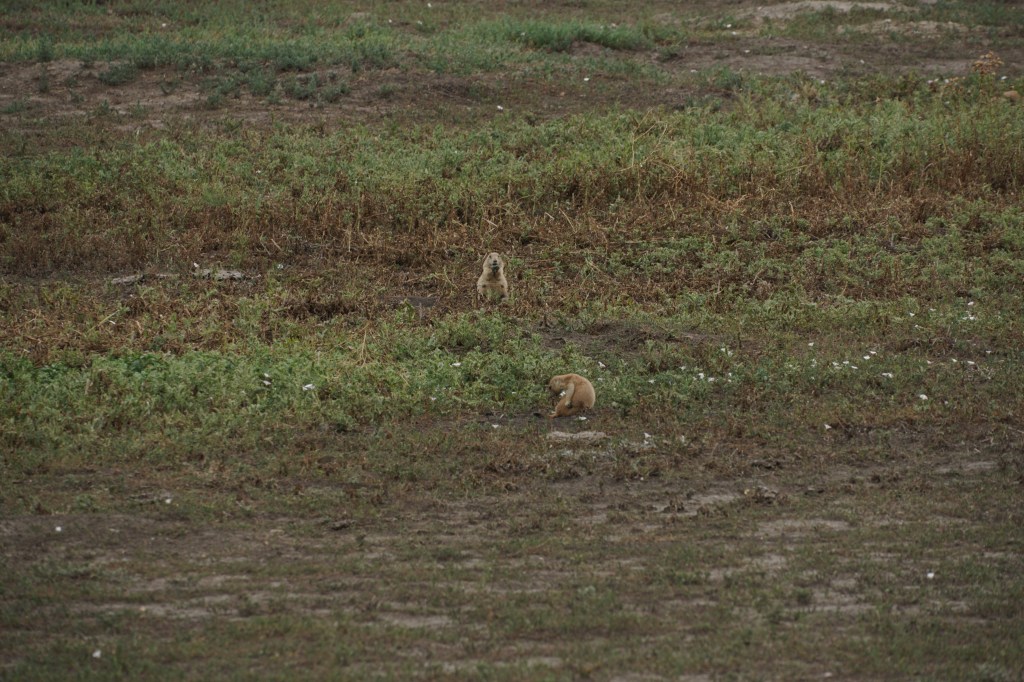
Badlands National Park was one of the best sites we had the pleasure of visiting. Wildlife was all around us – prairie dogs popping up from the fields, rams, buffalo, and birds surrounded us.
From Wall, we traveled to Mount Rushmore and Crazy Horse, each incredible and with the best company.
Mount Rushmore could be seen from the highways all around. Depending on each angle, the faces shifted, growing larger or shrinking into the cliff.
Crazy Horse, a short drive away, was another thing to behold entirely: a work in progress, created by decades of donations, sitting partially carved into the side of a mountain. Eyes, jaw, cheeks, and a finger are visible from the parking lot. The monument honors Crazy Horse, a renowned Native American figure of the 19th century, but also all Indigenous people in North America. It’s a beautiful piece of art, larger than one can comprehend.
In the 1970s, my grandmother visited Crazy Horse and Mount Rushmore on her honeymoon during a road trip.
This fact feels like a special relic; a way to link generations and family. Knowing that Crazy Horse was in the beginning stages of its carving at that time, and seeing the progress it has made since, is an incredibly special thing. I was once in the place of a loved one on her own personal adventure.
Road trips and stops like these have a way of connecting people, spreading joy across the states with memories intertwined and remembered.
American West
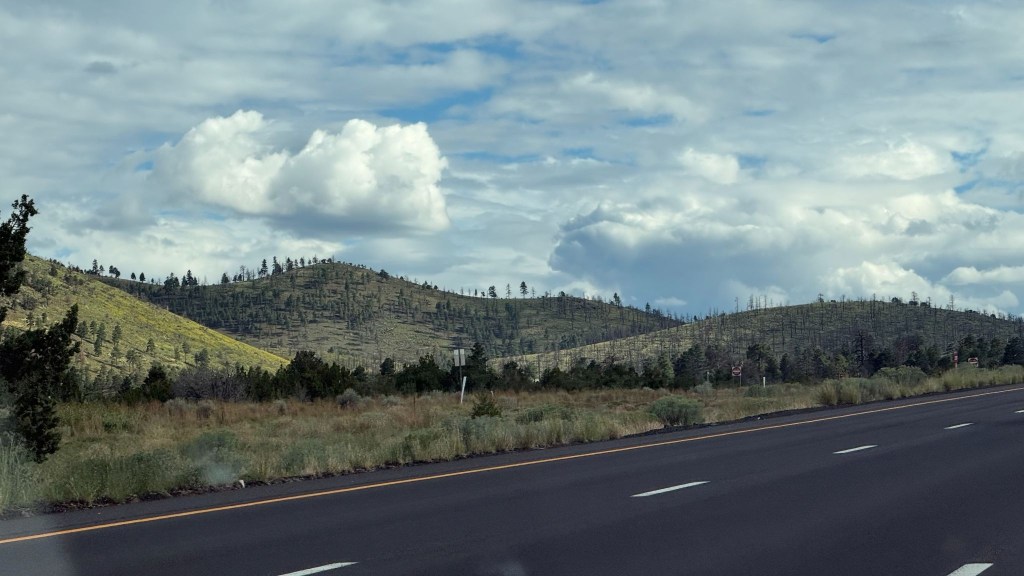
Wyoming, Colorado, Utah, and Arizona were the remaining states to pass through. We saw the light at the end of the tunnel.
Wyoming was unbelievably beautiful. Long, winding roads, mountains, and small businesses lined each road. For a while in this section of the trip, states blend into one another, creating a tangible illusion of unity. And Colorado came shortly after, with more truck stops and backdrops of thick white clouds and blue skies. Green, brown, and blue overlooking every road.
We stopped in Moab, Utah, which I’ve come to see as a kind of orange that’s hard to forget. The streets were full of shopping tourists and hikers preparing for the day. Driving through the looming rocks, I saw small bodies of climbers and wanderers atop large brown and orange formations, their movements colorful and calculated.
Before I knew it, we crossed into Arizona.
Rolling the windows down
As I reflected on my time in the car, it allowed me to look beyond the laborious driving. It all felt so slow in the moment, minutes ticking by, gazing out the window. Road trips are not for everyone, and not everyone has the luxury of such a vacation. Astonishingly, I was able to see 3,000 miles worth of American roads, culture, people, and National Parks for the second time.
The changes on this road trip reflected the present culture but reminded me that we must also preserve the autonomy of the past. So many of my experiences have been molded because of my youth – living bicoastally, exploring the states by car, and having the opportunity to see America’s beauty from the passenger’s seat. And now, what I always referred to as “out west,” or “where I grew up,” was now my home. It wasn’t a spring break trip, or a quick visit to my uncle’s house. Here it was, beautiful and wide (hillier than I recalled), and a place I really was looking forward to calling “home” again.
Across the East Coast, my friends lay scattered, eagerly waiting for a visit or the confirmation of a plane ticket. But writing this, living it, gave me the security that I made the right move. It feels like I’ve come across a stepping stone; a landscape of my past; an altered yet familiar home.

