
Sitting on the edge of the Zodiac, the small rigid-inflatable boat used for excursions from our temporary home on the MV Freya, I was close enough to the water to feel every movement of the sea. The inflatable tube beneath me rose and fell with the swell, as we headed towards the massive sea cliffs of Alkefjellet, along the Hinlopen Strait, in Svalbard. 60-million-year-old basalt cliffs towered above us, covered with tens of thousands of breeding pairs of Brünnich’s guillemots, nesting on the near-vertical rock faces and narrow ledges. Breathtaking and deafening at the same time.
As we got closer, we could see birds streaming out from the rock face in every direction, wheeling and swooping above us before disappearing back into the mass of nesting birds. The air was filled with the constant movement of wings and the unmistakable calls of thousands of birds. We quickly learned to keep looking up, and, more importantly, to keep our mouths shut. Every so often, a bird would pass overhead and leave behind an unwelcome reminder of just how many birds were above us. Dodging guillemot poop was an unexpected part of the experience, as we sat beneath one of the Arctic’s great wildlife spectacles, trying to take it all in.
In the High Arctic, climate change is not an abstract theory; it is visible everywhere, from the landscape to the life within it. From a distance, the Arctic may look timeless, with its enormous glaciers, pack ice stretching towards the horizon, cliffs crowded with seabirds, and a landscape so vast and empty that human activity seems irrelevant. But spend time here with scientists, and the Arctic stops looking so timeless and starts to become a place of measurements, comparisons and, most of all, change.
Measuring, comparing, and shifting ice
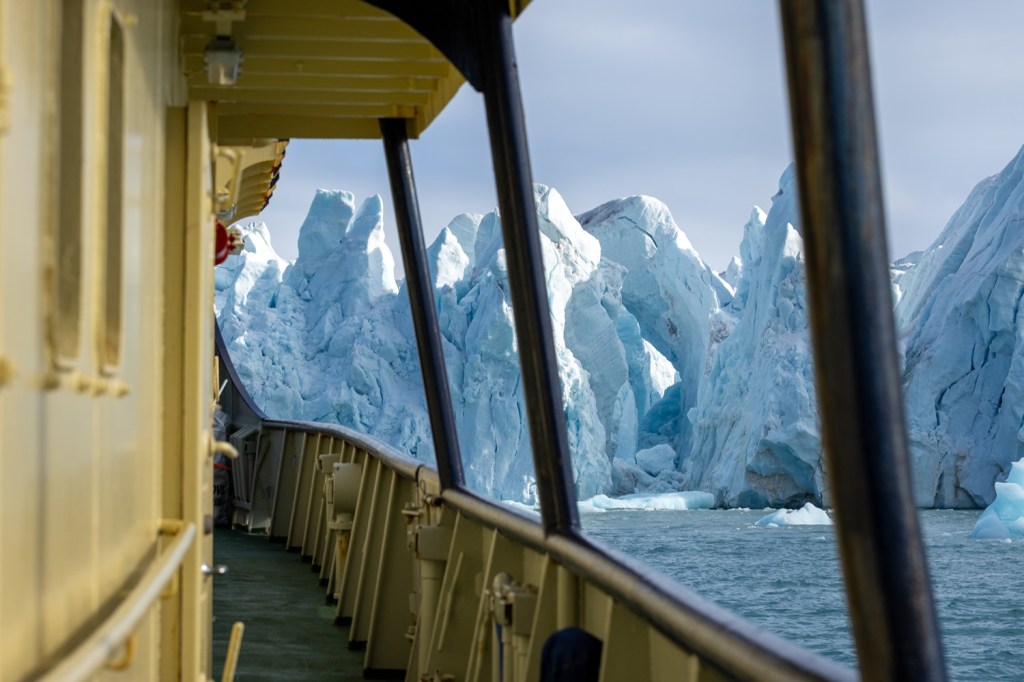
I spent nearly two weeks circumnavigating Svalbard on board Secret Atlas’ MV Freya. With us was Dr. Geir Wing Gabrielsen. Gabrielsen is a professor with the Norwegian Polar Institute, Secretary General of the Norwegian Polar Academy, and a specialist in climate change, microplastic pollution, and Arctic seabirds. He has spent years helping document how Arctic ecosystems are responding to a warming climate.
Born in Finnmark, in northernmost Norway, well above the Arctic Circle, Dr. Gabrielsen’s association with the Arctic started from a young age. He would go on to spend more than 35 summers in Svalbard, creating a lifelong connection to the High North. From those early years on the coast, his curiosity grew into a career shaped by the field — observing wildlife, studying ecosystems up close, and bringing what he learned back into classrooms and public conversations. To travel the water, ice, and islands of Svalbard with him gave our journey so much more depth, meaning, and understanding.
During our voyage, and under Dr. Gabrielsen’s guidance, we took water samples, studied seabirds, and collected a depressing amount of the plastic waste washed up on Arctic beaches. We also had a series of lectures on changing climate, melting glaciers, Arctic seabird populations, and the effects of global warming and plastic pollution on the Arctic’s animals.
Being aboard the petite Freya made the experience particularly immediate.
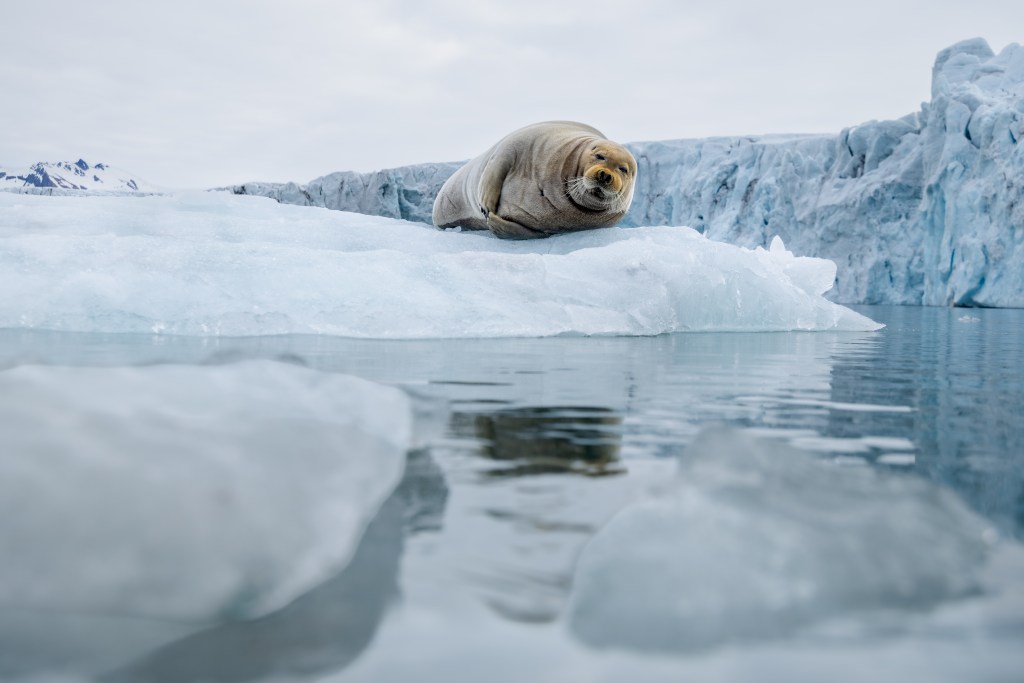
From the ship, the Arctic was not like something viewed from the deck of a huge cruise ship, a TV documentary, or a satellite image. It was all around us. We could sail past a calving glacier, listen to a talk about microplastics in the stomachs of fledgling fulmars (gull-like seabirds), and then spend half a day on a beach collecting pieces of plastic that had travelled thousands of miles to get there. Though, of course, it was not all doom and gloom. We had wonderful encounters with polar bears, walruses, Arctic foxes, beluga whales (if you’re wondering how long a whale can live for, it’s longer than you think), and more.
The changing Arctic
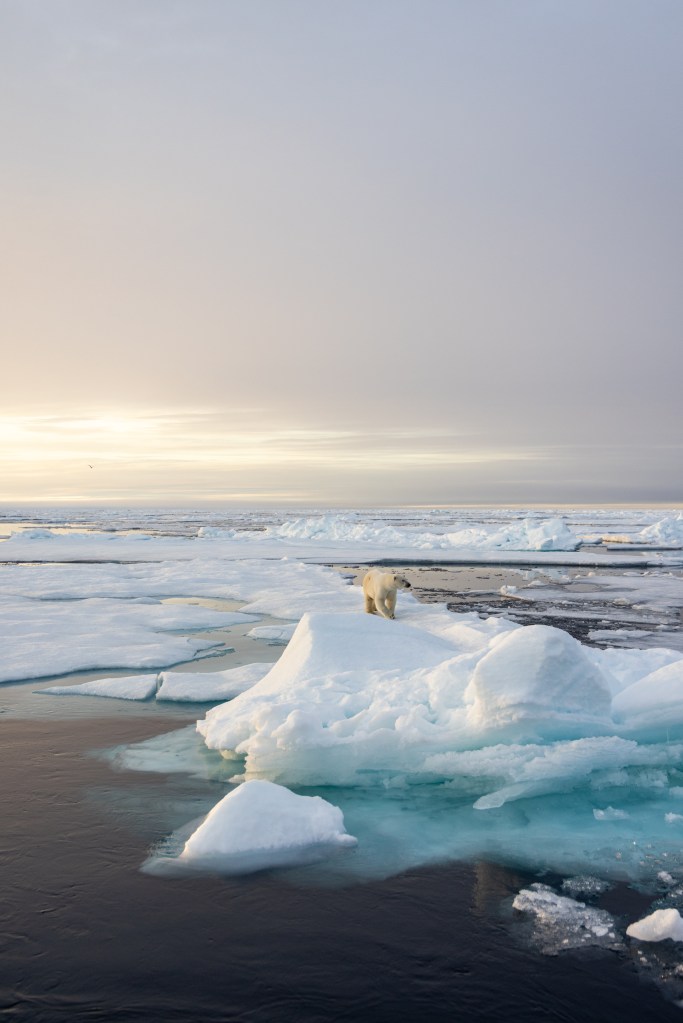
One of the first things to become clear to me was that the Arctic isn’t changing in just one way. Temperature is only part of the story. Sea ice is changing in extent, thickness, and seasonal behaviour; glaciers are losing mass, snow conditions are shifting, and ocean temperatures and currents are changing.
The wildlife is responding too, with some species moving into areas where they were previously uncommon, while others struggle as the conditions they depend on disappear. For seabirds, these changes are particularly significant. Many Arctic species have evolved around specific relationships between sea ice, ocean conditions, and the availability of prey. When those relationships shift, the effects can travel through the food web.
A bird doesn’t need to understand climate change to experience it. If warming changes where fish occur, that affects what seabirds can feed their chicks. If sea ice forms later or disappears earlier, access to feeding grounds can change. If extreme weather becomes more frequent, breeding success can suffer.
When several pressures arrive at once, the consequences become harder to predict. This is why long-term monitoring matters. A single poor breeding season doesn’t necessarily mean a population is collapsing, just as a single good year does not mean everything is fine. Scientists need years and decades of observations to distinguish genuine trends from natural fluctuations.
How has the Arctic changed in the last 20 years?
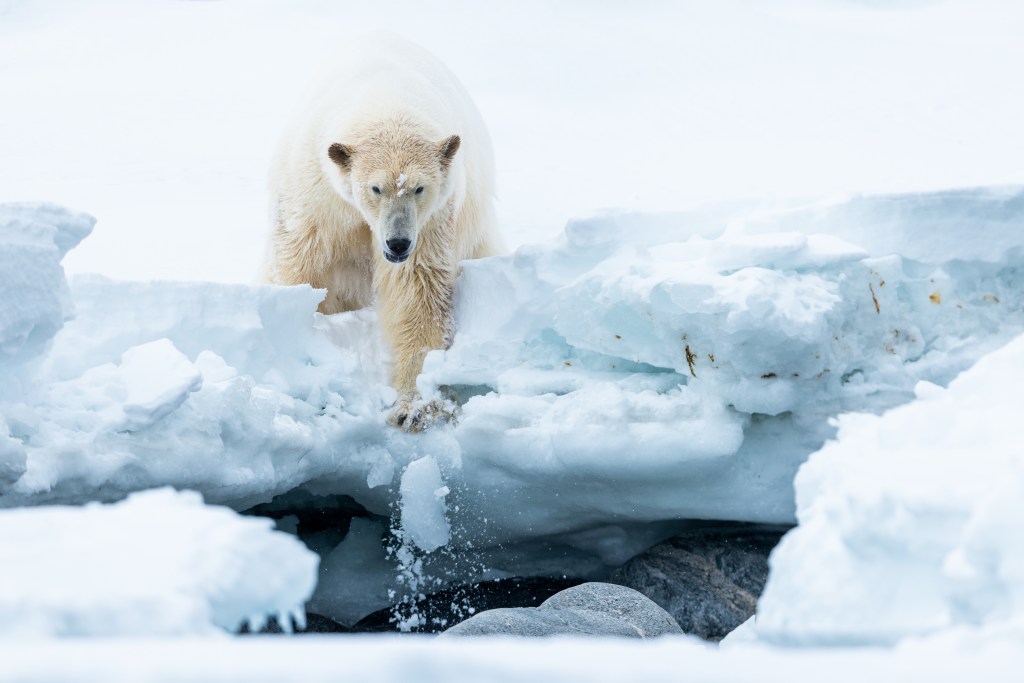
20 years is just a blip in the grand scheme of things, but it’s still long enough to reveal substantial changes in the Arctic. Researchers comparing today’s observations with records from previous decades are seeing an Arctic that is now not only warmer, but increasingly unfamiliar to the wildlife that has adapted to life there.
Glaciers provide perhaps the most visible evidence. Their retreat is not a distant possibility. It can be measured, photographed and mapped in real time. But it’s the less spectacular changes that are just as important.
Sea ice conditions are becoming less predictable, new species are appearing further north, plastics and other human-made debris are reaching extraordinarily remote beaches.
When we went ashore to collect waste from Arctic beaches, it felt almost surreal. While the landscape suggested isolation, the rubbish told a different story. A water bottle with a Russian label, an empty tube of toothpaste from China, a pot of French face cream, solitary shoes, fragments of packaging, lengths of fishing ropes and old buoys — plastic waste that had travelled vast distances on ocean currents before ending up here in the Arctic. It reminded me that while the Arctic may be remote, it’s certainly not disconnected from us.
Not all doom: The future of the Arctic
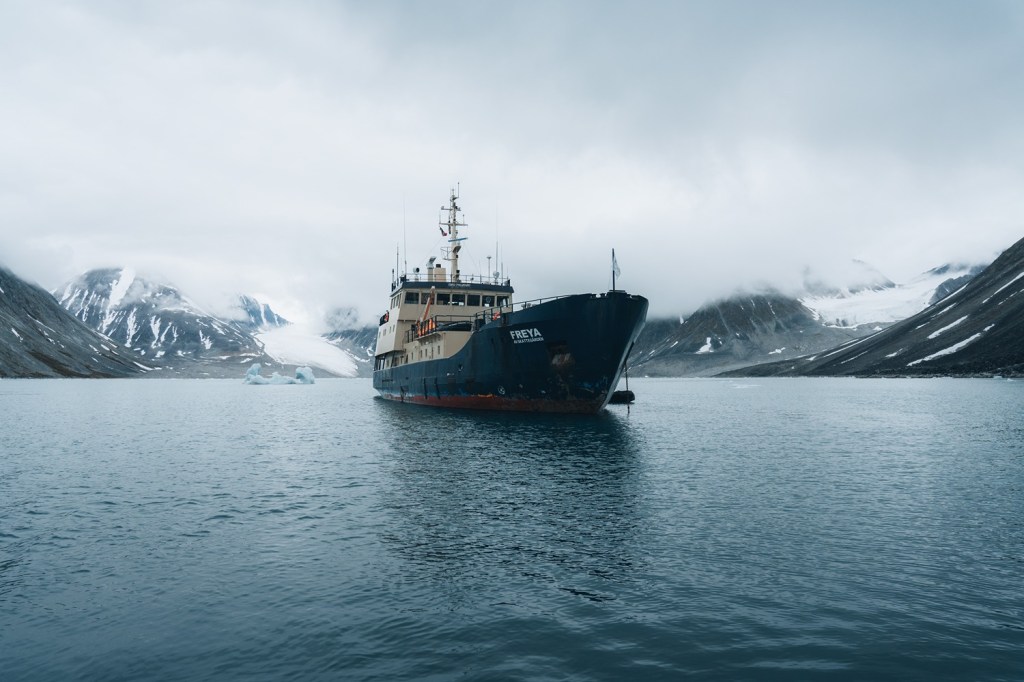
After 2 weeks in the High Arctic aboard Freya, it would be easy to come away with a story about wholesale environmental catastrophe, and there is definitely cause for concern. But that is not the whole story. The Arctic is also a place of extraordinary resilience.
Animals adapt. Populations fluctuate. Ecosystems respond. Scientists continue to discover things they did not expect (like how climate change is affecting flowers).
On an Arctic beach, picking plastic from the sand while seabirds circle overhead, climate change can feel both enormous and strangely immediate. From the deck of the Freya, the scale is different, but the message is the same: the glaciers are changing, the sea ice is changing, the wildlife is changing, the plastic is there, the scientists are learning, and so should we.


Leave a comment