
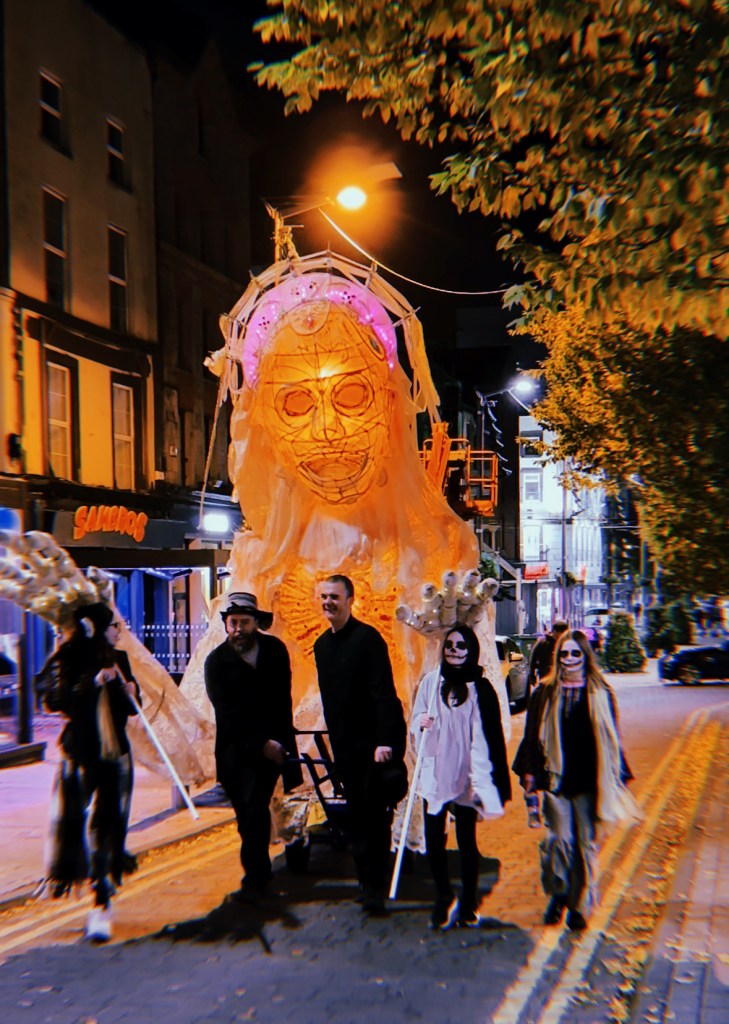
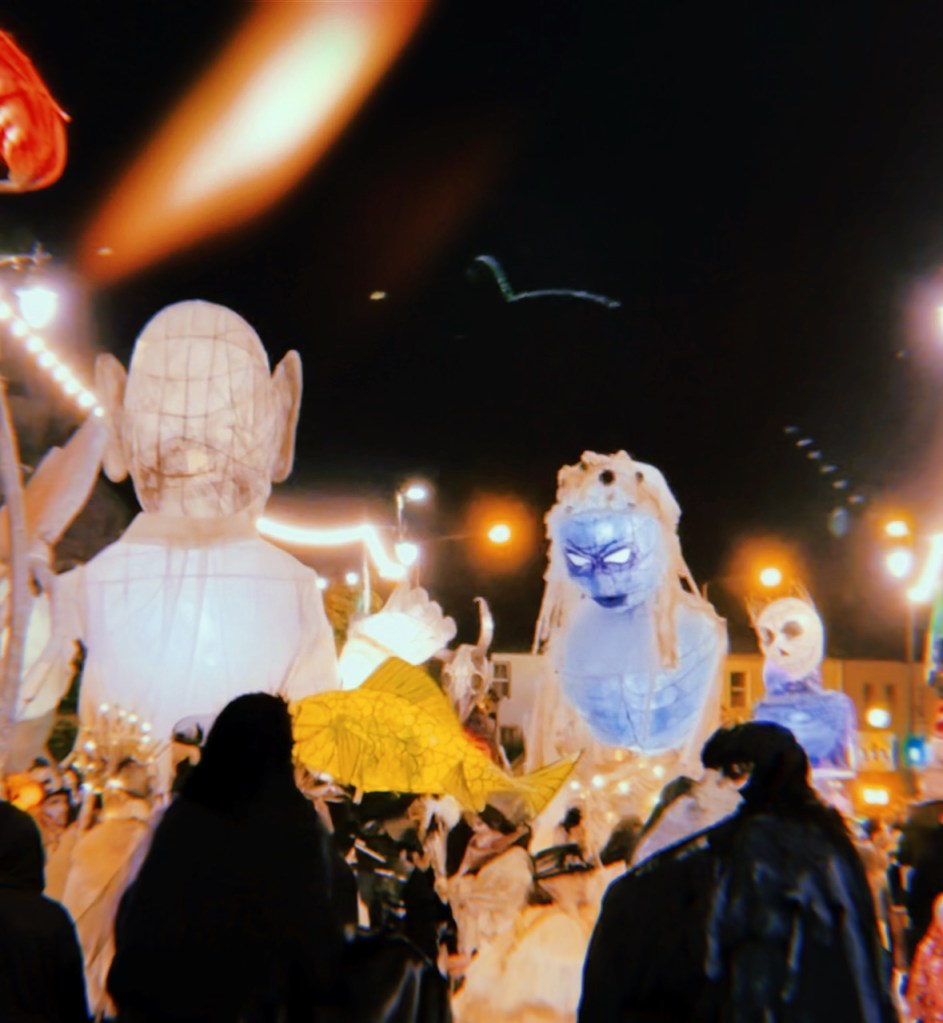
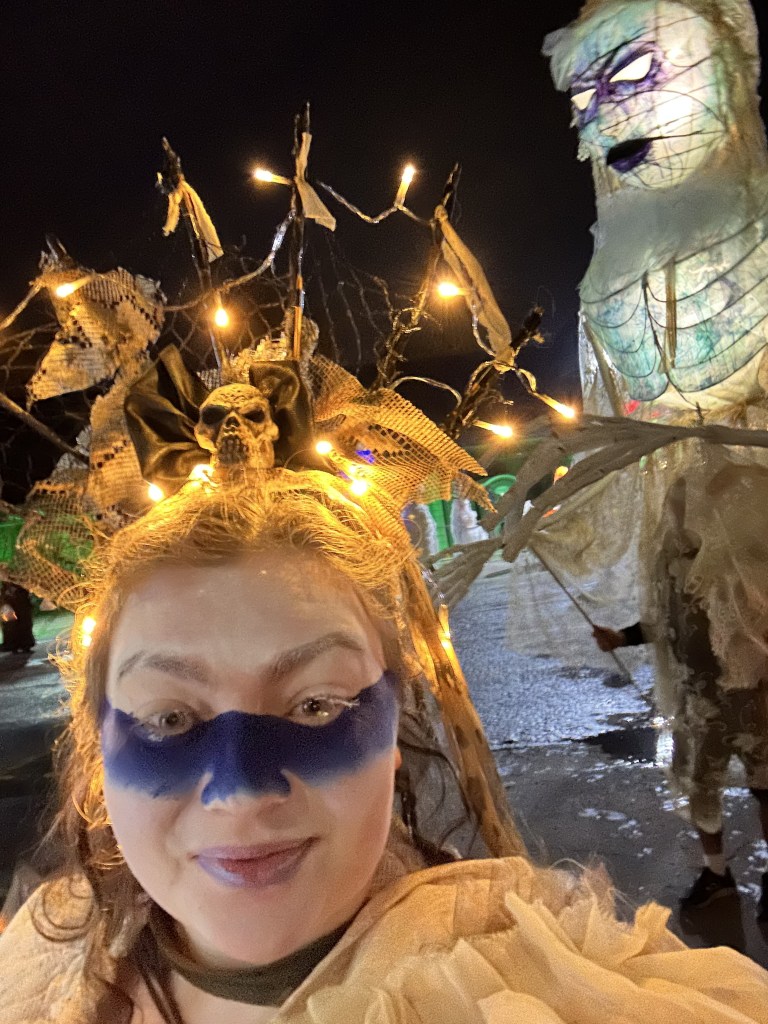
A few days after the plane wheels touched down on my big move to Ireland, I found myself surrounded by dozens of people dressed as ghostly brides. The crowd by the river’s edge ebbed and flowed like a tide, packed with yards of tattered lace and faces bearing a ghostly pallor.
I was still jet-lagged, living in a hotel, and hadn’t unpacked a single suitcase. However, the Samhain, Halloween parade was my first taste of belonging in Limerick. Throngs of people crowded the street, dancing and sharing candy. The preeminent figure in the parade was some kind of otherworldly bride, represented as a massive illuminated puppet in intricate lace, and many people milled around in white dresses and wedding veils that echoed the bride’s.
You wouldn’t think that a figure who was clearly meant to be terrifying — from the bones in her hair to the tattered, dirty lace of her hem — would give me a sense of belonging and nostalgia. However, as the parade wound around the banks of the River Shannon, I was immediately reminded of a folktale from my childhood.
Where I grew up in Texas, the figure that parents used to scare their children into being home before dark and avoiding rivers at all costs was La Llorona. She was described as a ghost woman in white, complete with a mantilla veil. It was said that La Llorona prowled around rivers and stream banks looking for her drowned children, and that she would take any other child she stumbled across as her own.
It felt like a thread of home to be following a pack of eerie veiled women along a riverbank, even though I was across the world. Eventually, I worked up the courage to ask a woman nearby about the significance of this ghost bride and why everyone wanted to dress up as her.
Gesturing to the large puppet at the centre of the parade, she said, “That’s the Bishop’s Lady!”
“Way back, the bishop of Limerick was rumored to be having an affair with a woman,” she continued. “When the rumor spread too far and threatened his position, instead of marrying her and giving up his title as bishop, he had her drowned in the river.”
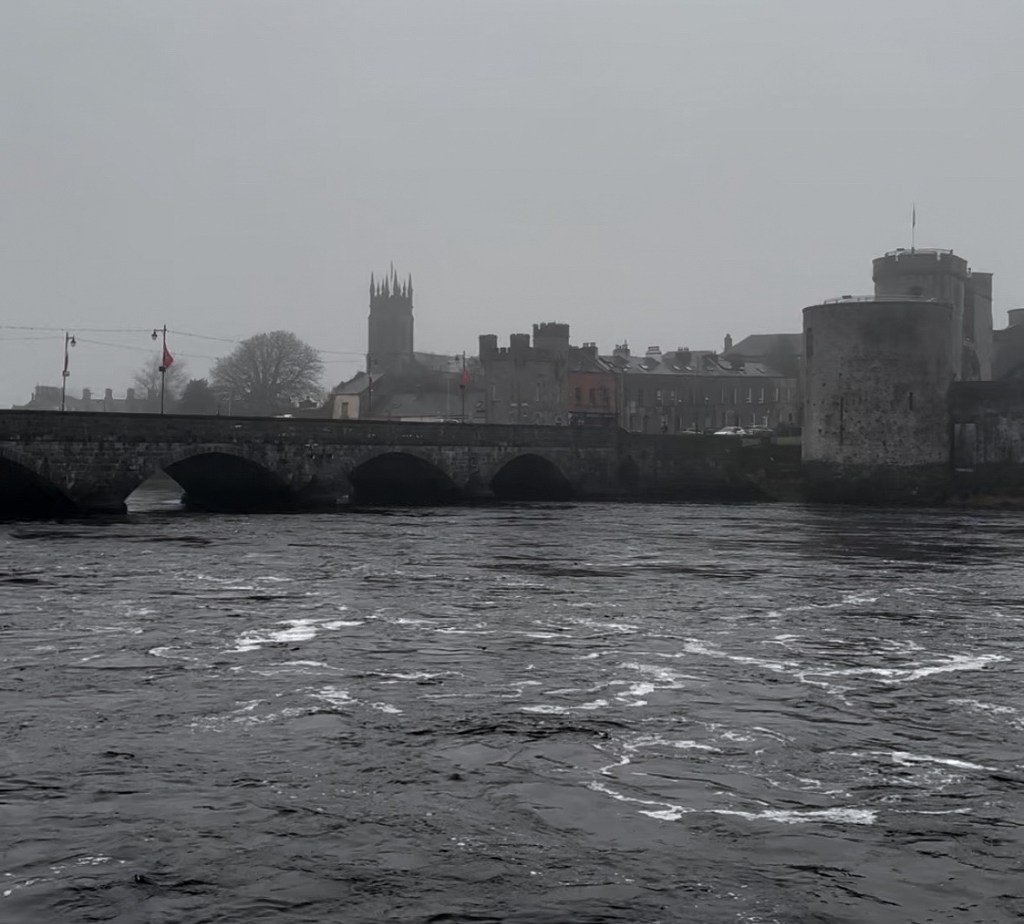
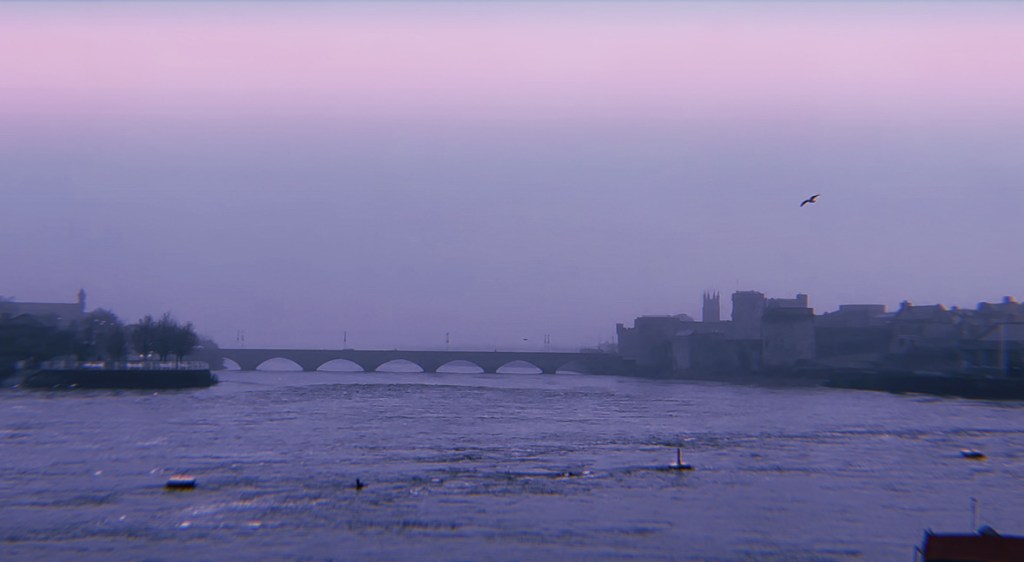
“She haunts Thomond Bridge now and protects the women and girls of Limerick. If any man with bad intentions crosses that bridge, she knocks him into the river below!”
I understood then why so many people at the parade would want to dress up as the Bishop’s Lady. She sounded like a superhero, watching the city at night and keeping people safe. This Bishop’s Lady seemed to be a far cry from the creepy story of La Llorona that kept the kids home before dark where I grew up. However, I couldn’t get the parallel out of my head: two veiled women in white haunting rivers 4,500 miles apart. So, especially when the jet lag had me up at strange times of night, I found myself learning as much as I could about the Bishop’s Lady and La Llorona.
The Bishop’s Lady
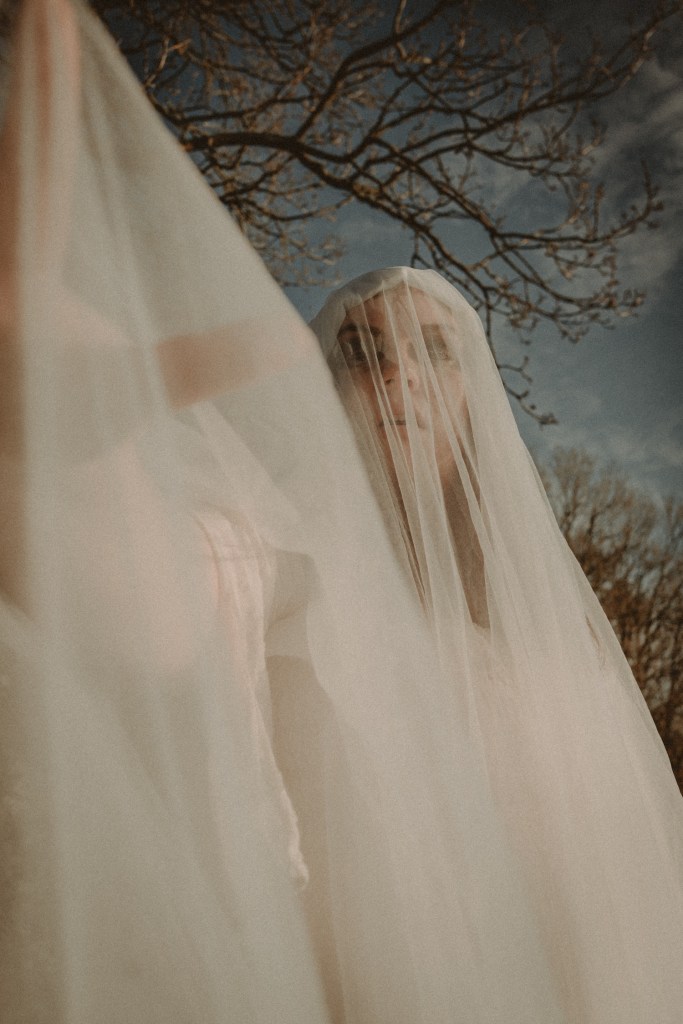
The oldest written source I could find on Limerick’s ghost bride was a poem from 1861 called Drunken Thady and the Bishop’s Lady.
To make a long story short, it is a bawdy, humorous poem about the town drunk, Thady, encountering the ghost of the Bishop’s Lady on Christmas Eve. She frightens him so much, and the river he is plunged into is so cold, that he prays to God for forgiveness, survives the ordeal, and is scared into being a model citizen forevermore.
You can read the full 445-line poem here beginning on page 74.
This version of the story makes the Bishop’s Lady out to be a horrible, miserable woman who was a violent gambler, troublemaker, and “ungodly woman” while she was alive. Drunken Thady and the Bishop’s Lady makes no mention of the Bishop’s Lady protecting the women of Limerick and plays up the ghost’s supposed cruel nature. However, it is just one man’s take on the legend. It does align with the story that I was told in 2022 about her illicit affair with the bishop of Limerick, and even gives potential family surnames to the woman — if there are any Bradys or O’Gradys reading this, your family tree may include Limerick City’s most famous ghost!
Is there an oral tradition of similar Bishop’s Lady stories that predate Michael Hogan’s poem? Yes, on page 76 Hogan notes that his version of the story was inspired by tales of the Bishop’s Lady that he had heard in Limerick since childhood.
Hogan goes on to say that in those stories, “[h]er nightly attacks were chiefly directed against the guard of the Castle-barrack garrison.” This is especially interesting when you consider that the castle barracks were home to the occupying British army at the time. When Drunken Thady and the Bishop’s Lady was written in 1861, the people of Limerick had recently risen against the British army in the Young Irelander Rebellion of 1848 and would rally again in the Fenian Rising of 1867. These uprisings and rebellions in Limerick continued until the Irish Free State formed in 1922.
Perhaps the idea of a supernatural figure also rising up against the occupying army was an optimistic one to the people in 1861. Here is a stanza from Hogan’s poem relishing the Bishop’s Lady’s attacks on the castle garrison:
“From the mad terrors of her hand!
She knock’d two drunken soldiers dead,
Two more, with batter’d foreheads, fled;
She broke the sentry-box in staves, And dash’d the fragments in the waves!
She slash’d the gunners, left and right, and put the garrison to flight!”
(Michael Hogan, Lays and Legends of Thomond [1861], 76)
I can’t help but wonder whether the women of the time felt protected by this ghost who was putting up her own fight against the British army and knocking some sense into the “wicked, drunken beast,” Thady. This protective element of the tale is what was passed down in oral tradition through years of strife and rebellion, all the way to women and girls this year painting their faces ghostly white and donning lace for the Samhain parade, whispering to each other all the while that Limerick’s ghost bride is still watching over them.
La Llorona
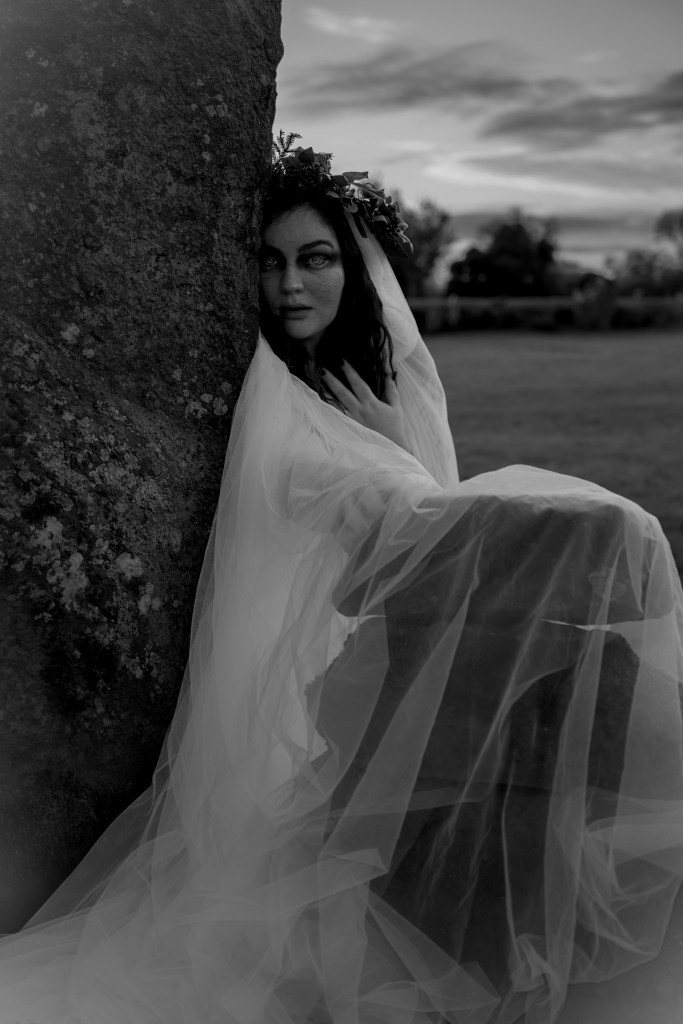
My research into La Llorona revealed even more similarities to the Bishop’s Lady than I originally connected at that fateful Samhain parade.
A note before we dive in: I have never lived in Mexico, where this story originates, and haven’t had the opportunity to study Mesoamerican legends and folklore nearly as deeply as those in Ireland. To share this tale, I’m leaning heavily on the article titled Traitor, ghost, feminist icon: Reclaiming the stories of La Llorona by Sarah Quiñones Wolfson (Los Angeles Times, October 16, 2023) — I welcome feedback and further La Llorona stories from anyone who is part of Mexican, Mesoamerican, and Latinx cultures.
I got a chill when I read, “The first official documentation of La Llorona is in a 19th-century sonnet by poet Manuel Carpio. [In the sonnet,] La Llorona is portrayed as a ghost after being murdered by her husband” (Quiñones Wolfson). The eerie closeness with the Bishop’s Lady story continues: in addition to the fact that they were both said to be murdered by a partner, Carpio’s poem about La Llorona was penned in 1849, a mere 12 years before Hogan sat down to write Drunken Thady and the Bishop’s Lady.
Something about this point in history compelled people across the world to preserve their local ghost stories in writing, and for that I am grateful.
The stories of the Bishop’s Lady and La Llorona are found extensively in their respective oral folklore traditions. In fact, Quiñones Wolfson notes that La Llorona stories have spread as widely as Mexico, Central America, South America, and the Southwest of the United States. I heard them myself as a child in Houston, Texas, in the early 2000s, and in Quiñones Wolfson’s article, a source named Carolina Munoz recalls hearing the story of a woman weeping by a riverbed told on a stormy night in Jalisco, Mexico.
While the details shift, La Llorona is most often portrayed as a ghostly woman in white. She is usually said to have been killed by a husband or lover, and is associated with lost children. Often La Llorona’s children have drowned, but whether the drowning is her fault, caused by another, or a heartbreaking accident also varies. Nevertheless, the element of violence is another through line, and as Quiñones Wolfson noted, “[s]ometimes, she consumes new souls with a dagger in her eye and sharp nails.”
Ghost or lost goddess?
One detail about the origins of La Llorona stopped me in my tracks: “La Llorona is associated with Cihuacōātl, a fertility goddess and snake woman” (Quiñones Wolfson).
After reading this detail about La Llorona, my mind skipped back to a folklore theory proposed by Jane C. Beck in The White Lady of Britain and Ireland (Folklore 81, no. 4 [1970]: 292–306). Could the similarities between the La Llorona of my youth and the Bishop’s Lady haunting my new hometown be traced back to cultural memories of river goddesses?
In Beck’s review of the many legends of ghostly ladies haunting water sources in Ireland and the United Kingdom, she proposes that these ghost stories are a faint echo of the tales of pre-Christian water deities. Switching a character from a goddess to a ghost was potentially a convenient way to keep the stories alive and encourage people to respect the water without causing issues with the local Christian priests.
Many of the most significant rivers in Ireland bear the names of old goddesses. When I made this connection I rushed to search if the River Shannon in Limerick was one of them. Yes, the very river that the Bishop’s Lady now patrols was once personified as the Irish goddess Sionann.
It’s not just Ireland and the UK that have this style of ghost story with potentially deeper roots. A German folklorist named Jacob Grimm reached a similar conclusion in his book Deutsche Mythologie in 1835. The sheer number of waterways in Germany that had a female ghost patrolling them made him speculate that these ghosts were remnants of a time when waterways were deified and personified as women.
I was excited to see that La Llorona has a strong connection to the Aztec goddess Cihuacōātl, which suggests that this goddess-to-ghost trend exists outside Europe as well. Further research is needed, but these kinds of connections and patterns are what I love about storytelling.
Because water is such an important and life-giving source, it only makes sense to me that waterways would have spiritual significance, be personified, and even deified by our ancient ancestors worldwide. Once these waterways couldn’t be honoured in the same way, did their stories continue to be told? Under the guise of a haunting tale, did people continue to talk about the women of the water?
Modern scholars such as Ronald Hutton emphasize that there is no evidence to suggest that active worship of these water goddesses continued despite the prevalence of these “woman in white” waterside ghost stories (Queens of the Wild: Pagan Goddesses in Christian Europe [Yale University Press, 2022]). However, many do agree that where a strong story of a woman haunting a waterway arises, it’s worth looking for other mythological significance at that river, well, lake, or beach.
What ghosts linger in your neighbourhood?
Despite living in Limerick, I have found that even local written sources about the ghost of the Bishop’s Lady are few and far between. This is a common stumbling block in Irish folklore research, where many stories were kept alive only through oral storytelling tradition. This tradition included specialized members of the community known as seanchaí who preserved and shared the stories. In fact, before 1841, the seanchaí were especially important community members because more than half of the Irish population could not read or write. This fact is not surprising when you consider that from 1695, the Penal Laws severely limited education for the Catholic majority for nearly a century, driving learning underground into informal “hedge schools.”
Additionally, around the world, women’s stories are often passed down through oral tradition because, historically speaking, we’ve had less opportunity for literacy than our male counterparts and less opportunity to entrust our tales to folklorists who wished to take them down.
Nevertheless, this genre of tale — a woman in white haunting a water source — persisted. In fact, these stories are so incredibly widespread that the phenomenon has its own Wikipedia article, White Lady, with entries spanning the globe. As we head into the darker half of the year in the Northern Hemisphere, perhaps you, too, can find a ghost story near you that fits this pattern.
The importance of reaching out to community members as part of the search for stories like the Bishop’s Lady and La Llorona cannot be overstated.
I would never have started looking for writing about the Bishop’s Lady if someone at the Samhain parade hadn’t told me the story first. If I hadn’t been frightened by La Llorona stories as a child, I doubt that I would have made the connection between her and the Bishop’s Lady as an adult. Indeed, perhaps ghost stories live in people’s hearts and minds more than they live in the written record. As Carolina Munoz said beautifully about La Llorona, “The only thing that’s persevered, that’s continued in time, has been oral tradition — these stories, legends and myths. It’s also necessary to know what ideologies and ideas structure these stories to understand better what it was like to be a person, specifically a woman.”
You never know what research rabbit holes the local Halloween parade might lead you down. What might the eerie stories of your own town reveal? Are your ghosts a piece of history made immortal, an archetype many people relate to, or a river deity the locals dare not forget?
As the nights grow longer, I dare you to look a bit deeper and see what you find.


Leave a Reply