
By Marta Abbà
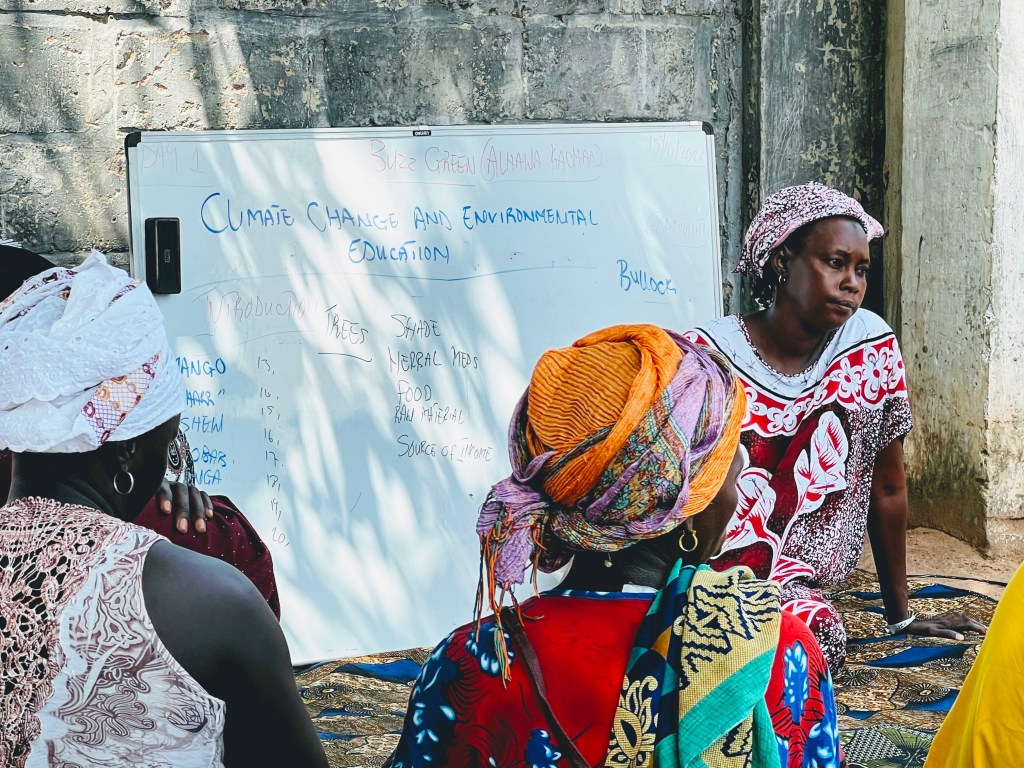
The blackboard is covered in the names of plants I don’t know. I recognise the baobab, and possibly the papaya.
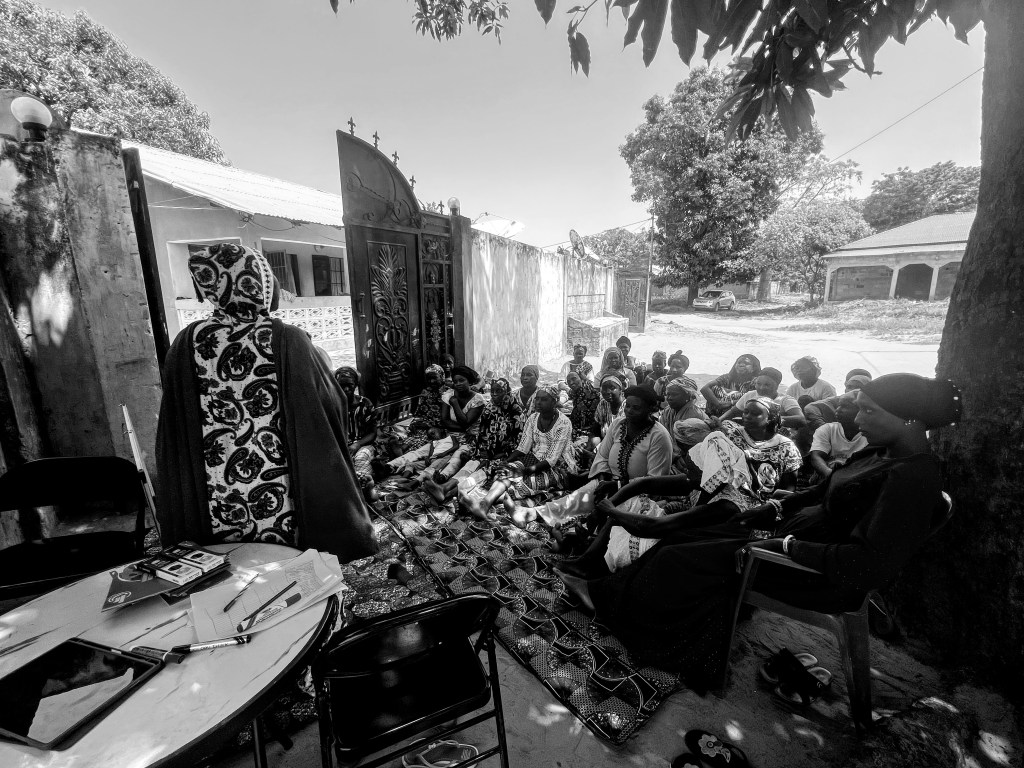
We are in Bulok, a Fula village in western Gambia, sitting on mattresses laid out on the floor. One after another, the women stand up, pick a name from the board, and start speaking in Mandinka. I don’t understand the language, but I can see they are telling stories. The others listen, chip in, and laugh. Sometimes, when a woman finishes, they clap. Later, someone explains the exercise to me. Each woman takes on the role of a plant and explains what it is used for, how she uses it, and why it should be protected. It is a climate adaptation workshop run by Buzz Women Gambia.
Mid-morning, a woman comes in with a child in her arms and sits down with the others. The child is passed from hand to hand. They rock him and make him laugh, while his mother talks about her favourite plant.
Then a woman stands up, looks at me and switches to English.
“We don’t need the SIM anymore to stay connected,” she says.
“You are here with us.”
The others smile and applaud. It takes me a few seconds to realise she is talking about me. She is the group’s leader. Every group has one, chosen by the other women, and she keeps it together when the trainers are not around.
Buzz Women was founded in 2012 in Karnataka, southern India, by Uthara Narayanan and Dave Jongeneelen. It started as a school on wheels: a bus that travelled to villages to train groups of women in saving, managing money, and self-confidence. The core course is called Self Shakti, from shakti, the Sanskrit word for strength. Later came Buzz Green, the climate module. It teaches women to recognise the changes underway, to act in their own villages, and to earn a living from natural resources without exhausting them.
The Gambia was the first African country to adopt this model, in 2018.
“We were the first in Africa, and from here the model spread to other countries,” says Kebba Sallah of the Gambian team.
The programme has since reached Senegal and Côte d’Ivoire, and teams from Kenya and Tanzania came to Banjul to learn it. According to Sallah, around 43,000 women aged eighteen and over have taken part since 2018.
“We give knowledge, and with it each woman builds her own business,” Sallah says.
“Every woman has a strength she often doesn’t know she has — our job is to help her find it.”
In his view, a lack of money is only part of the problem.
“Many women earn something, but nobody has ever taught them how to manage it,” Sallah continues.
“How do you save for the future? How do you get back on your feet after a loss if you have nothing put aside?”
Building a wealth of knowledge
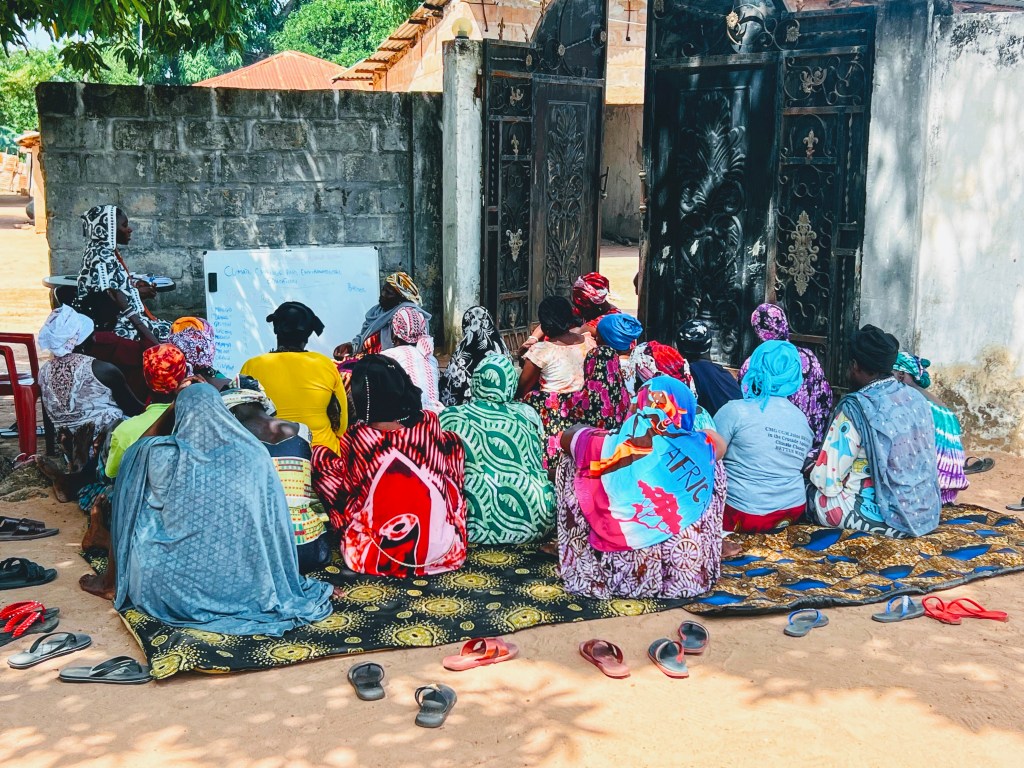
The Buzz Women team collects data from these first meetings.
“Before the training, we ask the women about their income, how they manage money, how capable they feel of leading others,” Sallah tells me.
“A few months later we go back to the same women, ask the same questions and see what has changed,” he says. “No project is perfect.”
“That’s why we measure: to understand what isn’t working and fix it.”
According to Sallah, the last two assessments show more bank accounts opened, more savings, and greater self-confidence.
He tells me about a woman who wasn’t working when they first met her, even though she could sew and decorate fabric. At a fair organised by Buzz Women, she learned to turn fruit and vegetables into juice, jam, and pepper sauce. She talked it over with her mother and started a small business, which has since grown.
“The last time I spoke to her, she told me she had bought her mother an expensive gift,” Sallah says.
“Here, that’s something people expect from a son, (but) she managed it on her own.”
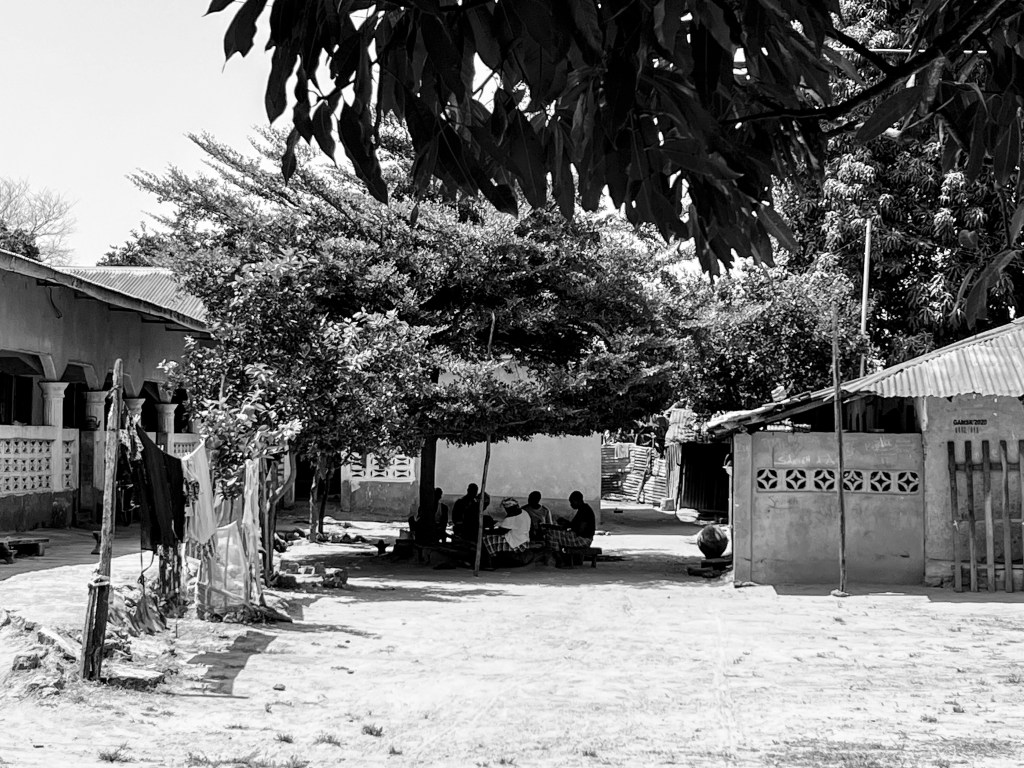
Husbands were not always easy to convince.
“At first some men were jealous,” Sallah says.
“We went to talk to them,” he continues. “We explained that when a woman is better off, the whole community is better off, and that includes them.”
Today, he says, nearly all of them have accepted it.
“They have seen that when the wife earns too, the family has more options,” Sallah continues.
“If only the husband brings money home, the day he runs out, the arguments start,” he says. “If both of them earn, they share the expenses, and there is more peace at home.”
For Sallah, poverty is one of the main causes of conflict within families. He also points out that in Mandinka culture, women have always held a central role.
“Over time, power shifted entirely to men,” he shares.
“It shouldn’t all sit on one side — we need balance.”
That balance is now under strain from the lack of jobs. Many young people leave for the Canary Islands along the Atlantic route, known here as “the back way.” It used to be almost only young men. Now women leave too, sometimes with their children.
“West African women are very strong — many families are supported by a woman alone,” Sallah says.
“They used to be the ones telling the men: don’t go, stay here, we’ll manage somehow,” he says. “If they are now the ones leaving, it means they no longer see an alternative.”
“That is what is frightening.”
The land that isn’t theirs
The women in the group live off what they grow. In Bulok, Sallah tells me, most families depend on farming and small trade: vegetables and groundnuts in the rainy season, a few animals, rice in the lowlands near the river. For them, the climate is not a topic for conferences. It decides how much a harvest yields.
Their situation reflects that of the whole country. According to IFAD, women make up more than half of The Gambia’s agricultural workforce and produce around 40% of its output. Yet by tradition, they do not control the land they farm — World Bank data show that 91.7% of women aged 15 to 49 don’t own any land. And, according to Afrobarometer, only 1 in 4 women have a bank account (the gap the savings courses set out to close).
A study published this year under an FAO project with the Gambian government concludes that climate risks hit women hardest, because they have less access to land, credit, and services. But when decisions are made about those risks, women are largely absent. In fact, according to International IDEA, they hold just 5 of the 58 seats in the National Assembly.
It is a double injustice — the Gambia produces less than 0.01% of global greenhouse gas emissions. But it is among the countries most exposed to warming, as Vice President Muhammed Jallow noted in May when presenting the World Bank’s climate report.
More than 60% of the population lives in high-risk coastal and urban areas, and flooding already costs up to 3.8% of GDP a year. Within the country, women farmers pay most of this bill. Because rice fields, traditionally farmed by women, are among the first to suffer when the sea rises. According to an International Monetary Fund technical report, a one-metre rise would flood a fifth of the country’s rice-growing areas and 60% of the mangroves that protect them today.
The mangroves of Tanbi
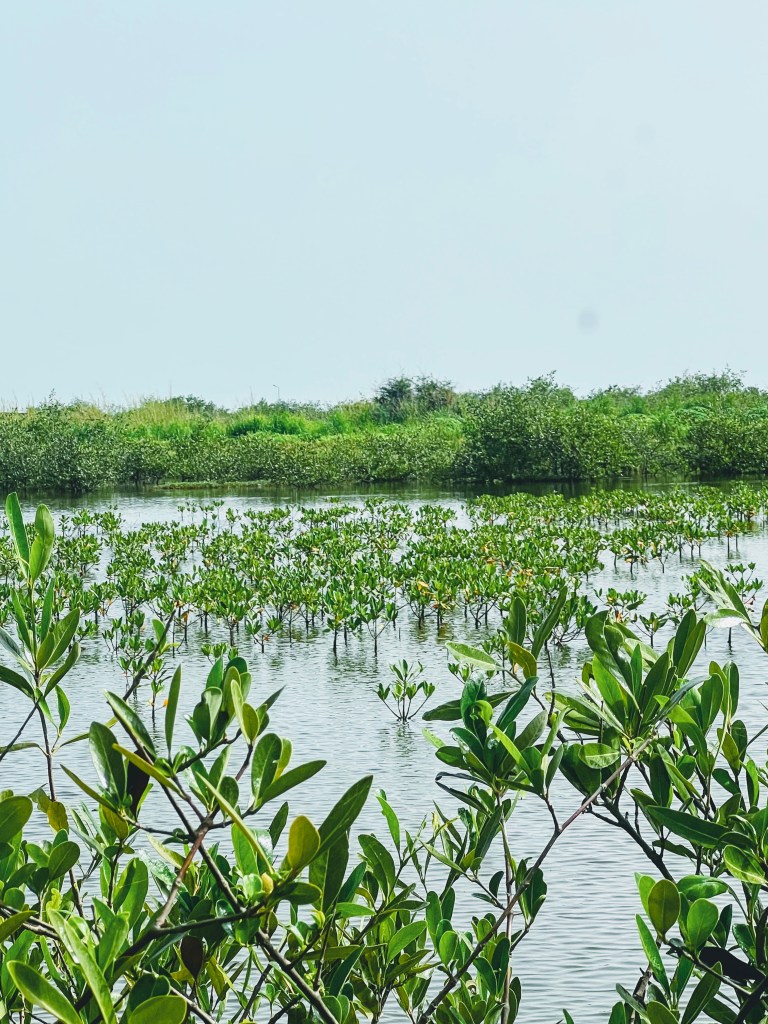
On the way back from Bulok we head for the coast, to where Banjul ends, and the rest of the built-up area begins. It is the road I travelled at dawn on the day I arrived, half asleep. This time I am with Momodou Inkeh Bah, founder of CAPED.
We stop in the Tanbi Wetland, the protected wetland that separates the island of Banjul from the mainland. Bah explains that for years, during storm surges, seawater flooded the rice fields farmed by women, and the salt made them barren. In the area where CAPED would later work, women had lost 179 hectares of rice fields.
He points to an earth embankment, so low it now blends into the landscape. It was the villagers’ first attempt to hold back the sea, and it failed. Yet it is still there, the mark of a community that tried to fight back from the start.
In 2009, Bah tried another way — he began planting mangroves along the edge of the fields, using his own money and contributions from family and friends.
We walk among those first trees, planted 10 years ago. Today they form a dense green wall, taller than we are. Being inside it is almost overwhelming — it is hard to believe it all began with fragile seedlings. Where the embankment failed, the slowly growing forest has held: in 10 years, 43 of the 179 lost hectares have been brought back into cultivation.
Birds fly overhead, settle on the branches and vanish into the thicket. For them too, the mangroves are once again a refuge and a source of food. Women walk along the road with their children. Many know the project well, because it concerns their rice fields and the food on their tables.
With the first funders, the work spread to other communities. In 2023 the Arab Bank for Economic Development in Africa put more than $500,000 into planting 1.2 million mangroves, the largest effort of its kind in the country. In total, CAPED has planted more than three million mangroves since 2009.
“The project has directly helped more than 7,000 people and indirectly more than 31,000,” Bah says.
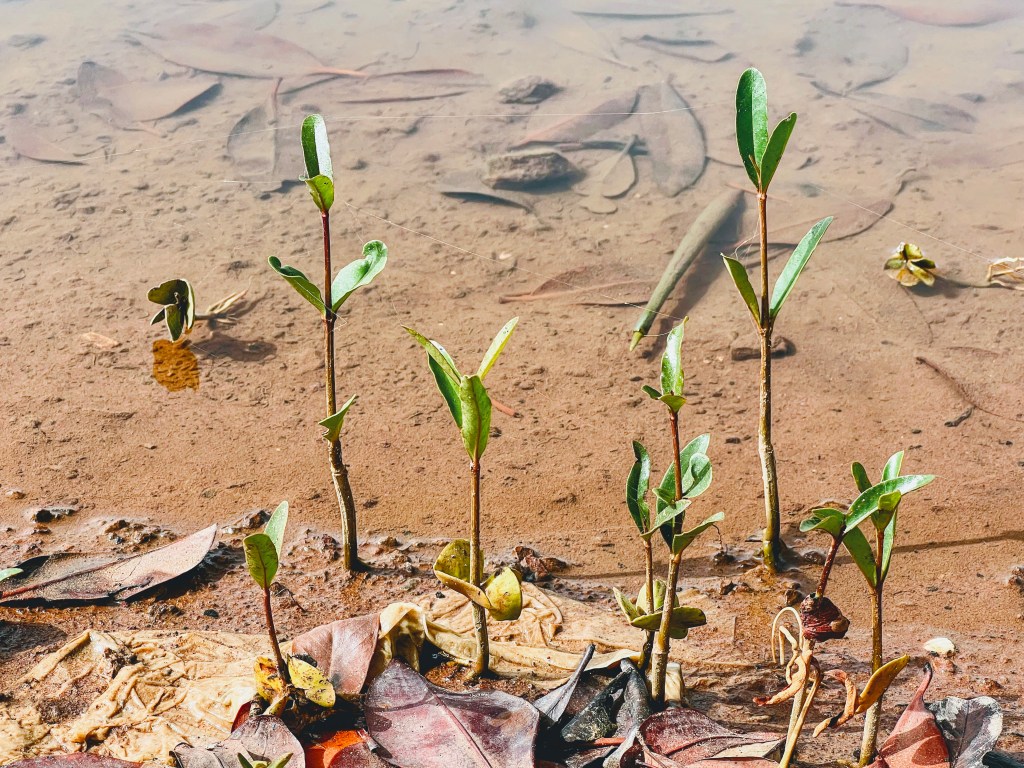
The work goes on. Next to the large trees are recently planted mangroves. You have to look for them; they are so small, but they are growing — in a few years they will be as tall as the first ones. 10 years ago, where a forest now stands, there were only seedlings like these.
Back from the visit, I meet Fatou Jeng, environmental activist and Bah’s deputy. She talks about the mangroves with pride, but quickly tells me the project is under threat. The government has granted licences to Gambian, Senegalese, Chinese, and Indian companies which, according to CAPED, have already destroyed between 100 and 200 hectares of the Tanbi to build warehouses and factories and to mine sand. Environmental groups keep protesting without being heard.
Fatou is on the front line. She tells me so several times, reminding me that she has been there for a long time. When she started, at 20, she was the only woman in the group.
“Back then, a woman who went to a meeting was called a prostitute,” Fatou tells me.
“They called me every name you can think of,” she says. “I didn’t care.”
Today, she says, things are genuinely different. Young women are more aware and freer to take a stand. Yet much remains to change.
“Many women are still forced to choose between activism and their families,” Fatou shares.
“The problem isn’t time — it’s husbands who won’t accept their wives getting involved,” she continues. “The climate crisis weighs on us above all, and yet at the tables where decisions are made, our voice doesn’t reach.”


Leave a Reply