
By Marta Abbà
“Do you want to tell the story of how you think we live, how the world wants to believe we live, or how we actually live?”
She asked me this, looking straight at my face with unmistakable features and the steadfastness of a Sami. The answer came later, on foot, walking the territory with her.
Drones tracking reindeer, apps mapping migration routes, families splitting their year between more than one house — technology here isn’t a break from tradition, but rather what herding has always demanded, applied to new tools. Pay attention, adjust, keep moving with the animals, keep moving with a climate that’s already warmer and less predictable than it was one generation ago.
What kept surfacing, though, in conversation after conversation, was a second word, one visitors rarely think to ask about: mining.
It doesn’t replace the climate story or compete with it. It grows out of the same root. The push to extract more critical minerals in Europe (and famously sustainable Finland) is driven directly by the green transition itself, and by the geopolitics around it. Rare earth elements go into electric vehicle motors, wind turbine magnets, the components any decarbonized grid depends on, and the EU remains heavily reliant on imports to get them (China above all).
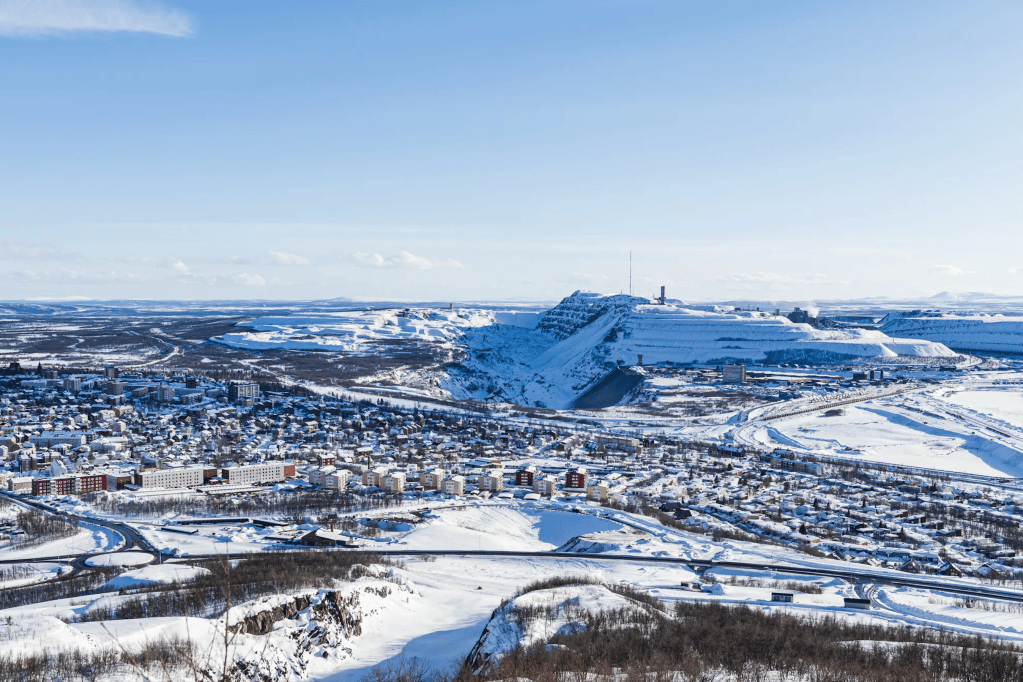
Kiruna sits at the center of that overlap. In March 2025, the European Commission designated the nearby Per Geijer deposit a strategic project under the Critical Raw Materials Act, part of a push to extract, process, and recycle more critical minerals inside EU borders and cut reliance on imports (all in the name of the same transition meant to lower emissions).
The figures involved have grown fast. LKAB, the Swedish state mining company, put Per Geijer’s rare earth oxide resources at just over 1.3 million tonnes in 2023, 1.7 million tonnes in 2024, and roughly 2.2 million tonnes by 2025, making it one of the largest known deposits of its kind in Europe. And each revision has moved in one direction.
That is the knot at the center of this story: a warming Arctic is already forcing real adaptation on the people who live here, and the very minerals meant to build a future less dependent on fossil fuels are adding new pressure to the same territories carrying that adaptation.
Framed as urgency and fast-tracked as strategic infrastructure, the extraction race exposes a gap that rarely makes it into EU policy language. A transition can cut emissions and still fail the test of climate justice — who is consulted, who pays the cost, who is protected, and who is treated as expendable along the way. On the ground in Sápmi, that question isn’t abstract. It shows up in whose consultation gets skipped, whose grazing land gets rezoned, whose rights get labeled an obstacle to sovereignty.
This is where the story starts.
Land rights on the surface, profits underground
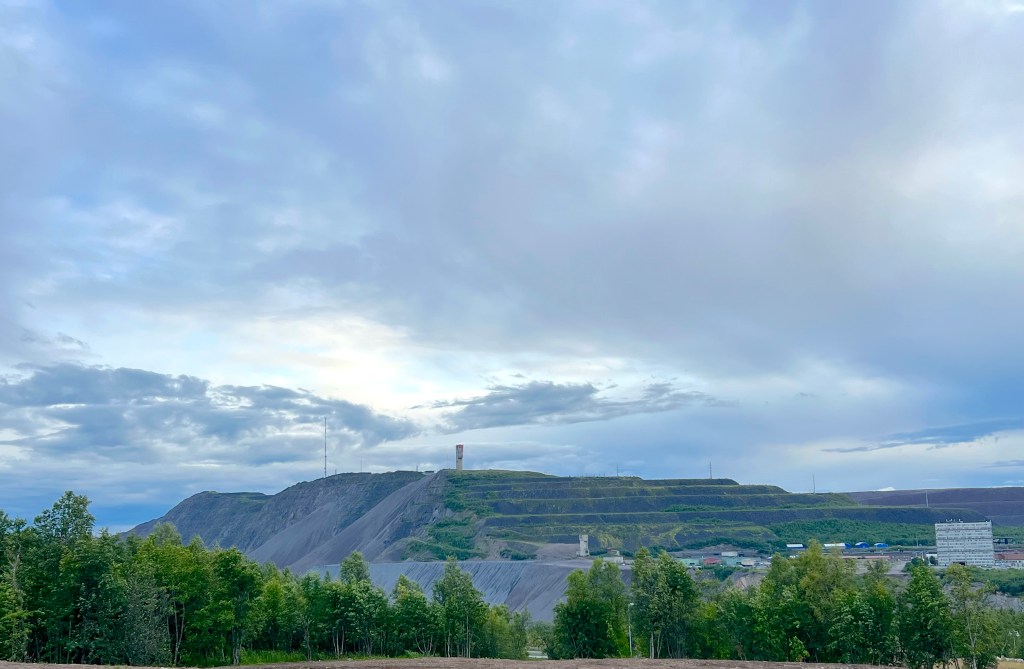
In Nikkaluokta, a small settlement north of Kiruna — close enough to feel the mine’s gravity, far enough to be a different world entirely. No railway, no headframes, just the lake, the mountains, and the trailhead into Kebnekaise.
I spoke with a Sámi woman who asked to remain anonymous. What follows draws on that conversation and on others with people in the area, kept general enough not to single anyone out.
Sámi land rights vs. resource extraction and climate change
Kiruna itself is young by any Nordic standard. Iron ore was found in the surrounding mountains in the 1890s, mining began in earnest in 1895, and the town grew up around the operation almost immediately afterward — a company town before it was anything else. And a railway, finished in 1906, was built for one purpose: to move the ore out. Today, the mine is state-owned, run by the Swedish government. Around 19,000 people live in Kiruna; roughly 4,000 jobs are tied directly to the mine.
What’s changed, in the account I heard, isn’t the scale of the operation so much as the intensity of demand behind it. Interest in Arctic metals has grown sharply since the war in Ukraine began, driven by a push for European and Swedish self-sufficiency in materials used for electric vehicles and renewable infrastructure alike.
That demand collides directly with Sámi land rights.
Sweden’s mineral law grants prospecting rights with striking ease. A company registers an area, applies for exploration, and in most cases receives approval. Consultation with Sámi communities, on paper, is a right. But in practice, it often means a single meeting where a company presents a plan already decided — an informational session rather than a negotiation; useful to a company mainly as a record that consultation technically took place.
“It’s not cooperation,” as it was put to me.
“It’s just information.”
Since the invasion of Ukraine, several people told me that pressure has intensified. Projects designated as strategic move through environmental review far faster than before — a fast track that, by design, requires less proof of compliance and fewer of the “complicated meetings” companies would otherwise owe Sámi communities. As one resident summed it up, right now, politics is doing more damage to daily life here than the weather is.
That’s not to say the weather has stood still. Herders in the area describe a shift that goes back to warm spells in the 1960s that, unlike this one, eventually passed — this time, the warming never reversed.
The clearest symptom is warmth that lingers deep into what used to be full winter.
When snow falls onto ground that hasn’t frozen properly, or a warm spell melts the surface and it refreezes, it seals the tundra beneath a shell of ice that reindeer can’t dig through to reach lichen underneath. Herds have starved this way in recent winters, a chain of cause and effect that begins with an unremarkable warm afternoon in October and ends, months later, with animals that don’t survive.
There’s no single fix for this, no rediscovered ancestral technique that solves it. Just constant, day-by-day adjustment. In practice, that now means using spring pastures earlier, in winter — grazing land higher in the mountains, where thinner snow cover paradoxically leaves lichen more accessible, supplemented with bought feed when the land can’t provide enough. It’s expensive, but it’s what keeps a herd intact from one birth season to the next.
There is also, locals told me, an old contamination question that never fully closed.
10 to 15 years ago, a fuel leak from the mine was found to have reached a nearby lake. The mining company has maintained there were no lasting consequences; people who live near the water describe ongoing treatment of the site and fish that, by their account, still aren’t in good condition. Whatever the precise scientific record shows, the episode has become a kind of shorthand locally for a wider mistrust — a sense that company environmental reporting reflects the measurements a company chooses to take, not necessarily the fuller picture on the ground.
Many of the people I spoke with describe climate change and mining as the two forces that are making traditional life increasingly difficult. The prevailing feeling is one of powerlessness, but not resignation. The everyday challenge begins with acknowledging, without denial, that we are moving toward unprecedented conditions.
A warmer autumn delays safe travel: rivers that once froze solid by a certain date now remain open for weeks longer, narrowing the window for moving herds between pastures. Insects that previously could not survive Lapland’s winters — ticks and biting flies, for example — are now appearing because the cold is no longer enough to kill them off.
On a nearby mountainside, I was shown a stretch of dead birch forest. It had been repeatedly stripped bare by a moth whose larvae, during a sufficiently cold winter, would have died before causing lasting damage. Now the winters are no longer cold enough, allowing the insect to survive and preventing the forest from recovering.
The two crises, as they were described to me, reinforce rather than cancel each other out. Climate change is reshaping the land on which the Sámi depend. Mining, meanwhile, is reshaping the very right to be consulted about what happens to that land.
The herder who sings the wind
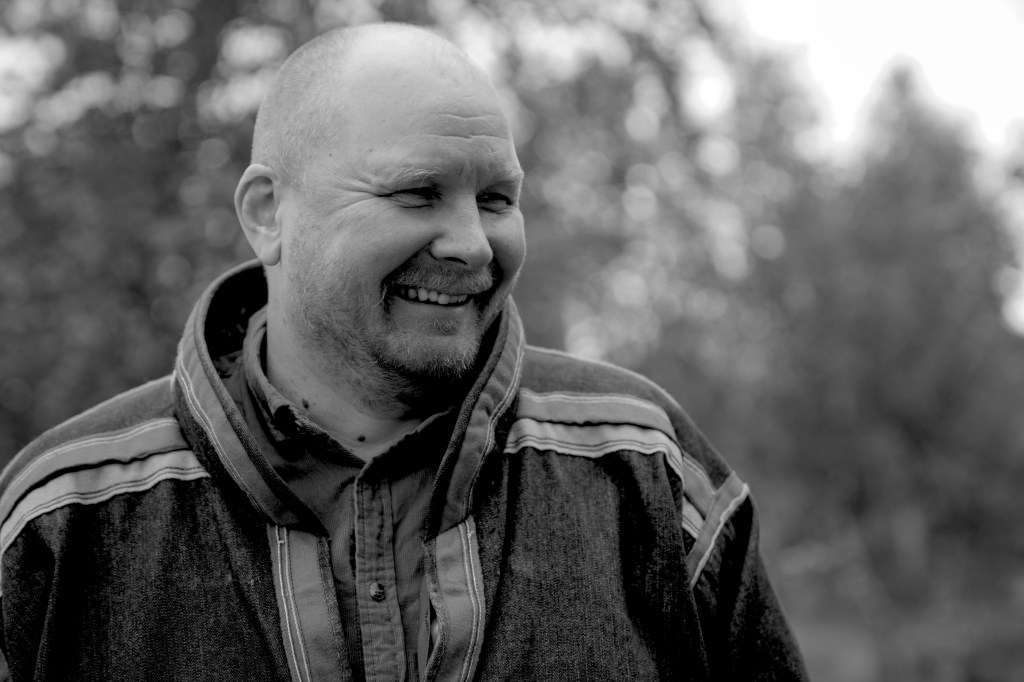
I found Lars-Ánte Kuhmunen in the same corner of Sápmi, Nikkaluokta, a good hour’s drive north of Kiruna and worlds away from the mine’s noise. He doesn’t describe himself as an activist. He describes himself as a joik singer who happens to have grown up entirely inside reindeer herding.
“I was born with the reindeer herders,” he told me.
“The reindeer herders move everywhere, because it’s a cold land, and you never know what’s going to happen with the snow.”
He first began recording the herders’ work in the winter of 2013, following the animals from the Taiga forest up into the mountains and the tundra above. For years afterward, tracking them consistently proved almost impossible.
What he has watched happen over roughly a decade unsettled even him. Two winters ago, for the first time in 25 years, he went up into the mountains in winter. He used to make the trip routinely, following the herds into the Taiga through the coldest months. Now, he said, it’s often too dangerous. Deep, wet snow — heavier and more frequent than the dry cold he grew up with — traps reindeer as they try to dig down to lichen.
“If the reindeer have too much snow, it’s impossible for them to dig through a meter of it to get food,” he said.
“They can’t put more energy into digging than they get back from eating.”
Winters, meanwhile, keep starting later. Warm autumns now stretch into November before the freeze truly sets in.
None of this makes its way into his music as commentary, he was careful to clarify.
“I don’t think I’m a climate activist. I just see what’s happening.”
And what he sees becomes part of the material his songs are built from, filtered through joik’s older function: not description, but presence. He sang for me in the mountains, a piece built around the sound of wind moving through snow — a sound, he said, that reindeer herders have always listened to as information, a way of reading conditions the eye alone can’t judge.
Where his story turns outward is in what he does with that knowledge once he’s back among people who’ve never herded a day in their lives. Kuhmunen has become one of the connective points between the working, changing reality he describes and the tourists who arrive expecting the postcard version of Lapland. Through performance, he carries the specifics of what’s shifting — the timing of the freeze, the texture of dangerous snow, the sound that tells a herder something is wrong — to people who otherwise encounter this place only as scenery.
It’s a quieter form of the same argument the anonymous herder was making: that the story worth telling isn’t the one the world already believes about how Sámi life works, but the one unfolding, in real time, on the ground.
Reading the tundra
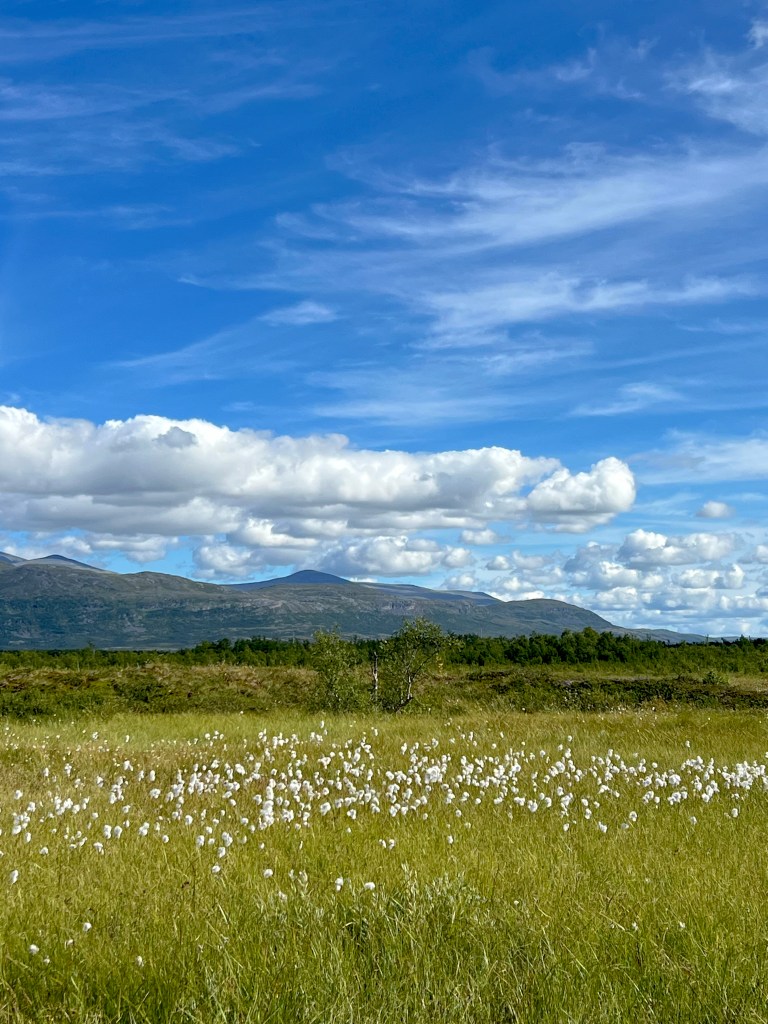
At Naturum Abisko, the visitor center for Abisko National Park, the mission is stated plainly on the wall before you even reach the exhibits: inspire, inform, and educate visitors about the surrounding nature, and, inseparably, about the climate pressures reshaping it. Lo Fischer runs the place. The center sits inside the park itself, next to the old tourist station, the railway stop, and the E10 road, and beyond the exhibition floor it holds a library, a gallery used for talks and slide shows, a play area for kids, and a small shop — it operates under Norrbotten’s county administrative board, Länsstyrelsen Norrbotten.
“Because we’re in an area where climate change is so visible,” Fischer told me, “every day we’re talking about and responding to what’s happening with the climate here.”
The most visible change, in Fischer’s account, is disarmingly simple: the seasons no longer arrive on schedule.
“We see that the first snow, the first week — it changes a lot. We don’t have winter conditions the way we used to.”
That shift reaches all the way into how the center advises its own visitors. Ice-skating on the lakes, once a reliable winter activity to recommend, can no longer be promised — the ice may not form solidly enough, or may form and then weaken unpredictably. Meanwhile, new bird species have begun appearing in the park, a fact Fischer described as genuinely double-edged: interesting to see, and also a quiet signal that something has shifted enough to let them survive here at all. Small birds that once acted as a kind of baseline indicator for the surrounding ecosystem aren’t arriving and departing on the timelines the center has recorded for years.
Public awareness, Fischer said, has visibly shifted in just the past five years.
“People are more conscious today, and people are more direct today — people ask questions about this. Five years ago there weren’t many people who denounced it as a fact.”
Visitors increasingly arrive already worried, some explicitly fleeing summer heat further south in Europe, treating the Arctic less as a bucket-list destination and more as a refuge.
Running the center, for Fischer, means translating a changing landscape into something a visitor passing through for a day or two can actually register.
“People want to see certain things when they go up the mountains,” she said, “and that could change with climate change.”
The postcard version of the Arctic and the one actually taking shape outside the window aren’t quite the same place anymore, and part of her job is closing that gap before people leave.
In Nikkaluokta, they measure change in reindeer that can’t dig through the ice, in a lake nobody can fully explain, in rights that arrive on paper and vanish in the room. In Abisko, 40 minutes north by train, they measure it in soil samples and shrinking ice-skating seasons. Both places sit on the same map; both are already living the future the rest of Europe is still debating.
The only open question is who gets a say in what happens next — and right now, in Sápmi, the answer is: not the people who live there.


Leave a comment