
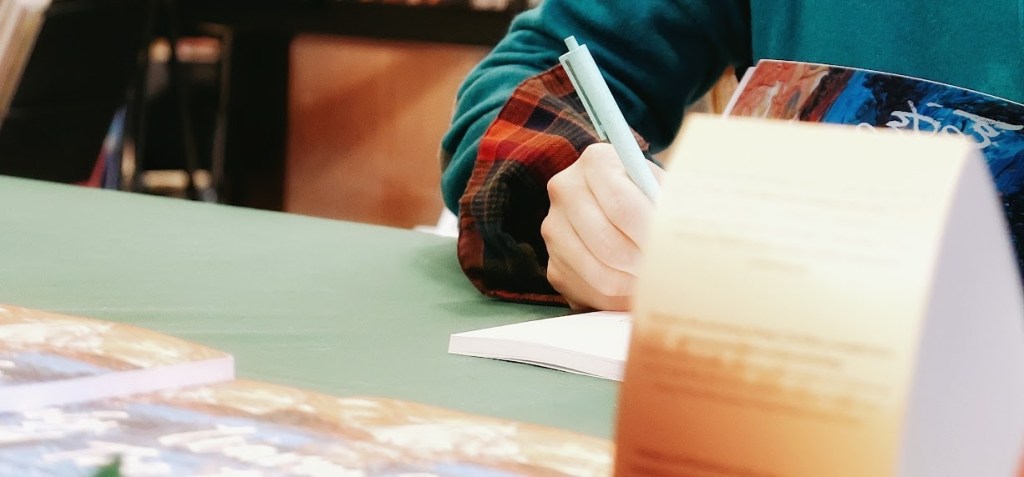
Mary Oliver, in her essay collection, Upstream, says, “Attention is the beginning of devotion.” This well-circulated quotation is one of the places I found my entry into poetry. In my 18-year-old, grief-wet body, poetry came over me like a spring thaw – as heavy and inescapable as any natural law. I was forced into my first poetry workshop due to a scheduling mishap at the University of Virginia in the Fall of 2018. I fought against it but was quickly won over by the life-changing nature of devotion; not to a single religion, but to the human spirit and the way that we can connect with the world around us.
The first poem I remember striking me was, Tarantulas on the Lifebuoy, by Thomas Lux – a conversational poem detailing a saga of tarantulas falling into a swimming pool and the benevolent speaker asking us to, “Leave a lifebuoy / or two in your swimming pool at night. // And in the morning … haul ashore / the huddled, hairy survivors”.
Tarantulas on the Lifebuoy is a glimpse into mercy and our ability to extend it to all persons, human and non-human alike. It reminds us that, “if you believe there is justice, / a reward for not loving // the death of ugly / and even dangerous … creatures,” they may begin to believe again that, “you are good, / that you love them, / that you would save them again.”
It appealed to the poetry critic in my heart, the same steel-willed individual who scoops spiders out of the bathtub in the morning without screaming.
There are so many ways into a poem, but one of the primary ways is through observation. Poetry uses all of this flowery language to cut to the heart of a thing, but most poetry says something similar – I am alive, and I am part of this. Through observing, we begin to see patterns, and in this way, we have the potential to be a better steward.
With our feet in the grass
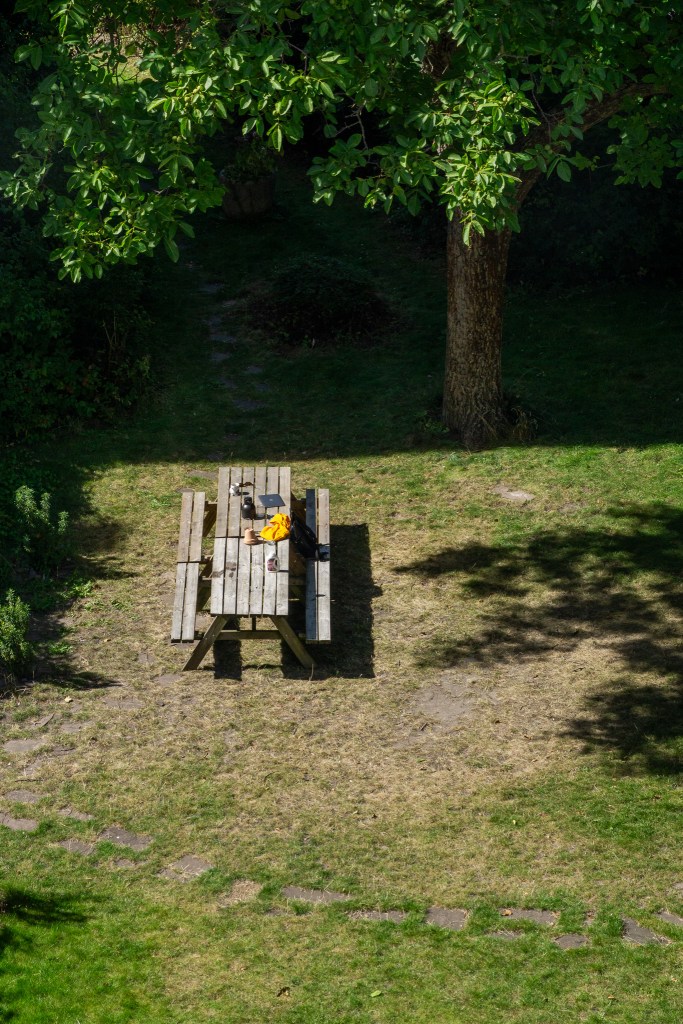
Mary Oliver is a key teacher in this self x nature x Other lesson, seen keenly in her poem, The Summer Day. She gives us both instructions and an invitation in this poem.
She begins with the big questions:
“Who made the world?
Who made the swan, and the black bear?
Who made the grasshopper?
This grasshopper, I mean—
the one who has flung herself out of the grass,”
She moves quickly from the existential to observation of the natural world, painting a setting where these questions are floating around in Mary’s mind, only for her attention to snap to “this grasshopper!” Right there, in front of her.
It’s through that observation, applying some of her own existential questioning to the grasshopper, that she enters a state of mindful attention:
“the one who is eating sugar out of my hand,
who is moving her jaws back and forth instead of up and down—
who is gazing around with her enormous and complicated eyes.
Now she lifts her pale forearms and thoroughly washes her face.
Now she snaps her wings open, and floats away.”
The narrative quality of this section of the poem works in two ways: the personification of the grasshopper brings her into community with the speaker, and we, as readers, are invited to also observe her grasshopper behaviors. Through breaking down the actions of this grasshopper, Mary invites us to bear witness to the natural world.
She then continues:
“I don’t know exactly what a prayer is.
I do know how to pay attention, how to fall down
into the grass, how to kneel down in the grass,
how to be idle and blessed, how to stroll through the fields,
which is what I have been doing all day.”
This is, perhaps, the central message of the poem. There is a reverence in this image. “I don’t know exactly what a prayer is / I do know how to pay attention.” This is something that we can all do. No matter how large the questions, how overwhelming the situation, we can come back to what we are in community with, which sustains us, and we, in turn, can protect it. She isn’t calling for us to go out and do something sudden and massive to change the world, but calling us in to where we are now, with our feet in the grass. Mary is asking us to know how to be still and appreciate the world for what it is already giving us. These next lines are some of her most famous:
“Tell me, what else should I have done?
Doesn’t everything die at last, and too soon?
Tell me, what is it you plan to do
with your one wild and precious life?”
She’s in conversation with us, as readers.
Mary lets us know that our life, exactly as it is now, with slow strolling and lounging, is already wild and precious. We can learn a lot from the last two lines of the poem: “Tell me, what is it you plan to do / with your one wild and precious life?” These lines are a call to action to go out and experience your life, with all of its subtleties and ordinary excitements.
The world is in a constant state of motion, all systems interconnected and precariously balanced and, now, with climate change, many are out of balance. Humans are an integral and inescapable part of all of these natural systems.
When we write creatively, we begin to bring a deeper understanding of these systems into our individual and collective awareness. The more we understand, the more we recognize the true wildness within ourselves, the more we will fight for it.
Exploring your wild life
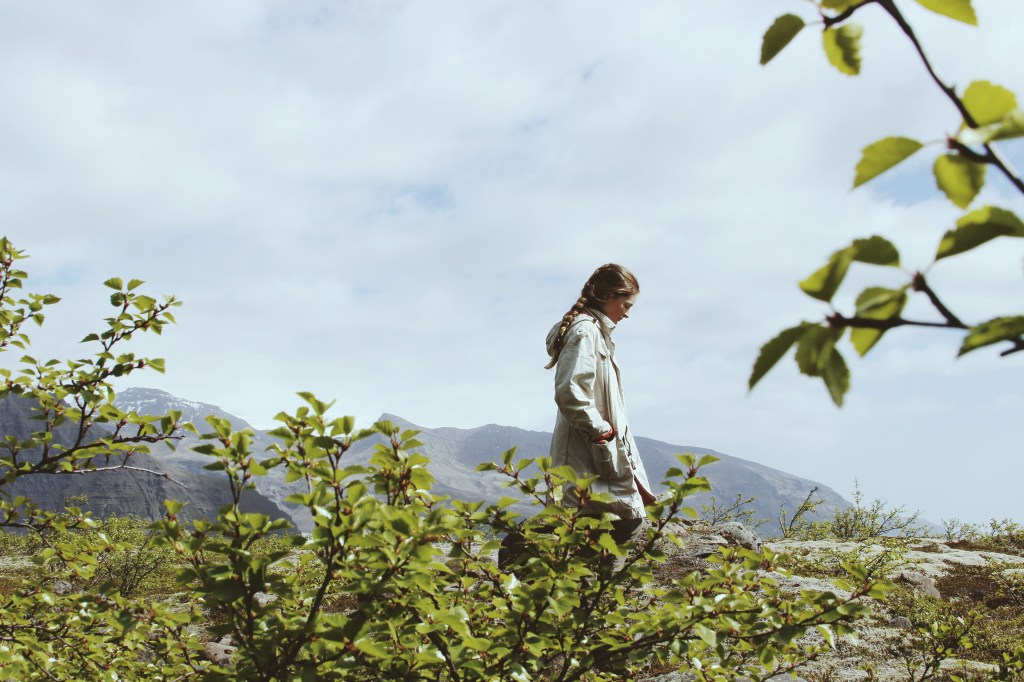
Try these creative exercises at home to develop your relationship with your own ordinary wildness:
- Go outside in your yard, a nearby park, or grassy area. Pay attention to what you see there. Can you name any of the plants? Try saying hi to them, out loud (there is scientific evidence that naming plants makes us feel more connected to sensations of awe). If able, kneel down in the grass, or just feel it on your skin. Breathe in slowly, name what you smell, and be idle. Do this for several minutes. Write down what you notice, not to make meaning, just to witness your own experience.
- Take a nature poem of your choosing (The Summer Day by Mary Oliver, Tarantulas on a Lifebuoy by Thomas Lux, Lying in a Hammock at William Duffy’s Farm in Pine Island Minnesota by James Wright, and Please Don’t by Tony Hoagland are all good choices if you don’t have one in mind) and read it three times. Twice out loud, and once to yourself. Identify any natural imagery that speaks to you. Name the literary devices, if you can. Then, just for the fun of it, write in the style of the poet. Take their way of viewing the world and try to put yourself in their place.
- Try a structured prompt — here are a few prompts that you can try at home:
A.) Write a poem either from the perspective of a plant or about the perspective of plants. Use short lines. The title should be the beginning of the first line. Include at least 2 neologisms and 3 of the following words: stomach, mitochondrial, hallucination, exquisite, sufficiency, albino.
B.) Write a poem about a force of nature that touches all things. Personify it. 2 lines should end in exclamation points. Your poem should be a waterfall poem and be all one sentence. Include 3 of the following words: liminal, clandestine, velocity, melancholic, artery, ardent.
C.) Choose an observable critter or plant and write an observation poem. Don’t force the big questions, but ask a question of the critter/plant. Use anaphora in at least 6 lines. Address the reader in the second person at least once.
D.) Write a poem beginning with where you’re from in a conversational tone. Go into nature and open your senses – what things do you know before they set their mark upon the earth? What can you feel under the surface of your observable world? Personify/objectify one inanimate object (e.g. 5 wooden senses, metal emotions, straw thoughts). - Choose a playful friend, human or otherwise, and play pretend again as if you were a child (invite your kids to participate). Go outside and create an imaginary world for yourselves, where you are intricately connected to the world around you. Come up with superpowers, origin stories, names for the critters you see, and meaning behind your actions. Genuinely commit to doing this for 15-20 minutes. Let emotions come, if they do. Write down how you felt afterwards.
There is not one way to ascribe attention, devotion, or stewardship to the world we live in.
What we can do, together, is expand our minds to the possibility of something more than ourselves – our natural systems, communities, and impacts. Consider that becoming more attentive to something might help you care for it better. Creativity opens doors for the mind that might otherwise be left closed.


Leave a Reply