
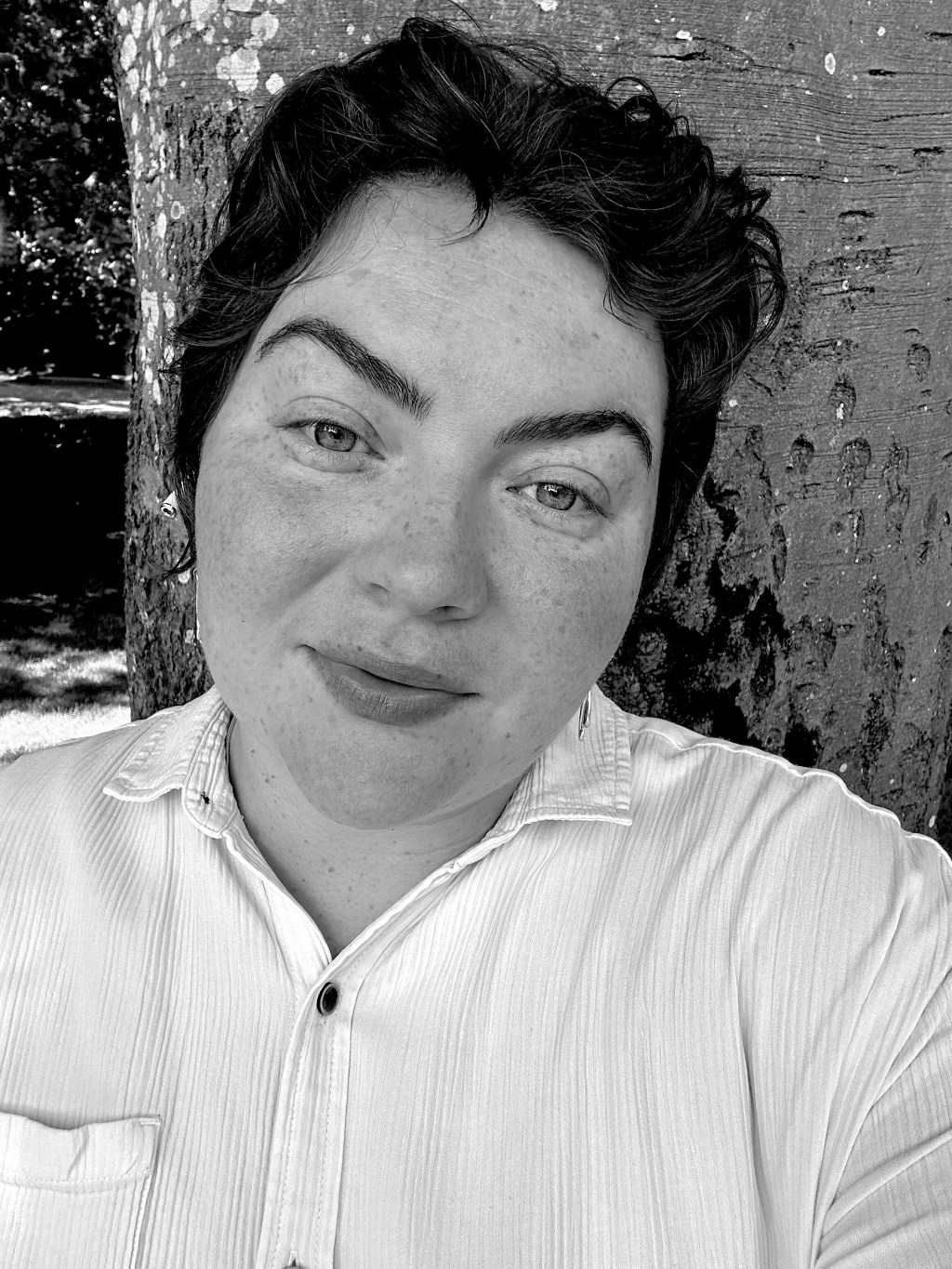
Meet Heather Canfield, an American folklorist exploring Ireland.
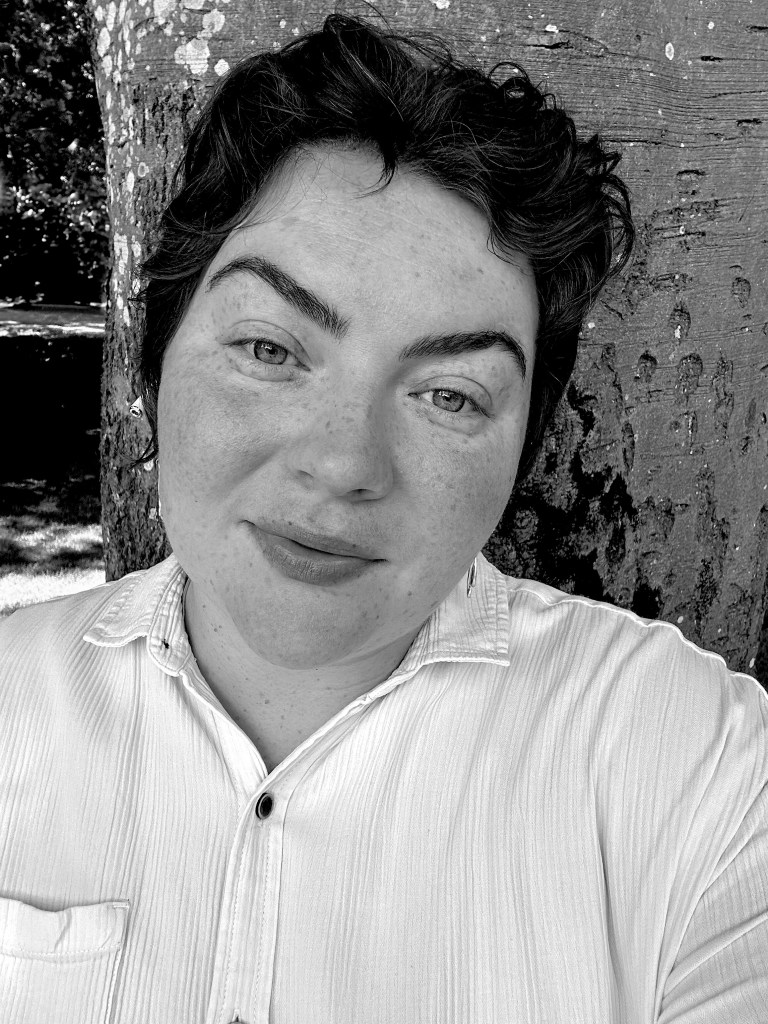
Our editorial team had the opportunity to chat with this expert, witch, and writer. We got to learn more about Irish history, Canfield’s favorite places in Ireland, and how feminism has played a role in folklore and storytelling. This conversation went as follows:
You’re an American living in Ireland. What drew you to the island?
Growing up, my favorite relative was my Grandad from County Cork (“Irish by birth, Cork by the grace of God” as those from the Rebel County like to say). He loved sharing the stories of his homeland, could identify a bird’s nest from yards away, and made sure my siblings and I knew all the words to Óró Sé do Bheatha ‘Bhaile. He passed when I was 16, but his impact on my life far outlasted the time we got to spend together.
I always knew the first time I could afford to travel internationally, it would be to the land of his stories and songs. What was a surprise, to myself and those close to me, was that visiting Ireland wasn’t enough for me. I wanted to immerse myself, learn the language, walk the old myth lines. I needed to live there.
When did you first become interested in Irish folklore, and what continues to interest you about it?
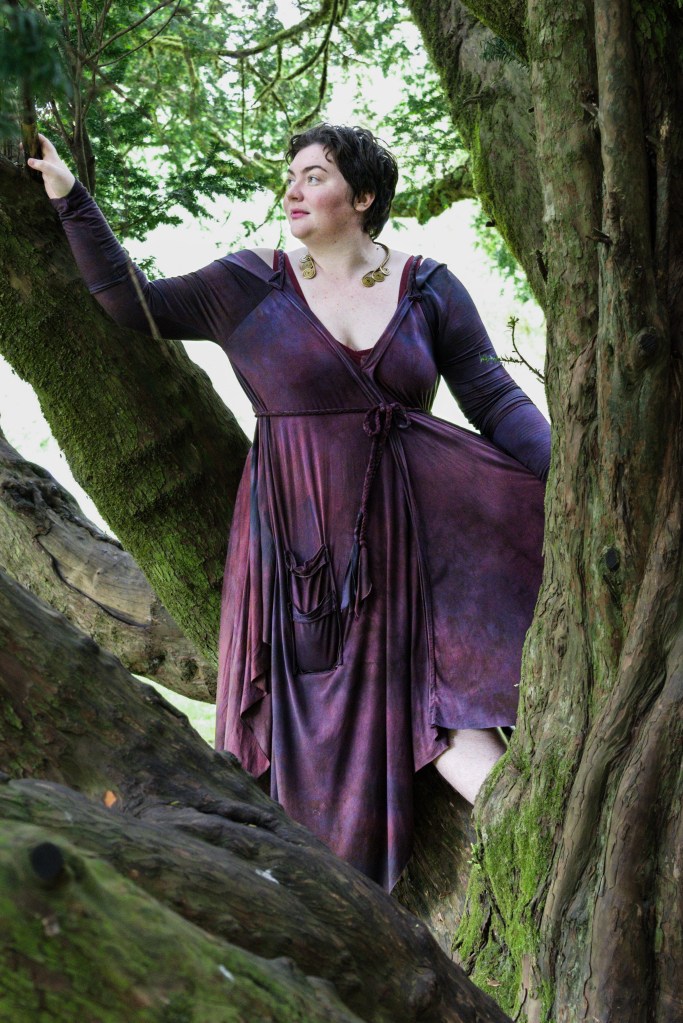
I was told these stories at my Grandad’s knee from the time I was very small. I have distinct memories of loving the women in his stories of Ireland. The Cailleach, the old woman of winter, who shaped the whole island. Pirate Queen Gráinne Ní Mháille, who had a zipline tied from the four-poster bed in her castle to the mast of her ship. St. Brigid and her nuns tending an immortal flame, no men were allowed to look upon. These stories offered me a more expansive idea of what being a woman could look like than any of the 90’s Disney movies or picture books for girls my age. As I grew up, I found myself seeking out compendia of Irish folklore or even fictional retellings with Irish mythology elements, always keeping that spark of interest alive somewhere inside me.
In visiting Ireland and eventually moving here, a different angle of the tales gripped me. All of the places my grandfather talked about were parts of the physical landscape that could be visited. The rock that the Cailleach threw in her fight with Finn McCool. The castle Gráinne ziplined from. The yew grove where Blarney Castle’s witch lived. The plain where the Tuatha Dé battled against the Formorians.
To me, it felt like being able to sit down at Aslan’s stone table or watch the twin setting suns from Tatooine. These stories are real, and they happened here precisely. Not only that, but the people here still remember, still honor the tales, and keep them alive.
What do you wish people understood about Irish folklore? Are there any misconceptions that you see floating around?
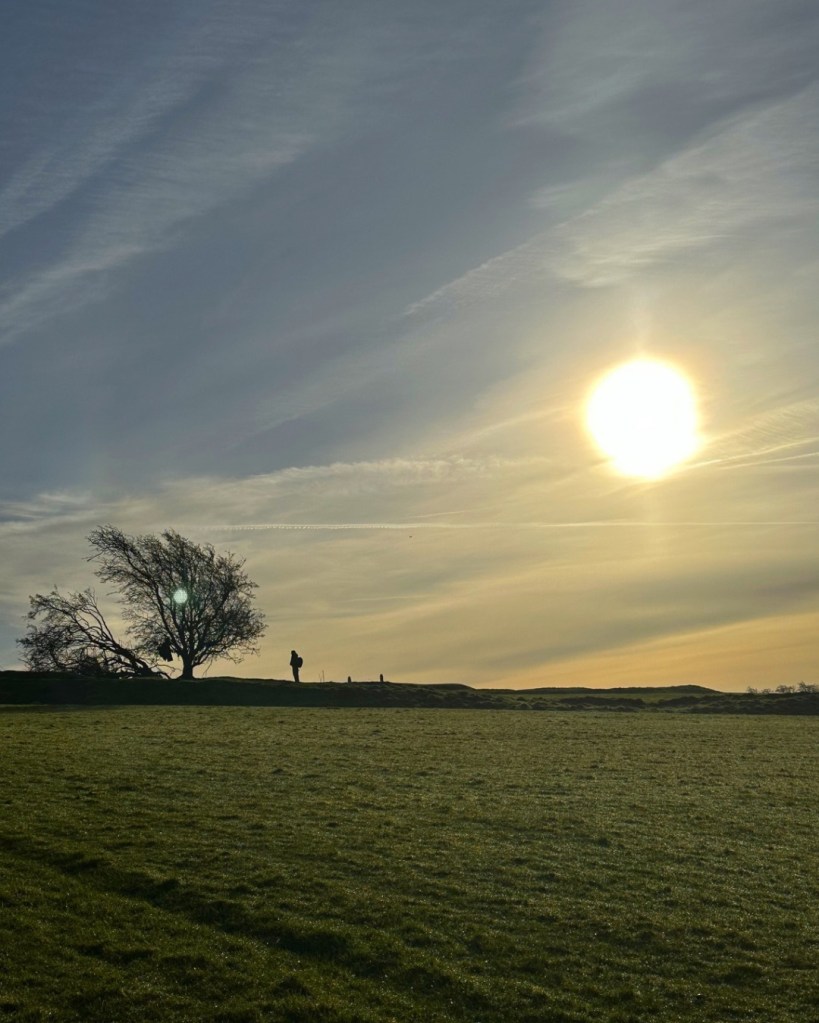
I notice people outside of Ireland are very quick to say a story is “wrong” or “untrue” if it is a version they haven’t heard before. However, this is a highly regional country. It’s equally true to say that the Cailleach lives on the Beara Peninsula as it is to say that she lives in the Slieve Gullion mountains. There’s a lot of grey area, a lot of both/and rather than either/or thinking in Ireland (really interesting article on this here if it piques your interest).
Did the sacred salmon of knowledge come from the Boyne River or the Shannon River? Depends which one the storyteller lives closer to! It definitely bends my American brain a bit, but it’s expanded my horizons a lot. Just ask an Irish person where the Otherworld (where the Gods and fae live) is, and how to get there. The answer will vary dramatically from county to county or even village to village. Maybe even household to household. There’s a temptation to say someone is “wrong” if you haven’t heard their explanation before or if it’s never been written down. I’ve gained immense respect for oral tradition and local variation. One of my Irish language teachers likes to point out that the three dialects of Irish have less in common linguistically than Swedish and Norwegian. If the language varies so much from place to place, even on one small island, you know the stories must as well.
What role does folklore seem to play in modern Irish life?
Depends who you ask! There are definitely Irish folks who haven’t thought about any of the old tales since they graduated secondary school at 18. That age is also when mandatory classes on the Irish language stop, to the relief of many students.
However, even the people least interested in folklore and mythology benefit from the fact that all 4 Cross Quarter days of the old Irish calendar (Imbolc, Bealtaine, Lughnasadh, and Samhain) come with long weekends/public holidays in Ireland. Those holidays usually include barbeques and backyard bonfires, even if people aren’t doing it for any particular folklore reason, “it’s just what is done on a long weekend.” The old stories would say these fires are done for protection and cleansing on days that the aos sí (aka fairies or Good Neighbors) are likely to be about. But driving through the countryside seeing dozens of fires glowing on Bealtaine or Summer Solstice, I don’t think every person lighting one would say they believe their fire has any supernatural properties on these days.
There are plenty of Irish people who are passionate about preserving the language and old lore. I count myself lucky to be able to study and learn with so many people who have dedicated themselves to keeping the stories alive. Many would say there’s a modern renaissance of interest in the folklore and mythology of Ireland happening at the moment. For example, the 12th-century text Dindshenchas says that fires and celebrations happen at the Hill of Uisneach in the centre of Ireland for Bealtaine. Since I moved here, I’ve gone to each one of these festivals (yes, they’re still held, it’s remarkable)! The number of people attending has gone up every year I’ve been there, from 1,000 attendees to 5,000 in just 4 years. The number of people visiting important mythological sites is also increasing, with more locals heading to them and more tourists interested in these storied parts of the landscape.
What can you tell readers about nature in Irish folklore? What role does the Irish landscape play?
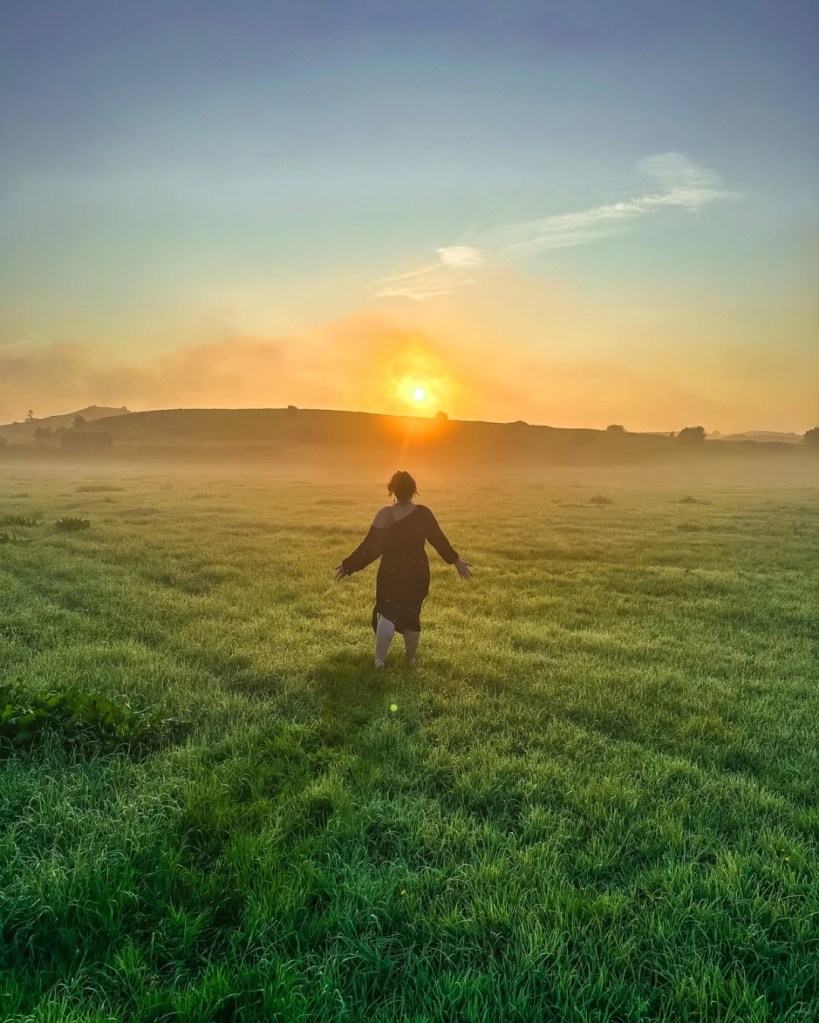
I would go so far as to say there would be no stories without the landscape. You’d be hard-pressed to find a mountain or a river in Ireland that doesn’t have a story attached to it.
And because human brains are wired for storytelling, it helps you remember directions and locations to know the stories. It’s nearly a way of handing someone a map, and the stories are the key.
One of my Irish language teachers in Connemara described meeting someone who previously lived in his village while he was on holiday in New York. She had moved away before he was born, and she hadn’t seen the village in 50 years. However, she remembered every rock, every tree, every creek of the land, and asked after all of it. My teacher said it was like she could still walk the land in her mind’s eye, and they had the stories in common, so he always knew exactly which tree or corner or rock she meant. I personally aspire to be in a deep enough relationship with my neighborhood to be able to recall things about it 50 years later.
On another note, many of the rivers and waterways in Ireland are named after Goddesses. I often wonder… would people treat the waterways differently if they still considered them divine? Are you less likely to toss old bicycles into a river if it is personified as a Goddess? Less likely to leak chemicals into it if you believe it’s a portal to the Otherworld? Is losing the animistic perspective on the land one of the reasons people feel comfortable mistreating it?
Does Irish folklore have examples of feminist themes or specific stories you can share?
Oh yes, many.
To be brief, the ancient Kings of Ireland were ceremonially married to the land herself. If the crops failed, if the weather was poor, it was perceived that he was out of the right relationship with his wife, the land. People would examine if they were overfishing, overharvesting, or doing anything that was hurting their King’s relationship with the land. If the weather or crops continued to be unfavorable, a new King was chosen. This expectation on the leader to put the land first is something I would love to see make a comeback.
Definitely, the above about the stories offering a more expansive view of womanhood to me as a child applies here.
The representation of a Goddess (arguably the most powerful goddess) as an old woman is something that sticks with me. Modern culture can be so youth-obsessed; it is such a balm to me to read stories of the Cailleach. She’s a powerful shapeshifter; she used the Irish landscape as her canvas and carved exactly how she wanted it to look. She’s the great-great-great to however many degrees grandmother of all Irish people because she took so many Kings as lovers, or so the 10th-century poem Lament of the Hag of Beara says. Yet she chooses to appear in most of her stories as an old woman, a hag. There’s something so freeing about that. It makes me hope the best of my own life is yet to come, in my crone phase.
Who are some figures from Irish folklore that you admire?
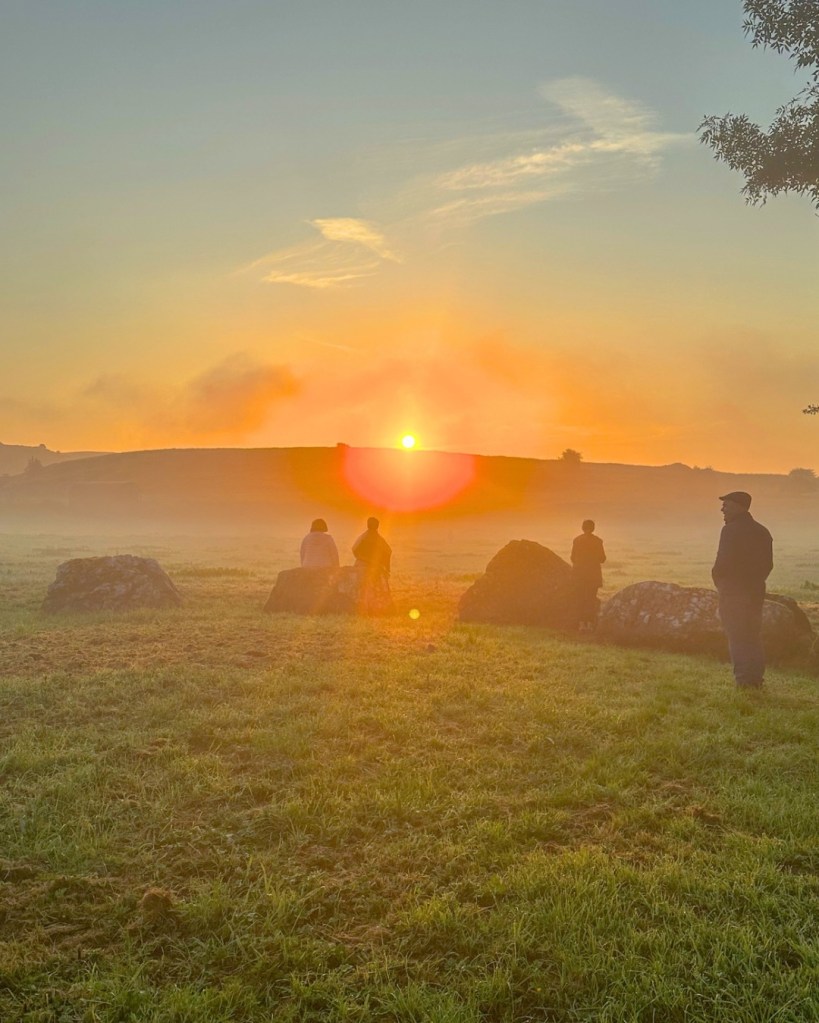
I have great admiration for the stubborn women of Irish folklore and mythology. The ways they have morphed and shifted shape so that their stories can stay in the mouths and hearts of the people always inspire me. I’ll give two examples:
Brigid is noted as an old goddess of fire, smithcraft, midwifery, and poetry. She has a whole family tree and lineage as one of the Tuatha Dé Danann, the godly pantheon of old Ireland.
Then, Christianity comes to the island. There can only be one God, but the people won’t give up their Goddess so easily. Brigid becomes the patron Saint of midwifery. The Saint has some other very interesting associations with an eternal flame, blacksmithing, and poetry. She keeps the same celebration day, February 1st. It’s called Imbolc in the old calendar, St. Brigid’s Feast Day in the new. Her name goes on many of the country’s sacred wells as they are Christianized. The knowledge of how to make her specific symbol out of rushes has been passed down, just associated with the Saint instead of the Goddess now. Most Irish households I’ve been to still have one hanging above their doors! Her story changes shape, but lives on.
Another slightly more convoluted example. This one is extra appropriate as I’ll be celebrating the summer solstice at her stone circle this year!
Áine is a Goddess closely tied to Lough Gur in Limerick. She is the Goddess who must grant the kings of the area permission to rule; they must prove worthy, or her land won’t cooperate with them. She has associations with the sun and especially the summer solstice. When Christianity comes to Ireland, she can’t be referred to as a Goddess anymore. The story morphs, and she’s now not a Goddess but the Queen of the Faeries. When an outsider family is looking to colonize the area around Lough Gur, they lean on the old stories of Áine choosing the local kings. They claim to have ancestry through Fairy Queen Áine, to have her blessing in ruling the land, and her blood in their veins. They build their stronghold castle on her lake shore.
We get closer to the modern era, and now Fairy Queen is too much power for a woman to wield. Now Áine is a banshee, a supernatural creature that keens to warn a people that a death will soon occur. The family she is associated with is still the Fitzgeralds of Lough Gur. They claim when one of their clan is close to death, Áine the banshee wails for them. Which is how we get to the local story that Áine the banshee was heard keening at Lough Gur before the JFK assassination. “Sure, the F in his name is for Fitzgerald, didn’t you know?” as one local resident told me. Which is true, and his family genealogy does link him to the Fitzgeralds of this area specifically. If Áine’s cry was heard across the lake nights before his assassination, I can’t possibly confirm, but I can say you won’t visit any pub near Lough Gur today without hearing that tale.
I can’t help but admire that some story of Áine’s has survived long enough to be told over a plate of French fries in 2026. The oldest written reference to her as a Goddess comes from 900 C.E. Her power may have had to shrink with the times, but her name and her association with the lake have never left the mouths of her people.
Do you have any reading recommendations for our readers?
Manchán Magan’s Listen to the Land Speak and Sharon Blackie’s If Women Rose Rooted are brilliant, accessible entry points into Irish stories. They both emphasize the ways embracing these legends gives us important tools for modern life.
Girls Who Slay Monsters & Gods Don’t Cry by Ellen Ryan are fabulous illustrated Irish myth compendium intended for children, but I’m a huge fan myself. If you’ve ever wanted the Percy Jackson equivalent for Irish mythology, you need these in your life. They’re really well researched and bring the tales into the 21st century so beautifully.
Where is a place that made you feel the closest to nature?
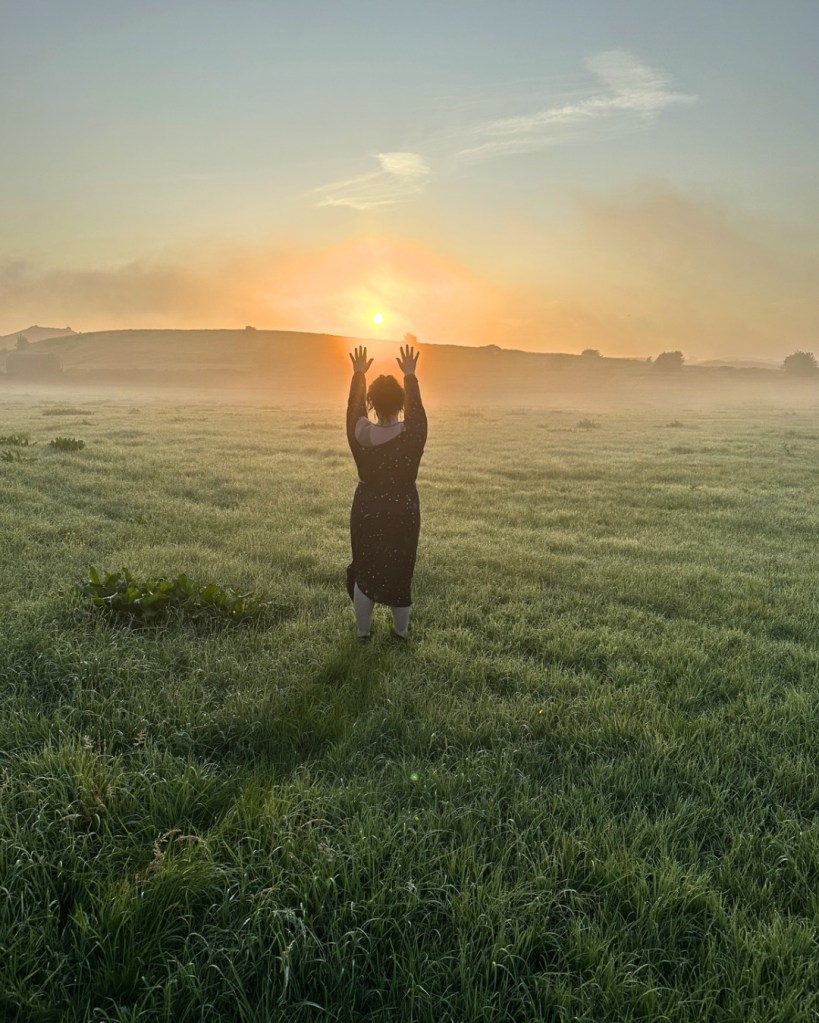
There is a particular holy well in the Burren. Most of the 3000+ holy wells in Ireland have been Christianized over the years; they bear Saints’ names and often have been built up into little buildings or churches.
This one, deep in the remote crags of the Burren landscape, has avoided all of that. It’s simply a babbling wellspring at the centre of a lush hazel wood, no saint’s name, no building, no infrastructure. You’d need the directions of a local and some good hiking boots to find it at all.
You can hear it before you see it. The echo of the water flowing under the limestone sounds like a deep heartbeat. Each step closer you take to the wellspring, the ferns, trees, and moss get closer and closer to bright neon green. The birdsong gets louder. It’s nature turned up to an 11. However, signs of other people visiting are present. Painted rocks adorn the path. A nearby willow and hawthorne have ribbon offerings tied to them. Three crystal teacups hang on a branch where the water burbles out, inviting you to slake your thirst at the healing well, the heart of the forest.
It’s a spot where I feel humans, nature, and the divine all meet and mingle together in a way that is very difficult to describe, but I’ve tried my best.

