
By Keri Stewart
Within northern Finland is the Lapland, a wonderful snowy destination to fulfill your life list of tracking boreal forest birds. This taiga presents outstanding lakes and forests for you to traverse, including many conservation areas like the Pallas-Yllästunturi National Park, where the Snow Bunting, the symbol of the park, frequents.
Top eBird hotspots in the Finnish Lapland

Regarding popular spots, eBird, through its data recorded as early as over a century ago, offers insight into frequent species present during this month.
With the right amount of patience and vigor, you too can add to the Laplands’ eBird list by traveling through multiple hotspots, hiking trails, and/or conservation areas.
Lake Elijärvi
The Around Two Lakes hiking route that passes along Lake Pyhäjärvi leads to a great birding spot: Lake Elijärvi, located in Keminmaa.
Juxtaposing the lake and its surrounding forest, these combined habitats offer a wonderful place for birds to nest in shallow waters, trees, and in crevices on the forest floor.
Additionally, you may be able to spot some species beginning mating behaviors, such as Ebird’s most frequently counted Lake Elijärvi species: the Snow Bunting, Taiga Bean-Goose, Common Crane, Canada Goose, and Reed Bunting.
These waterfowl and buntings will provide you with a delightful view of various-sized birds from the small Reed Bunting to the long-legged Common Crane.
Raumonjärvi (lake and wetlands)
If seeing the Common Crane at Lake Elijärvi wasn’t enough for you, then a trip to the wetlands of Raumonjärvi will offer you a great chance to spot another. Amid these marshy areas, you not only come face-to-face with another lake, but also many wooded wetlands where a unique variety of birds can be discovered.
Besides the crane, Ebirders have most frequently counted the Fieldfare, Snow Bunting (also found in the Faroe Islands), Mallard, and Northern Lapwing.
There is not much information on this location, and yet, this wetland environment is a testament to the marshy wonder of the Laplands, encouraging you to traverse other popular eBird hotspots.
Kemi: Tuhka-allas
The Tuhka-allas Ebird hotspot, surrounded on two sides by water, is an area in Kemi near Järppi. This popular hotspot features fells, rocky and sandy areas, a body of water, and a great chance to birdwatch.
In the rugged terrain, birders can get a chance to spot the Snow Bunting, Eurasian Curlew, Eurasian Skylark, Twite, and Northern Lapwing. This selection of birds makes this hotspot a great destination, especially if you need these birds for your life list.
Tuhka-allas, though featuring bodies of water like many of the other hotspots, is a great model of the avian populations and environment of Finland.
Birding at the Pallas-Yllästunturi National Park in Finland
Outside of the most popular eBird hotspots, the Pallas-Yllästunturi National Park is the perfect arctic delight for birders to explore.
This northern forest, featuring some of the best air quality in the world, is home to plenty of wildlife, from bears to birds to many types of trees. On a wooded walk here, you can take a peaceful stroll to admire the many bird species, including the national park’s symbol: the Snow Bunting.
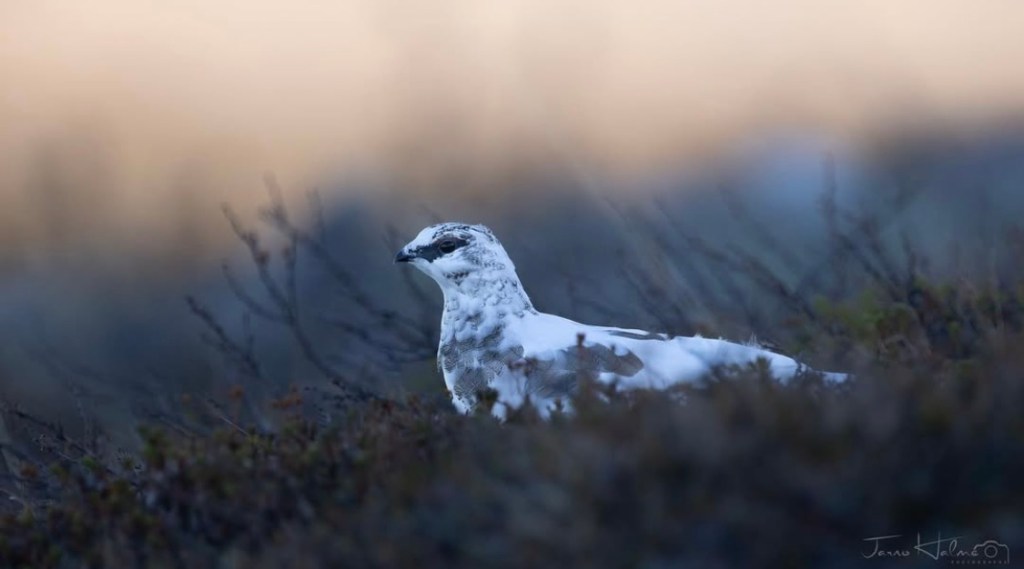
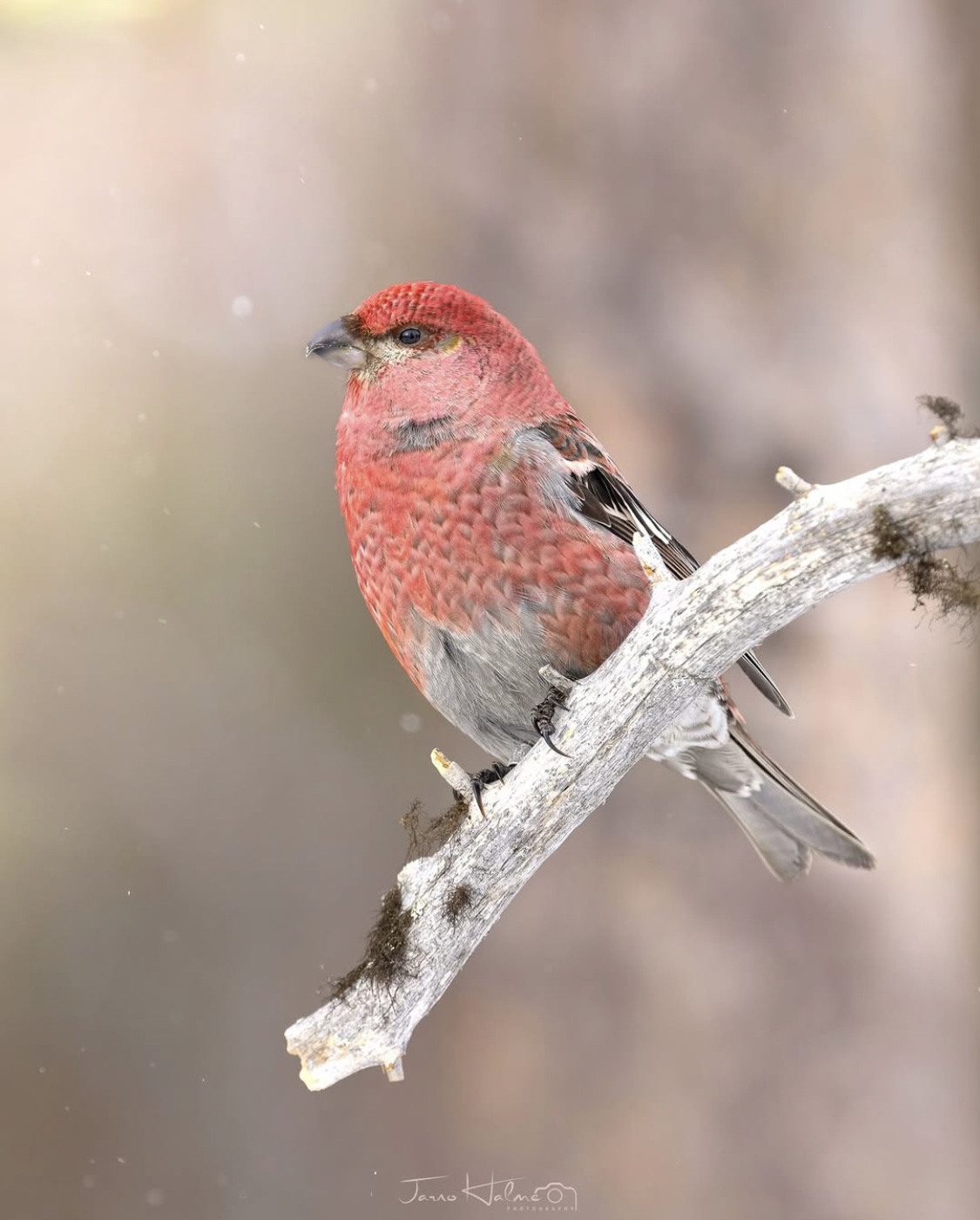
Alongside that esteemed ground-dwelling bird, other species, such as the Rock Ptarmigan, Common blackbird, Eurasian Three-toed Woodpecker, Siberian Jay, and Pine Grosbeak, are likely to be flying around the area.
While on the lookout for birds, be sure to follow the “leave no trace” principles. It is important to respect the environment as you are merely a witness to the phenomena of nature.
The beauty of this tundra forest and its multitude of species has made this conservation area a popular tourist spot, especially for birders and ecologists.
Esa Huhta and Pekka Sulkava, in a 2014 study, observed nature-based tourism at the Pallas-Yllästunturi National Park; there was a hypothesis about whether this would disrupt the bird populations or not.
However, though this land has many recreational aspects, there have not been any sizable changes to avian populations, and as a result, the study concludes that monitoring should be pursued to ensure the park’s ecosystem.
Huhta and Sulkava’s study focuses on the importance of avian communities. Being a birder is not only about spotting species, but also about leaving no trace and respecting the land.
Declining bird populations: How environmental stress impacts species

Why have bird populations been declining?
Many bird populations have declined in response to habitat loss and environmental stressors. Of these stressors, climate change is greatly impacting ecosystems and habitats.
Anthropogenic climate change, created by our own impact on the environment, has been rapidly destroying habitats. Whether through deforestation, rising ocean temperatures, and even pollution from releasing greenhouse gases, we have left a mark on the planet, a mark on the biodiversity of avian populations.
For example, the Western Capercaillie, Eurasian Three-toed Woodpecker, Siberian Jay, and Pine Grosbeak communities have drastically declined due to the loss of old-growth forests in the Laplands.
These ancient forests, up to 800 years old, risk disappearing due to felling. The logging industry finds many financial prospects in the upper Laplands’ forests due to the trees’ massive statures, and thus, a grand source of wood.
Our own desires for profit are not just impacting the economy, but also our environment and the species that live in it. Bird populations are declining because of deforestation and climate change. Bird populations are declining in part because of us.
How environmental stressors have impacted the Lapland Longspur
Climate change is already impacting the weather conditions in the Laplands, and many species fall prey to declining populations in response to this phenomenon’s impacts.
Of which, a popular resident is Finland’s Lapland Longspur. This taiga-loving passerine has been impacted by environmental stressors relating to weather conditions.
A 2024 study by Zhou Wu et al. explores how extreme-weather events can negatively impact the physiology of the Lapland Longspur, suggesting the importance of finding climate change solutions to benefit all avian species.
Considering the rise of arctic temperatures, it’s vital that these arctic regions remain stable and unexposed to increased temperatures and severe storms so that the wildlife can prevail.
In Zhou Wu et al.’s study, extreme storms and an abnormally cold spring affected the Lapland Longspurs’ energy capability, stress response, breeding behavior, and other physiological factors.
Taking a closer look at the genome, FKBP5, an important stress regulator, was shown to be increased in response to severe storms. The burden of environmental stress creates an allostatic load, and the birds waste energy fighting off this stress instead of other important survival behaviors.
Additionally, an abnormally cold spring impacted breeding behavior by invoking stress while simultaneously impacting the ZP3 genome correlated to male reproduction. The unexpected temperatures not only added more stress to the birds but also impacted their breeding behaviors.
Zhou Wu et al.’s study explores the significance of the environment on Lapland Longspurs, such that extreme weather conditions and variability can negatively impact their survival and reproduction.
Though this study just explored one species in the Laplands, it’s likely that other species are impacted too. The ecosystem is interconnected, and every species is linked in some way.
Under this assumption, it’s important to find solutions to the Arctic’s increasing temperatures and other environmental concerns, or we may lose more avian populations in not just the Finnish Laplands but the whole world.
 Blinter Magazine
Leave a reply to Articles by Keri Stewart – Blinter Magazine Cancel reply