
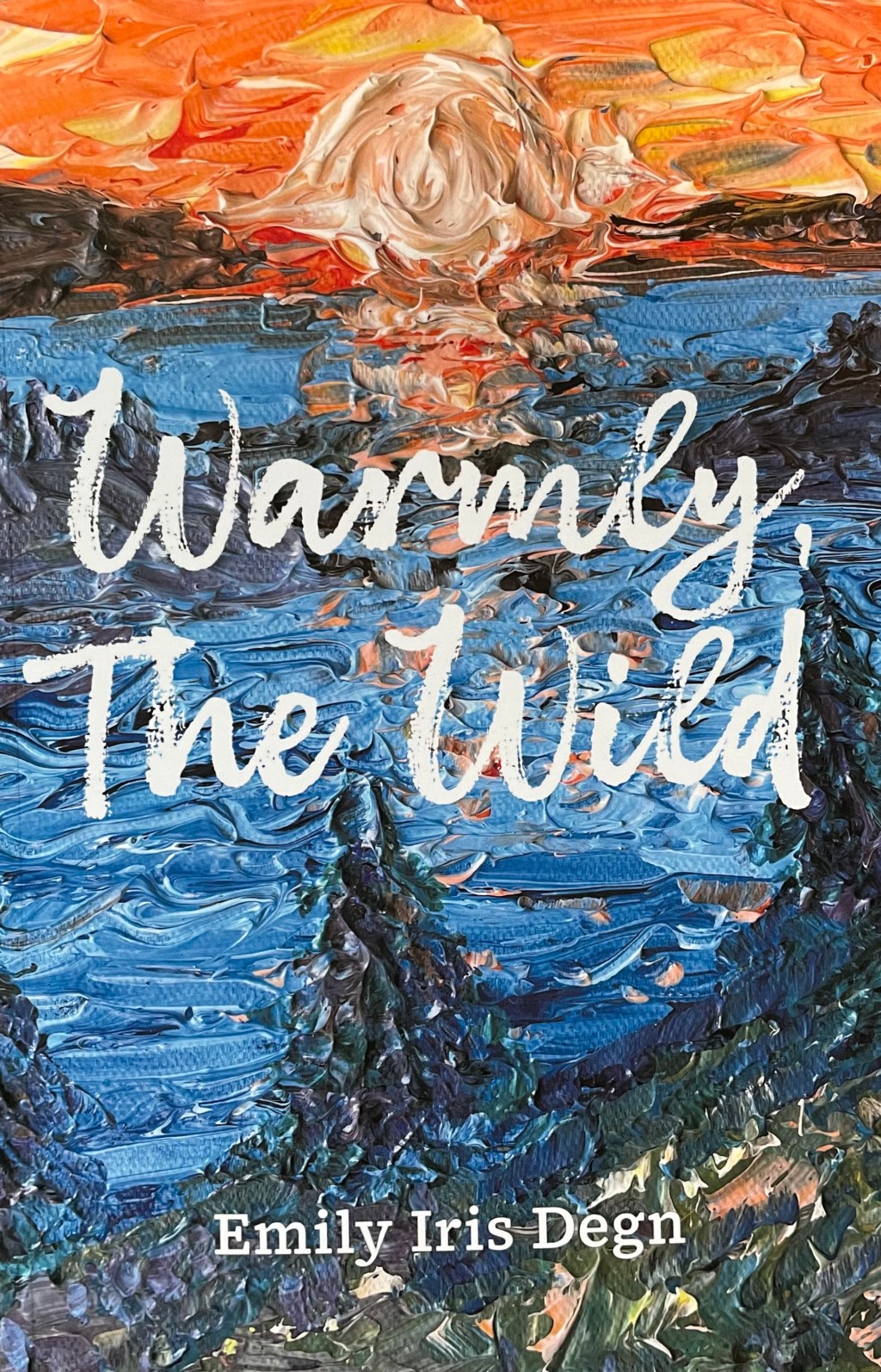
We’ve been on a hiatus here at Blinter Magazine, and plan on doing only light publishing until 2026. This is largely due to the publication of my first full-length book, now available from Finishing Line Press. “Warmly, The Wild,” the collection in question, celebrates the tethers between humanity and the natural world, mourning the personal toll of climate change.
In this book, I explore the roles that humans allow nature to play in their lives through my female experience of North American habitats, eco-feminism, myth, and elegiac grief. The poetry invites readers into a deeper connection with the natural world and themselves, challenging the idea that only wilderness spaces are “nature” worth noticing and protecting — nature is nature, and a parking lot tree is just as wild as a tree that stands in a National Park.
What is “Warmly, The Wild” about?
The entire collection of poems was written outside as I explored the North American continent over the course of many years. The title nods to the shape of the work: the book is framed as a letter to nature, from nature; to the wild, from The Wild.
Throughout this narrative, the idea of humans being separate from nature is challenged as people are examined through an ecological lens. The interactions between individuals and the Earth are both celebrated and lamented over via an uninhibited untangling of personal observations, policy, large-scale habits, and community habits. The ways that city pigeons are ignored as urban birders bus upstate to see “real birds,” that sidewalk weeds are seen as nuisances while the same plants in meadows are deemed as “wildflowers,” and that people’s problems aren’t considered part of climate action’s scope are questioned. And the ways that trees offer sanctuary to climbing children, that the Pacific Northwesterners coexist peacefully with wildlife, and that humans want the outdoors to be their final resting places are praised.
“Warmly, The Wild” ties together things like city-dwellers, backyard oaks, protected wilderness, and neighborhood beaches, putting them all in the same category in a work that recognizes human-made spaces as habitats worthy of environmental consideration. Helping people is helping nature, because people are nature, and in this argument, the book shines a light on the true power of climate justice, an area of my expertise — I studied the sect of environmentalism deeply in school and beyond, having won multiple awards and recognitions for my climate justice work in the community and university. This extensive knowledge is utilized in “Warmly, The Wild,” acting as a partner with poetry to tell the story of humankind’s relationship with Earth and themselves.
Seasonal shifts and rebellion shape the Warmly, The Wild” narrative
Organized by season, beginning with winter, the collective weaves through The Wheel of the Year, forming a cyclical shape that reflects the theme of interconnection that grounds the book. As readers flow through the dark, cold season and into warmth, they’re gifted with visions of palm lines and the shapes of roots, among other bonds between people and planet.
Eco-spirituality plays a part in the storytelling, blending myth, heritage, and science. As a proud ex-Mormon, religious symbology has some part to play, highlighting the fact that, like religion, humans built society, and can therefore reimagine it. This part of my background also plays a role in the themes of rebellion throughout the collective, empowering the reader to question the system and look deeper than the answers they were given.
“Warmly, The Wild” is a deeply eco-feminist book
Tying all of this together is my queer female perspective. As a pansexual eco-feminist, I often examine tradition, gender, and justice in my work, and have received multiple awards for my published poetry and paintings that express eco-feminist concepts. Academically and professionally, I’ve studied the links between feminism and environmentalism, and between sexism and the destruction of the livable planet.
“Warmly, The Wild” asserts that the oppression of people and the oppression of the planet are the same in an argument that I’ve adamantly made throughout the course of my over-decade-long career.
By the end of it, readers are left with a dance of odes and lamentations; of dedications to childhood memories spent outside and to an uncertain future where hope and effort must shake hands.
There’s more than just poetry in “Warmly, The Wild”
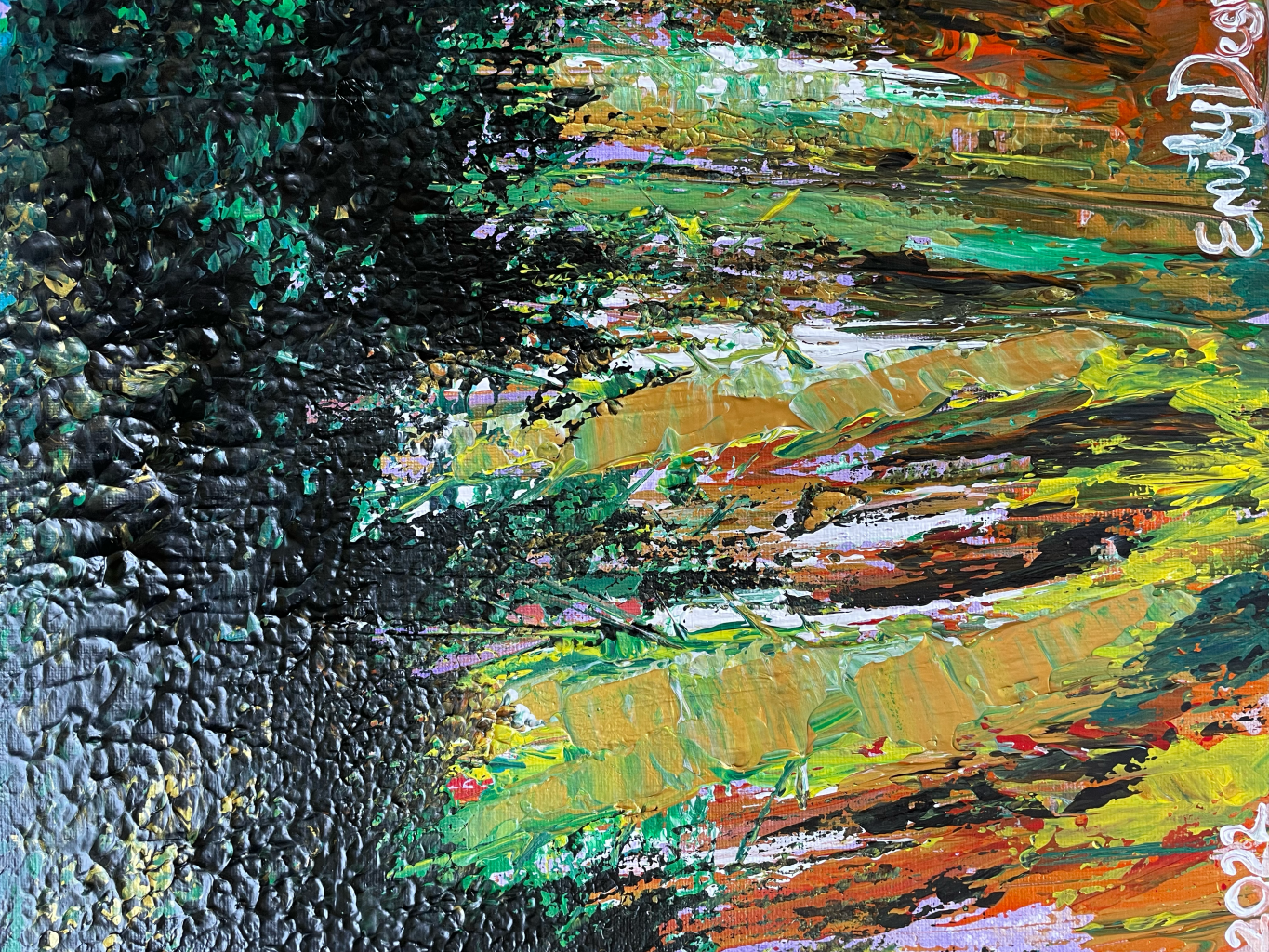
I felt very strongly about the concept of including other forms of art in my poetry collection.
Despite being a writer, I’m a very visual person, and felt that it would add to the immersive nature of “Warmly, The Wild” to have artwork dispersed intentionally throughout. I also find poetry to be very tactile, so it made sense to add another interactive medium to the collection.
The interior art of “Warmly, The Wild”
For the interior art, I chose paintings I had already completed of the landscapes I’ve lived in and loved across North America. I painted most of these while working on my book, but I threw in a few that I painted during high school (which is par for the course, as I included a poem that I wrote in middle school and one written in high school to nod to the younger version of myself who put me on this path).
I tend to put a heavy emphasis on color when I paint, dreaming up new combinations and attempting to see nature with newborn eyes rather than assigning it hues based on assumptions. For example, the tree bark that I paint so often is rarely brown, but rather shades of blue, orange, and even pink. Like my photography, I love to play with light, and capture that wonderment in paint. This only further toys with color, which causes my work to have a whimsical and otherworldly quality while still being tethered to the natural world.
As someone who also makes nature art (something I’ve done since I was kid before studying Andy Goldsworthy and other masters of the craft in college), I considered photographing my works and including those instead of paintings in “Warmly, The Wild.” However, climate literature and nature poetry so often leans in the direction of reality. It relies on reports, data, and elements that are very much rooted in the real world. This is something that I’ve long felt can impede climate action among the general public, as few are equipped with the tools needed to understand the scientific releases, let alone feel touched by them. That’s why I’ve made it my goal as a journalist to master the skill of translating highly complex information into engaging frameworks, moving storytelling, and accessible language.
As a poet and author, I apply the same goals to my creative writing. I felt that including photography, something very rooted in the physical world, wouldn’t be as effective at steering readers toward the emotional aspect (rather than the practical) of climate change, nature, and their own relationship with wildness. I wanted to communicate realities through the abstract; the ethereal; pure language. Paintings felt more true to this approach.
I was very careful in which art pieces I selected, not only choosing paintings that depict the places and ecosystems that I discuss, but those that highlight the emotions behind their accompanying poetry. For example, the last painting, “The Leaves Shimmered,” expresses the ethereal nature of the birch forests that both I and my northern ancestors frequented. The dark foliage suggests mystery and a sense that these spaces link us to the dead; those who loved us and are now gone. The trunks are slashed, reminding the viewer of these ecosystems’ vulnerability, mirroring the ways that we ourselves are hurting. And the splashes of gold and warmth around it all are reminders that this, despite folktales warning of dangerous forests and their modern ecological waning, is a sanctuary built by pieces of ourselves.
The cover of “Warmly, The Wild”
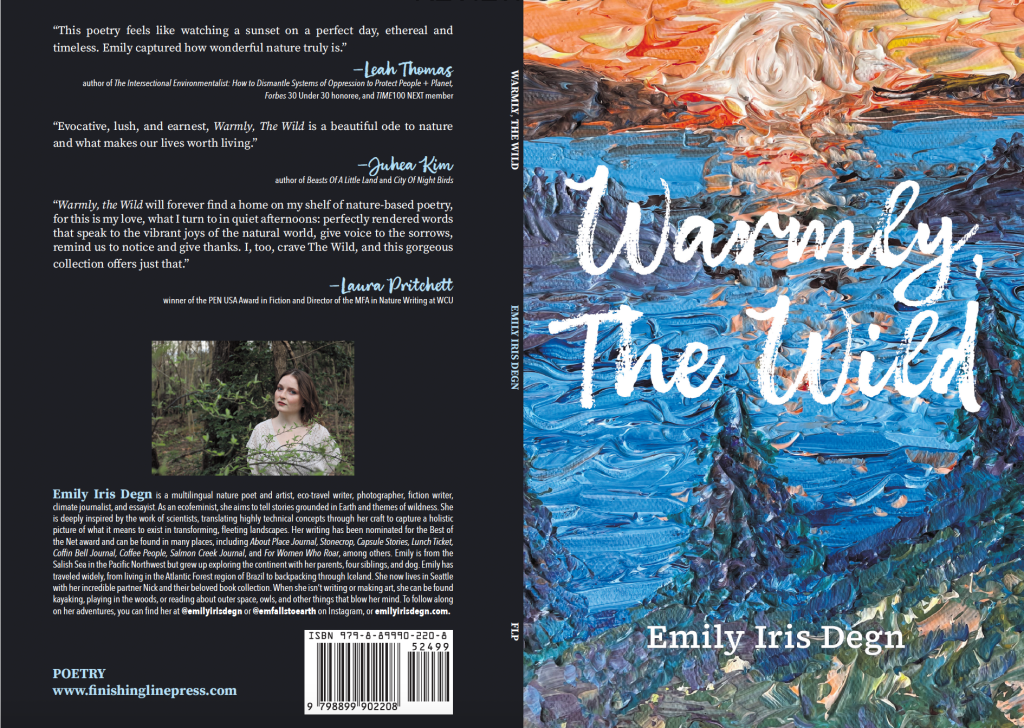
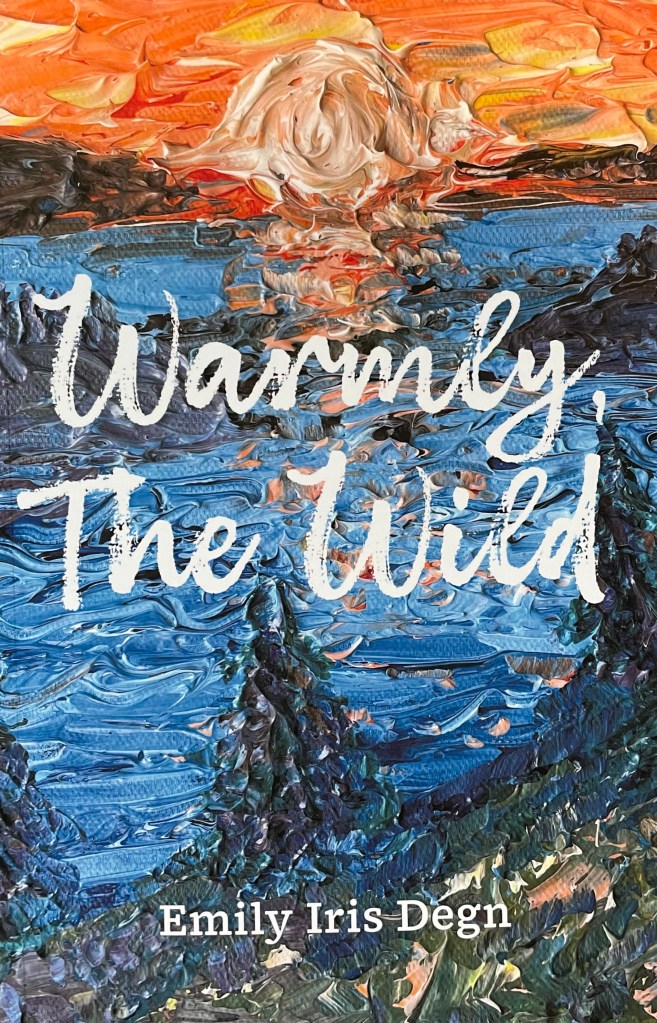
For the cover of the book, I painted something new. I wanted the cover to be an expression of the collective; a visual ode to what’s written.
I spent weeks experimenting and researching for this. As I had engaged a lot with “Earth As Art,” a concept from USGS, in college (it was beautiful to be a double major, linking both the arts and sciences, and this concept fell right into that fusion), I painted a few versions of scenes from satellite imagery above the Salish Sea. This is the place I grew up, where I started the book, and that shaped much of the narratives even about other spaces around the continent. They were beautiful, and I do plan to share them at some point (I have a new art project in the works for that), but they felt too distant for something so intimate.
Eventually, I decided to paint the scene that my mind goes to when I think of “wildness.” It’s an overlook on this preserved forestland that stretches across much of my home island, looking out into Burrow’s Bay in the Salish Sea. Like most of my work, it’s heavily textured, granting it that intimate quality I was looking for. I wanted it to feel personal, even for those who have never stood on those pine-scented cliffs. The colors, meanwhile, draw on the hues of native plants (marine and terrestrial) that thrive in this space.
What are people saying about “Warmly, The Wild”?
I was fortunate enough to get my three blurbs from giants in the world of nature writing, green storytelling, and climate justice. Here are the pre-release reviews for “Warmly, The Wild”:
“This poetry feels like watching a sunset on a perfect day, ethereal and timeless. Emily captured how wonderful nature truly is.” -Leah Thomas, author of The Intersectional Environmentalist: How to Dismantle Systems of Oppression to Protect People + Planet, Forbes 30 Under 30 honoree, and TIME100 NEXT member
“Evocative, lush, and earnest, Warmly, The Wild is a beautiful ode to nature and what makes our lives worth living.” -Juhea Kim, international best-selling author of Beasts Of A Little Land and City of Night Birds
“Warmly, the Wild will forever find a home on my shelf of nature-based poetry, for this is my love, what I turn to in quiet afternoons: perfectly rendered words that speak to the vibrant joys of the natural world, give voice to the sorrows, remind us to notice and give thanks. I, too, crave The Wild, and this gorgeous collection offers just that.” -Laura Pritchett, winner of the PEN USA Award in Fiction and Director of the MFA in Nature Writing at WCU
What to know about Finishing Line Press
I spent a years after completing “Warmly, The Wild” submitting it to presses, editing and homing it with every rejection (I even made it my senior project in college so I could workshop it without fear of it getting leaked), researching publishers that aligned with my work, and collaborating with my dear friend and award-winning poet Mary Hill (who tragically passed away very suddenly in 2023, leaving behind those of us whose lives were changed for the better because of her).
Finishing Line Press checked all my boxes, and I was thrilled when they offered me a book deal. Also known as FLP, this organization is a traditional, award-winning, small press poetry publisher based in Georgetown, Kentucky. Specializing in poetry, fiction, and drama, they are a member of the Community of Literary Magazines and Presses (CLMP).
FLP is known for publishing both established and emerging writers, including those from diverse backgrounds. They are recognized for their commitment to publishing works by women and BIPOC authors. This was especially important to me, as someone who’s built a career on climate justice, eco-feminist writing, and a queer, female, exmormon perspective.
In addition to the Chapbook Series, FLP publishes the New Women’s Voices Series and sponsors the Finishing Line Press Open Chapbook Competition. FLP also hosts several literary competitions, including the New Women’s Voices Prize in Poetry, the Finishing Line Press Prize in Poetry, and the Donna Wolf-Palacio Poetry Prize. I love their involvement in the literary community, and it’s been a pleasure working with them on this release
Where to buy “Warmly, The Wild”
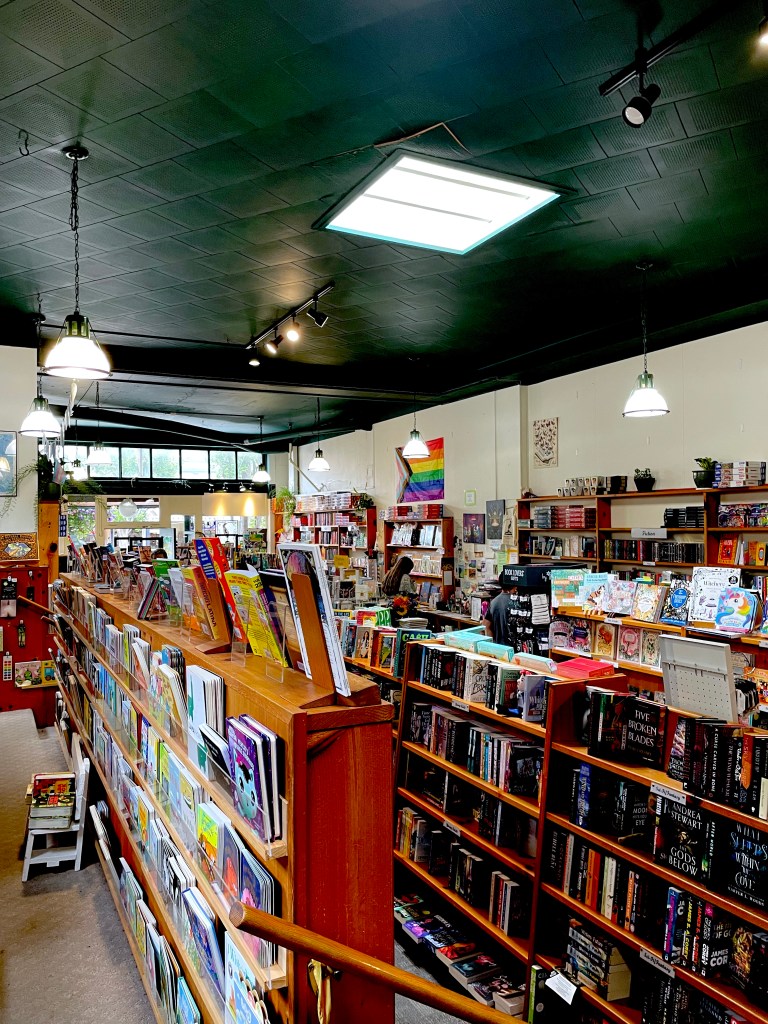
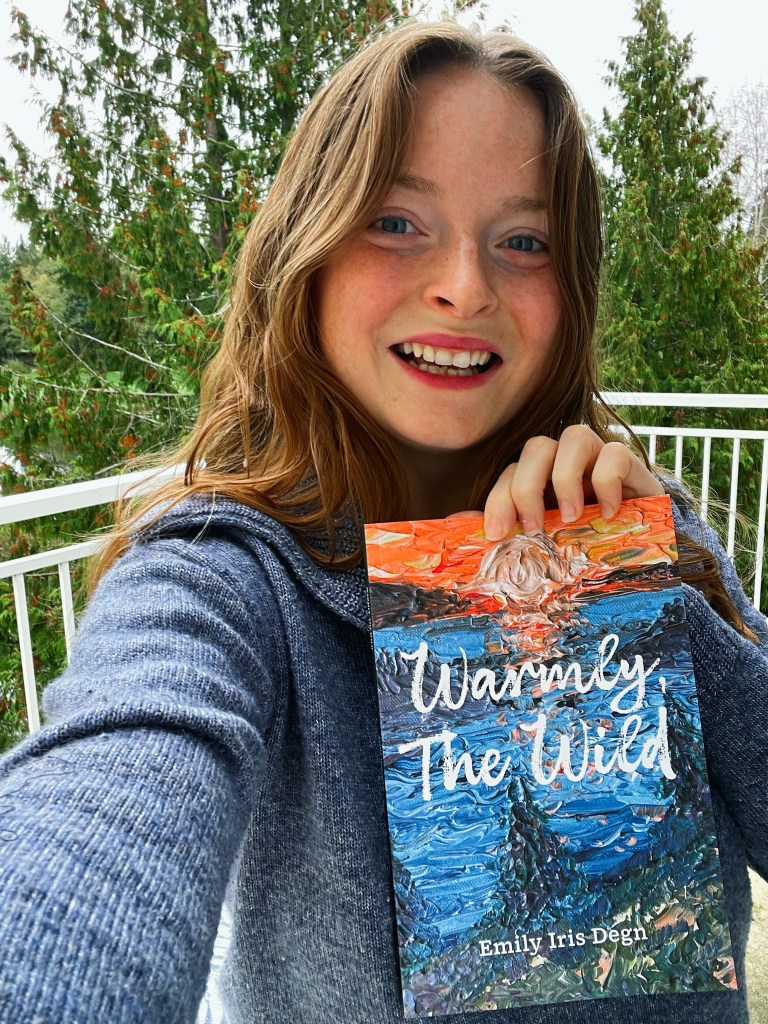
Released on Oct. 17, 2025, I’m pleased to say that “Warmly, The Wild” is now available online at every major book retailer (Barnes & Noble, Waterstones, you name it), e-retailers (Amazon, Walmart, etc.), and independent bookstores across the world. I’m especially excited about it being stocked in the latter, as I grew up practically living in my local indie bookshops. Powell’s, a Portland staple and the world’s largest independent bookstore, has “Warmly, The Wild” in stock, for example.
Here’s where you can shop for “Warmly, The Wild”:
https://www.emilyirisdegn.com/published-writing/shop-warmly-the-wild
Here’s how you can support “Warmly, The Wild”
- Repost, share, like, save, and comment on posts made by the “Warmly, The Wild” Instagram and TikTok accounts (and follow)
- Write, call, or go into your local independent bookstore or Barnes & Noble to ask for them to stock “Warmly, The Wild” on shelves (while many list it on their websites, it takes demand from readers for them to invest in physical copies)
- Keep an eye out for in-person author events listed on my personal website or social media
- Buy a copy of “Warmly, The Wild”
- Rate or write reviews of “Warmly, The Wild” on bookseller sites
- Review “Warmly, The Wild” on reader apps like Goodreads
- Post pictures of your copy of “Warmly, The Wild” or if you see it in the wild, tagging the book’s social media accounts
- Tip me, the author, to fund book tours (yes, that’s in the works!)
- Recommend the book to your people the old-fashioned way
- Visit the places or ecosystems discussed in “Warmly, The Wild” and post a picture (remember to tag the account)
- Use the hashtag #warmlythewild
- Share this article, the author profile published by the Anacortes American, or other write-ups you see online
- Ask your library to offer copies of “Warmly, The Wild”
- Submit the book for awards or literary recognitions, as applicable
- Suggest the book as a read for Booktokers and Bookstagrammers in their comments
 Blinter Magazine