

By Keri Stewart
Perfect for frolicking and birdwatching, the Angarnsjöängen Nature Preserve is a beautiful spot to visit during the summer. A majesty of nature located in Vallentuna, Sweden, this natural area features beautiful grasslands grazed by cows, Lake Angarn, and bird-friendly meadows.
Between the wetlands and grasslands, a multitude of birds can be spotted throughout these habitats. In part from local restoration actions, up to 250 species inhabit this area annually, making this spot a prime birding hotspot.
Breathtaking beauty of avian wildlife. The joys of basking in the summer glow of tranquil environments. Angarnsjöängen has more than enough delights to soothe your nature-loving desires. Let the leisure of existing in nature be your guide during your birdwatching.
What is the Angarnsjöängen Nature Preserve?

As you go through the Angarnsjöängen Nature Preserve, you will pass through a circular path, leading you through whimsical biomes and pleasing panoramics from start to finish.
This circular path, known as the Sjöängsslingan Trail, is just under 7 kilometers, a hardy but doable-length hike. Additionally, it loops around the entire lake so you can see every angle of interest that the preserve offers.
Waking up to bird song: the feat of Angarnsjöängen
One thing that makes this preserve stand out from others is the fact that you can camp here for up to two days in a row (in designated areas). Imagine yourself waking up to the charms of bird song, the arrangement of pitches splashed throughout a green scenery.
You could find yourself spending a whole weekend here discovering the differences of avian wildlife from day to night. Camping here offers a chance to be perceptive of nature’s routine, to notice the specific times birds prefer and how their chorus changes throughout the day.
Observing Lake Angarn’s wildlife: birdwatching towers
However, if you’re not a fan of camping, there is a tower for viewing wildlife that can make it easier for you to cross off another species on your life list. The observation tower has accessible features: a wheelchair ramp and benches to catch your breath on.
Between the scenic landscapes to its wonderful trail features, the Angarnsjöängen Nature Preserve is a fantastic spot for birdwatchers and nature-lovers alike.
What birds can you find at Angarnsjöängen?
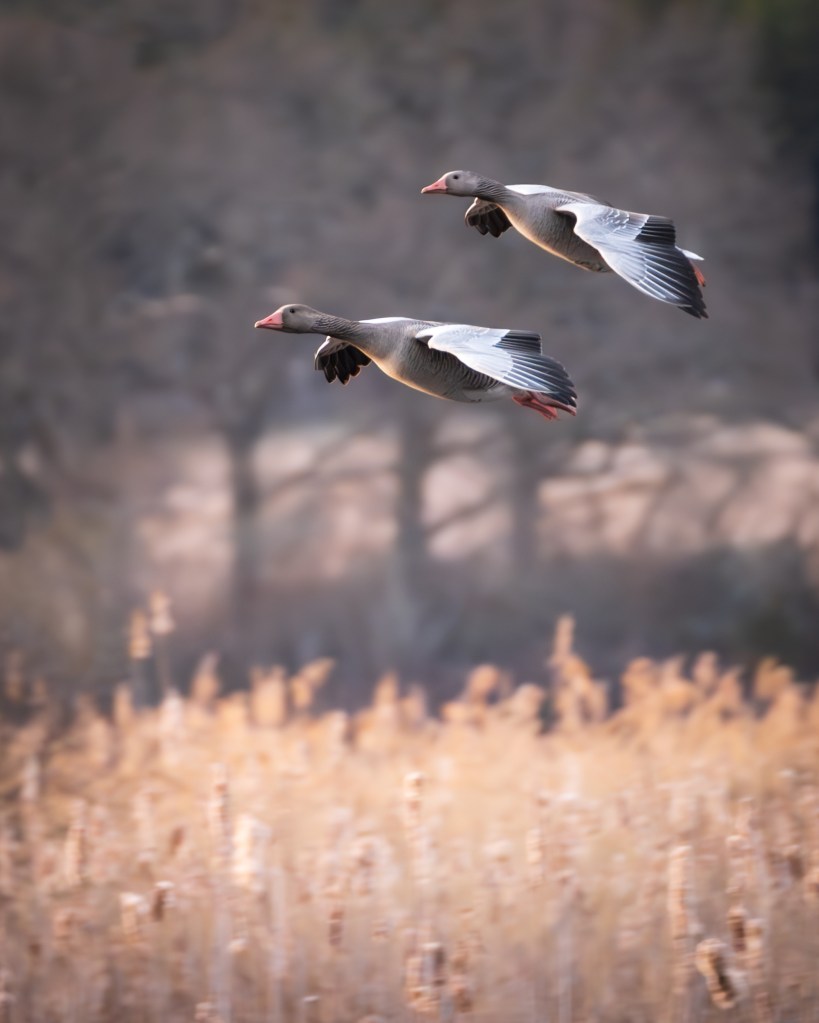
In August at Angarnsjöängen, you can find a variety of waterfowl, passerines, birds of prey, and more. As a result of the mix of grasslands, wetlands, and nearby forests, this environment offers multiple habitats, ensuring rich birdlife.
Ebirders have most frequently noted the Greylag Goose, Green-winged Teal, Northern Lapwing, and Eurasian Jackdaw to be present during this month.
Though you will likely find many other species as well: the Western Marsh Harrier, Northern Lapwing, Common Redshank, and Western Yellow Wagtail may soar overhead or traipse the outskirts of Lake Angarn.
The variety of avian wildlife present at Lake Angarn presents a wonderful opportunity for birdwatchers to travel to Sweden. Between the whimsical views and the stunning birdlife, Angarnsjöängen Nature Preserve is sure to inspire gratitude for the simple pleasures in life.
How restoration improved Angarnsjöängen’s birdlife
Though there are many birds at Lake Angarn now, this number wasn’t always as high. Birdlife at Lake Angarn has improved in part from restoration efforts to the lake and surrounding wetlands, a testament to the gratitude that habitat restoration can have on wildlife and those that visit.
What disrupted avian populations?
The emergent water vegetation had taken over avian breeding grounds in many Swedish wetlands, including Angarnsjöängen Nature Preserve, leading to declines in birdlife.
In a 1999 study by Svante Söderholm and Kjell Eriksson, fast growing vegetation and willows disrupted the shoreline that many birds, such as dabbling ducks, utilized for breeding and nesting seasons. Without the open area, the birds had less habitat for their vital behaviors.
Restoration’s impacts on Swedish wetland environments
Once researchers realized emergent vegetation disturbed avian breeding grounds, they made efforts to restore the wetlands, and thus, help preserve avian populations.
Ineta Kačergytė et al. 2022 explored how restoration impacted wetland environments. By producing natural floodings (through hydrological modifications and clearing space by removing emergent vegetation, these researchers witnessed a positive response from avian wildlife.
With more space for breeding and nesting, wetland birds were shown to have a clear, positive relationship with restoration.
One of the interesting things about this study is that they included grazing as a part of wetland restoration in regards to opening nearby meadows. At Angarnsjöängen Nature Preserve, there are cows that graze the wetlands’ meadows. It’s no surprise that the environment is doing well.
Though the cows’ origins are unclear, it is an insightful connection to make between the wetland restoration study and the cows that graze at the preserve.
By opening up space for avian wildlife on the shores and surrounding wetlands, researchers discovered that birds increase in abundance. Dabbling ducks, waders, and other waterfowl are no longer overrun by the emergent vegetation.
Just as these studies show: when individuals come together over a cause, the impacts can be sublime. Their observations, critical thinking, and experiments have not only helped Swedish wetlands and birdlife but also inspired others to help preserve and restore our planet.
The beautiful bird populations that you will see at Lake Angarn are something to admire, to cherish, and to feel grateful for, as these environments are healthy and the species are abundant. They are thriving, they are living.
A walk around the Sjöängsslingan Trail isn’t just a walk around the lake, but a walk into life.
 Blinter Magazine