

By Keri Stewart
Along the coasts of Oregon, beaches, estuaries, and seaside environments harbor a handful of natural areas, such as Haystack Rock, for birders and nature enthusiasts alike. These coastal destinations, adorned by shorebirds, waterfowl, and passerines, can light up your vacation.
Featuring tranquil panoramas and a gentle breeze, the coasts of Oregon make the perfect summer trip, especially considering its mild weather and minimal rain.
Paul Lask, environmental writer and host of the Oregon Coast Birdcast, shares, “One morning on a beach run, we spotted a whimbrel family. Another, the plovers, scurrying to and from the tideline. Seven pelicans like bomber aircraft arrow down to the sea surface.”
There are plenty of seabirds to observe along the coasts of Oregon.
Frolic on the beach with your binoculars. Dip your toes in some tidal pools. Just make sure to stay away from designated conservation areas, as many shorebirds could still be nesting in July. As birders, it is your job to admire (and protect) avian wildlife.
What birds are at Haystack Rock in Cannon Beach?
Birdwatching allows you to travel to exciting areas to explore an abundance of species and landscapes. At Cannon Beach, you’ll be confronted with the vastness of Earth as you stand before the towering figure of Haystack Rock.
Surrounded by tidepools and rich wildlife, this monolithic landform, home to many bird colonies, is a wonderful place to go birdwatching.
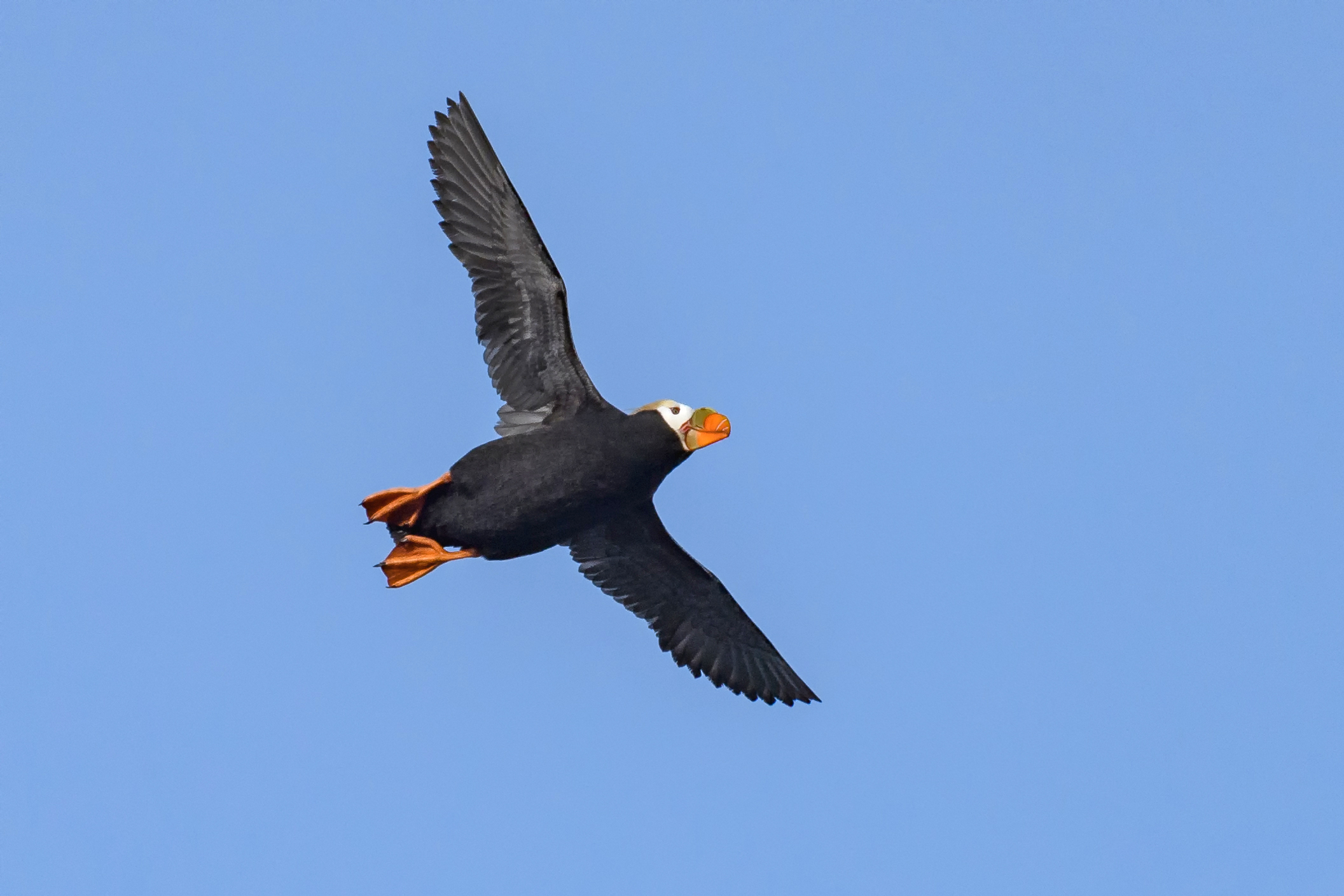
On the south side: Pigeon Guillemot and Black Oystercatchers. On the north of Haystack Rock: Common Murres and Tufted Puffins. This place is truly a seabird haven.
Regarding eBird, birders have often witnessed Common Murres, Western Gulls, and
California Gulls in July, so be sure to keep your eyes down low and also up towards the sky.
These seabirds, likely still nesting in July, will be in large groups (or colonies) on or around the rock. However, many will be flying overhead or far into the horizon.
Lask, reminiscing on coastal birdlife, shares his treasured perspective: “I love the powerful swells, the hazed headlands, how birds making a go of it along the craggy coastline bring to mind hardiness, togetherness, and endurance.”
Birdwatching is not only a discovery of vigor but of the beauty of nature, of surviving and truly living despite obstacles, like human disturbance to Cannon Beach’s coastlines.
Visiting the Necanicum Estuary Natural History Park
Birding in Oregon is like witnessing “the seasonal markers, [the] flying links in a chain of change,” shares Paul Lask, and at the Necanicum Estuary Natural History Park, the tidal wetlands and coastal dunes are prime spots for ever-changing beauty, specifically nesting season shenanigans.
The park’s flowing tides offer an oasis, an insight into the peace of natural beauty. Likewise, the park’s mixture of saltwater and freshwater fuses nature with biodiversity, enhancing the lush beauty through variation.
In July, the park is home to Black Oystercatchers and Harlequin Ducks in the water, along with Peregrine Falcons soaring overhead.
Additionally, Ebirders have spotted Caspian Terns, Western Sandpipers, Western Gulls, and Semipalmated Plovers in the area, making it a wonderful spot for viewing seabirds and shorebirds.
Considering that nesting season persists throughout the summer, it is vital to be cautious of your surroundings: many coastal birds, including plovers, have hard-to-see nests, and their young can camouflage quite well into the speckles of sand. Be sure to watch your step!
Perfect for curious birders, the Necanicum Estuary Natural History Park captures the fluid wonders of wildlife and the cyclic nature of life. Be curious and be there.
Habitat disturbance of Oregon’s coastal areas

It’s not news that Oregon’s coastal areas are suffering habitat disturbance. Worldwide, this process is affecting a multitude of environments, leading to the loss of rich vegetation and wildlife.
About 90% of Oregon’s coastal dunes have been altered since 1850, and a variety of other habitats are changing as well. Many of these areas face the risk of ecosystem destruction.
Though the weather can negatively impact habits, such as with coastal erosion, a lot of the damage can be traced back to us and how we involve ourselves in each habitat.
What is disturbing coastal habitats?
As simple as an unleashed dog coming across a plover nest, a group of tourists walking in restricted areas meant for conservation, or even a wrong step.
We are disturbing coastal habitats. Over half of Earth’s landscapes have been altered, and of coastal areas, only 15% remain intact and unaffected by human disturbance.
Apart from the individual level, on a larger scale, our species is disturbing coastal habitats: federal policies can have disastrous effects on the environment.
Whether it is through weakening coastal states’ rights to review local policies, such as with the proposed Coastal Commission Accountability Act, or by cutting funding to federal conservation programs, environmental harm happens both locally and intrastate.
The implications of environmental disruption
Loss of biodiversity. A hole in the food web. Habitat disturbances can erupt like a plague on the ecosystem. It’s like a butterfly effect of harm.
This disruption is especially dangerous during vacation season, as this period coincides with nesting season in Oregon. The nests, eggs, and chicks are vulnerable to any tourists trampling around.
As a result of environmental disruption, different species can be harmed, and an entire ecosystem can be transformed in a detrimental way.
How to bird in coastal areas without disturbing the environment
It’s important to be cautious and aware when you are birding. There are a handful of actions you can take to prevent excessive disturbance to the environment and its species:
- Be careful where you step. Eggs and chicks can be hard to see, especially in the sand, due to their camouflage.
- Follow all posted signs. Do not go into off-limit areas. Even if you see a really cool bird in the distance, it is important to respect all posted signs to avoid trampling or disrupting wildlife.
- Make sure to leash your dogs. They may end up disturbing a nest, and they look like predators to birds.
- Leave no trace. It is a risk to leave trash as an animal can consume whatever is left behind, and it can change the structure of the environment.
- Do not make unnecessarily loud noises, especially near nests, as this can scare the birds. This includes playing bird calls, as this can cause confusion and interfere with natural behaviors.
Remember that we are visitors, we are exploring the area and admiring the aesthetics of life, the beauty of birds.
By focusing on ways you can prevent habitat disturbance while birding and learning about ways to improve coastal conservation (locally and globally), akin to how Oregon Shores is proceeding, you can help preserve coastal ecosystems.
 Blinter Magazine