
By Keri Stewart
Growing up in the suburbs of Massachusetts, I was fortunate enough to have a backyard home to a variety of native shrubs, trees, and perennials, planted courtesy of my dad. These plants made the area inviting to more birds than I can count on my hand.
On days when traveling feels too extreme, I wander into my backyard to glimpse avian panoramas. There is an abundance of New England bird calls. In summer, many pass overhead, soaking in the sunlight.
On days when I seek adventure, I travel to my favorite natural areas with my binoculars and birding apps, eBird and Merlin Bird ID. Whether it’s in my own town or another state, birdwatching in New England is the quintessential hotspot for observing spring migration.
In my own experience of hiking through parts of Massachusetts, New Hampshire, and the Rachel Carson Trail in Maine, I have trekked a range of habitats speckled with avian diversity.
The echo of an Ovenbird call as it hops along the forest floor; the still silhouette of a Great Blue Heron tall in a salt marsh; the pitter-patter of a Piping Plover dashing on coastal sands… the grand ecosystem diversity of New England offers a chance to see a medley of species, depending on which biome you explore.
How birding connects me to nature

I always find it so breathtaking exploring different biomes. There’s something to enjoy about every biome: varying wildlife, varying plant life. The surprises of nature keep me on the edge of my seat. They draw me close and allow me to feel grateful for all I’m witnessing.
There is progress in the feelings birdwatching inspires. All the sights and sensations hone a sense of connection to nature, a sense of peace, and awe. While birdwatching, I am able to hold onto those feelings by exploring different habitats and witnessing a variety of species; it keeps me calm and engaged.
My favorite birdwatching biome: What to expect birding in salt marshes

Through tall grasses and muddy wetlands, I’ve discovered my favorite biome for birdwatching: the salt marsh.
Best visited on a sunny day, arms out and soaking up the warmth, salt marshes bring a little extra life to birdwatching trips. In these coastal wetlands, the refreshing scent of salt, that lingering beach aroma, emanates through the air: liveliness; vigor. The cool winds, scents, and scenery are enough to keep a birder at bay, especially considering the selection of waterfowl, shorebirds, and passerines present in this biome.
The first-ever salt marsh I explored in New England was the Lubberland Creek Preserve in Newmarket, New Hampshire. Connecting to the Great Bay where salt and freshwater meet, this inviting preserve features a great array of wildlife and a spongy layer of peat and mud to walk atop. When the tides are low, the preserve features a drop into muddy wetlands where many birds, such as Greater Yellowlegs, can be found bathing. When the water is higher, I’ve seen Great Blue Herons hunting for fish.
I visited Lubberland Creek Preserve this past April, where I saw a Northern Harrier flying above. Surrounding me, the shrill of red-winged blackbirds echoed from the tall grasses. There’s something special about how all the senses are invited into salt marshes, not just with Lubberland Creek Preserve but also with the Rachel Carson National Wildlife Refuge in Maine.
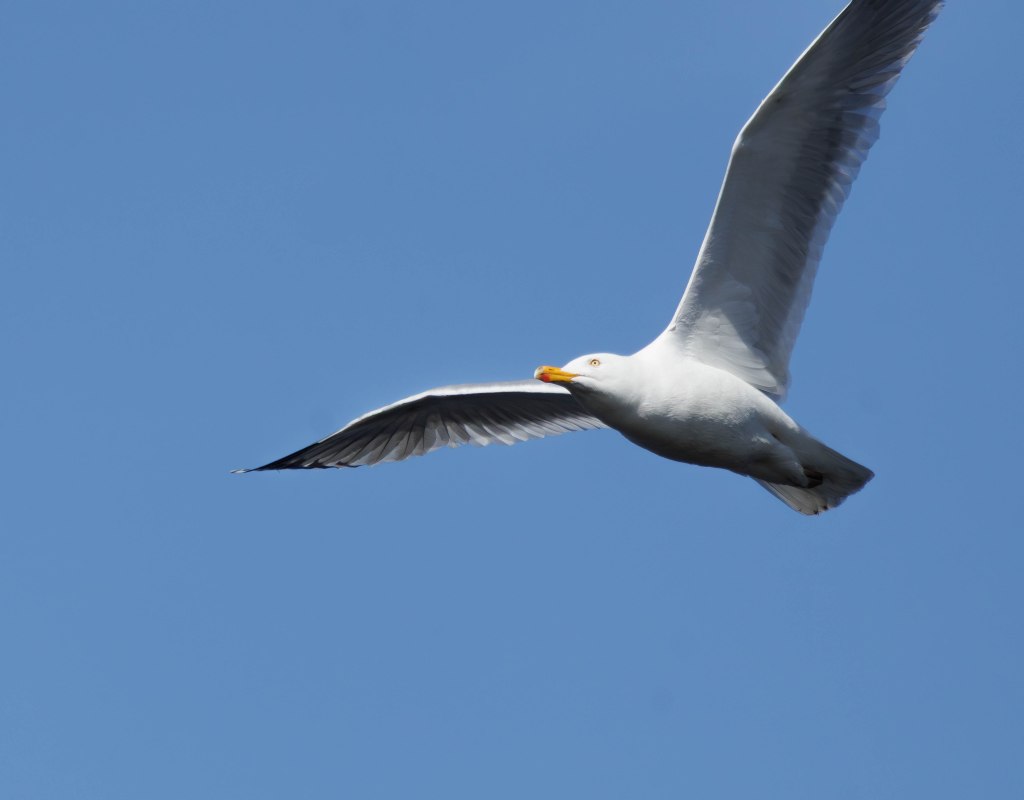
At this wildlife refuge, wooden paths overlook the beautiful salt marsh. Though not as immersive as Lubberland Creek, it makes up for engagement in the carefully constructed paths and rest stops with the perfect view for spotting wildlife. I’ve never visited the Rachel Carson NWR in June; however, when I visited in September, I found Snowy Egrets, Great Egrets, Great Blue Herons, and Greater Yellowlegs. I had never seen any kind of Egret before this location, so I felt truly in awe. Visiting in June, eBird lists that the American Herring Gull, Dunlin, Canada Goose, and Black-bellied Plover have been most frequently counted at this location.
I would love to travel to the Rachel Carson NWR again in the future, as the sun gleaming on the distant salt marshes is truly a pleasure. These biomes invite not only nature enthusiasts but also wildlife lovers like birdwatchers. One of the great things about salt marshes is the richness of wildlife where salt and freshwater meet.
Multiple biomes and species: Why you should visit diverse ecosystems

While on a guided tour for birdwatching, a guide had mentioned, “More biomes offer more species,” and I realized that if I wanted to find an assortment of birds, I had to travel to areas with multiple biomes.
In New England, specifically Central Massachusetts, I’ve found that River Bend Farm in Uxbridge and Hopedale Pond are great examples of this phenomenon. River Bend Farm, a popular walking spot, features woody forests, an open field, some distant wetlands, and parts of the Blackstone River. Though these biomes are commonplace, the juxtaposition of them creates a rich array of wildlife.
Perched in shrubs, I’ve found Song Sparrows calling to attract mates and Gray Catbirds letting out a playful, raspy call. Looking beyond the shrubs, Baltimore Orioles, Rose-breasted Grosbeaks, and American Goldfinches are letting out their beautiful songs. I recommend listening to the Rose-breasted Grosbeak’s song, as that one is particularly pleasing.
At River Bend Farm, the entrance has a bridge where you can go left or right. Upon going left, it heads towards the Blackstone Canal, where I’ve found a handful of Yellow and Yellow-rumped Warblers against the mesh of trees. Taking a right towards the open field, Barn Swallows constantly swoop down and soar back up. This area features a perfect field for picnics and birdwatching, along with an extension of secluded trails to explore wet and grassy areas.
Once I finished observing the field, I made my way down the main path on the right, following the Blackstone River. This area offers the chance to spot lots of backyard birds, like Downy Woodpeckers and Northern Cardinals, and some spring migrants, such as many kinds of warblers. The variety of avian species present in this location makes it appealing, and I’ve noticed a similar range while visiting Hopedale Pond.
At Hopedale Pond, there are a handful of color-coordinated trails that lead through the woods. Some paths go along the water, whereas others go deeper into the woods or near some train tracks. The first attraction is the pond where huge flocks of Canada Geese can be seen. They are usually more protective of their area during this time due to their newly treasured goslings; however, watching from afar, I’ve observed their behavior and witnessed many goose-on-goose arguments.
Besides the Canada Geese in the pond, I’ve seen Green Herons at the start of dawn atop lily pads and fallen trees. Though this was later in the summer, it’s possible to still find them in May. Besides waterfowl and wading birds, deeper in the forest, I’ve seen Eastern Phoebes, Northern Flickers, European Starlings, and many backyard birds scattered throughout the woody trails.
Just when I thought I had already seen a handful of species, I managed to find Spotted Sandpipers towards the end of the blue trail on muddy wetlands. I felt in awe seeing the shorebird at the edge of the pond, skittering across the shallow water.
There’s something amazing about how all these different birds can be present in one natural area just because there’s an array of biomes. The way the trees, climate, and environment can influence which species are present amazes me, and as a birder, I feel excited to discover birds’ preferences for where they call home. If you ever get the chance to explore a diverse ecosystem, I highly recommend it because you’ll be surprised by what you find.
Waterfowl palooza: Birdwatching at Massachusetts’ lakes

Sometimes when I go birdwatching, I don’t want to see everything, and I am on a quest for just one thing: to see some waterfowl. When I’m in the mood for a waterfowl palooza, I head down to my favorite lakes: Chauncy Lake at the Westborough WMA and popular fishing spot, Whitehall Reservoir.
Chauncy Lake holds a panoramic view of waterfowl year-round, bordered by rocky trails and plentiful trees. The only times I visited Chauncy Lake have been in the winter, when I’ve seen Mute Swans, Hooded Mergansers, Common Mergansers, and a single Pied-billed Grebe. Outside of my own scope of knowledge, White-winged Scoters, Double-crested Cormorants, Wood Ducks, and Buffleheads have frequently been observed in May, as of eBird.
I love visiting this lake because I get to see waterfowl I don’t usually see in my hometown; I tend to only see Canada Geese in my town’s lake. Lakes are an excellent spot for finding waterfowl due to how desirable the environment is for them. With spring migration finishing, it’ll be exciting to travel to these lakes again to discover new water birds taking a dip or a dive.
Birdwatching as a source of community engagement
In my junior year of college, I joined the University of New Hampshire Birders and discovered a new side to birding. The club had bird-focused activities like bird Valentine cards and trivia. We also went on College Woods bird walks, such as the Barefoot Bird Walk that collaborated with the UNH Outing Club, and even off-campus trips where an Audubon member guided us on a local trail.
Before the club, I typically went birding alone. During, I went with people who shared a common interest—people who knew their stuff. I learned that those group trips were a great experience to add on to my solo birding.
How birders can help each other grow
During UNH Birder trips, I explored novel areas and discovered species I hadn’t seen before. For instance, during their Audubon-guided tour, I saw my first Rose-breasted Grosbeak and learned how to identify a Turkey Vulture flying above: their V-shaped wings look like a clothes hanger.
Collaborating with other people enabled me to share information and, thus, grow as a result of the knowledge shared back with me. I learned about local birding spots along with identification tips I wouldn’t have known about otherwise.
Besides getting to hear from more experienced birders, I got to be surrounded by like-minded individuals. It was a nice change of pace from birding alone and allowed me to make more connections.
Inspired by UNH Birders: Traveling College Woods and the Oyster River Trail
UNH Birders frequently host walks throughout College Woods, 250 acres of forests and many different trails near Oyster River. This natural area, often used for UNH educational purposes or recreational activities, is a perfect spot for birding.
After having gone on some walks with UNH Birders, I slowly learned to navigate through the woods, and I felt comfortable enough navigating it myself (College Woods is a lot larger than I imagined). Though I haven’t explored later in May myself, throughout my semesters at UNH, I’ve witnessed many warblers, woodpeckers, and hawks. I’ve even seen Turkey Vultures flying overhead and Hermit Thrushes hopping along the ground.
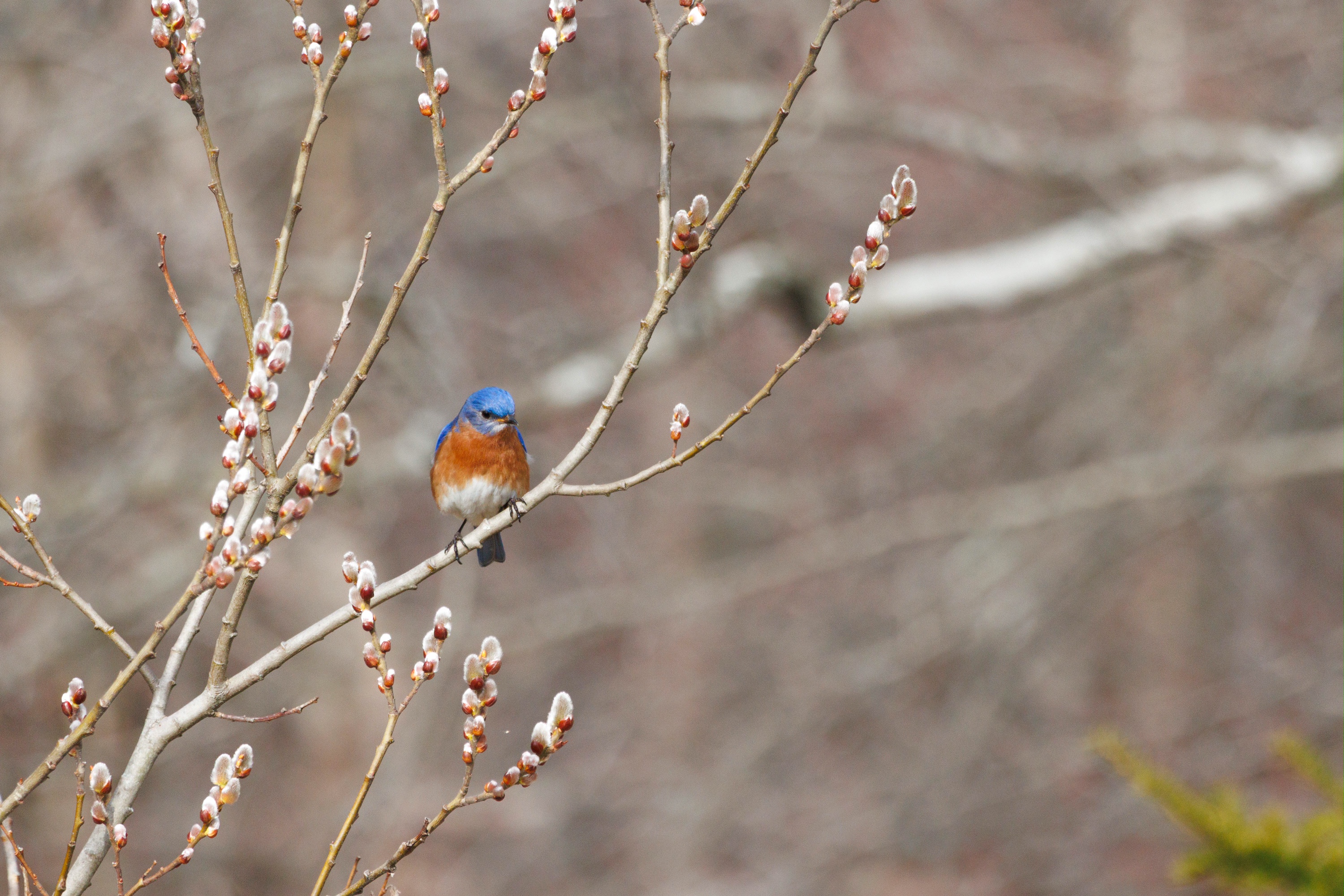
My favorite part of College Woods is following along the Oyster River Trail. In doing so, there is a small field, dotted with scattered trees, that looks out at the river. On sunny days, that area is my favorite place to soak up warmth while birding. There’s something special about seeing Song Sparrows and Eastern Bluebirds during those days. It’s peaceful yet invigorating.
Further along the trail, there is a bridge that crosses the Oyster River and follows it even as far as off-campus. The gurgling sound of the river is refreshing, and at those spots where the water is more rapid, I have seen a Louisiana Waterthrush hopping on different rocks.
Bound for the open field, far beyond the UNH campus, I have discovered the Young Forest & Shrubland Restoration Area about 2 or so miles deep into my hike. This shrubby grassland area, bordered by Sparrow-swarming shrubs and a small stream that Wood Ducks like to relax in, is my favorite part of the Oyster River Trail. The lively panorama of greenery and wildlife is captivating, especially on a warm sunny day.
After hiking for a while, it is rewarding to be able to bask in the wonders of this natural area and explore the many warblers, sparrows, and backyard birds lingering between branches. On a lucky day, I spotted a Scarlet Tanager and an American Kestrel. The College Woods and Oyster River Trail remind me of how precious nature can be. It’s a gift to be able to pause and take a moment to feel grateful for my surroundings. Witnessing wildlife is noteworthy. An extraordinary feat.
Whether at a nature reserve in New England or somewhere more local to the individual, birding is something everyone should do at least once to stay present (and grateful) in the moment.
 Blinter Magazine
Leave a comment