
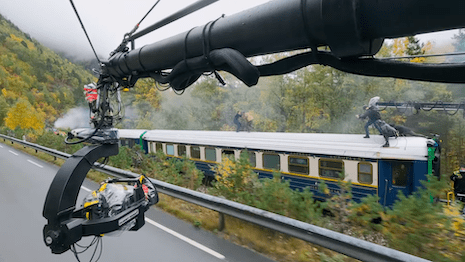
Cinema has always thrived on illusion—deserts built on sound stages, entire cities conjured in digital space, sunsets crafted from gels and rigged lights. But the effort to create these illusions is far from invisible. As the climate crisis intensifies and audiences grow more conscious of the environmental impact behind the scenes, the film industry is being called to account. Can moviemaking become more sustainable without sacrificing the artistry that defines it?
From high-profile blockbusters to independent features, productions are reevaluating not only how they shoot, but what they build, where they go, and what they leave behind. The conversation is not simply about choosing between green screens and natural light, but about redefining sustainability as both a logistical and artistic ethos.

Understanding the carbon footprint of film production
A single tentpole film can generate an estimated 2,840 metric tons of CO₂ emissions—roughly equivalent to 611 cars running for a year. The bulk of these emissions come from transportation (moving cast, crew, and equipment), energy use on set, and the construction and disposal of sets and props.
Even on smaller productions, the footprint is felt: diesel generators hum day and night, catering waste piles up, and crew members fly between cities for brief location scouts. Despite the glamour, filmmaking remains a resource-intensive endeavor.
Are digital sets and virtual production more sustainable?

Virtual production has emerged as a possible antidote. Most famously employed in The Mandalorian (2019), the use of StageCraft’s LED Volume allowed creators to build immersive digital environments projected onto massive LED walls. Actors performed in front of dynamic, photorealistic backdrops rendered in real time, replacing the need for travel-heavy location shoots.
The environmental advantages are clear: less travel, fewer materials, and greater control over energy usage. These enclosed environments also allow for energy-efficient lighting and minimal weather delays, which can mean fewer reshoots and a shorter schedule.
Yet even this innovation brings its own sustainability caveats. LED stages require significant electricity, and large-scale rendering relies on power-hungry data centers. If not offset by renewable energy, the digital shift simply exchanges one form of consumption for another.
Artistically, some critics argue that virtual production, while visually impressive, risks homogenizing the look of cinema—offering polished but sterile environments that lack the spontaneous imperfection of the real world. This aligns with research from UC Berkeley scientists, who identified a visual mechanism called “ensemble lifelikeness perception,” suggesting that humans are remarkably attuned to spotting when something feels subtly artificial, even in highly polished digital content.
The environmental cost of practical sets in filmmaking

By contrast, Barbie (2023) leaned hard into physical world-building. Its production design team built life-sized Dreamhouses drenched in bold color palettes, eschewing virtual trickery in favor of theatrical, practical spectacle.
The film’s signature shade of fluorescent pink caused such high demand that it reportedly contributed to a global shortage of that particular Rosco paint, exacerbating existing supply chain issues tied to extreme weather and pandemic disruptions.
Practical sets offer undeniable benefits: textured realism, actor immersion, and unique visual signatures. But they often come at the cost of waste. Temporary builds are frequently discarded after production wraps, and materials used, especially plastics, foams, and treated wood, are not always recyclable or biodegradable.
Films like Mad Max: Fury Road (2015) and The Revenant (2015) also illustrate the environmental tension of location-heavy shoots. Fury Road used practical effects and real stunts across the Namibian desert, but drew criticism for ecological disruption. Meanwhile, The Revenant insisted on using only natural light and authentic wilderness locations, resulting in an extended shoot that saw the crew travel across three countries due to weather unpredictability. These case studies demonstrate the aesthetic payoff—but also the sustainability complexities—of immersive, practical filmmaking.
Hybrid filmmaking: Combining practical and digital production
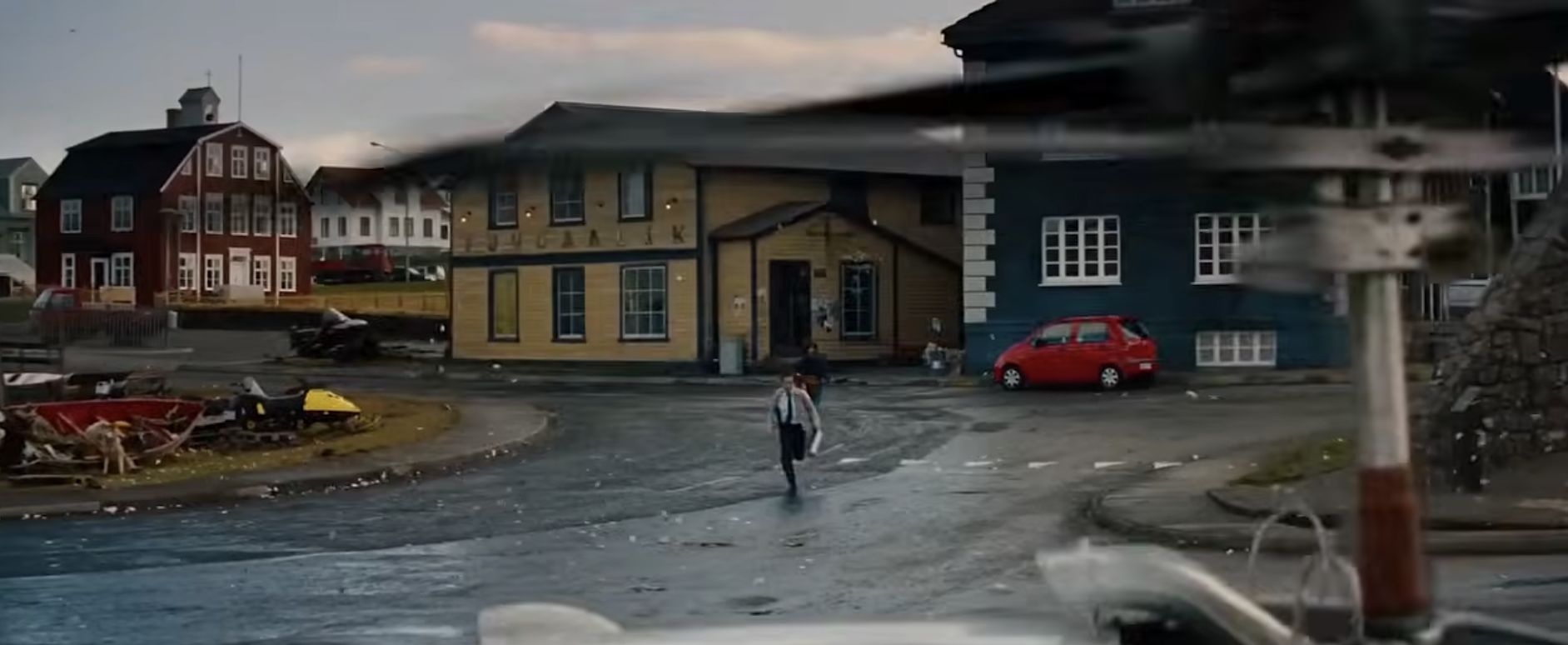
The future likely lies in hybrid production models—combining the tactile presence of real sets with the efficiency of digital extension. Films like The Batman (2022) and Dune: Part One (2021) exemplify this approach, using practical environments as a base while digitally enhancing scale, atmosphere, or landscape in post-production. This differs from productions like The Mandalorian, which rely more heavily on virtual environments rendered in real-time on LED volumes. While both methods integrate digital technology, the former is grounded in physical production design, preserving the texture and realism of real-world materials.
Another notable example is 1917 (2019), a film designed to appear as one continuous shot. It used carefully choreographed set pieces blended with visual effects, balancing authentic location shooting with digital transitions to maintain immersion while minimizing unnecessary crew movement.
Another technique gaining traction is digital previsualization. Previsualization—often shortened to “previs”—is the process of creating visual representations of scenes before actual filming begins, using storyboards, animatics, or real-time 3D rendering to plan out camera angles, movement, lighting, and composition. Using tools like Unreal Engine, filmmakers can now “walk through” a virtual set during preproduction to map out shots, blocking, and lighting. This reduces costly on-set experimentation, saves materials, and tightens shoot schedules.
Beyond carbon: social and environmental sustainability in filmmaking
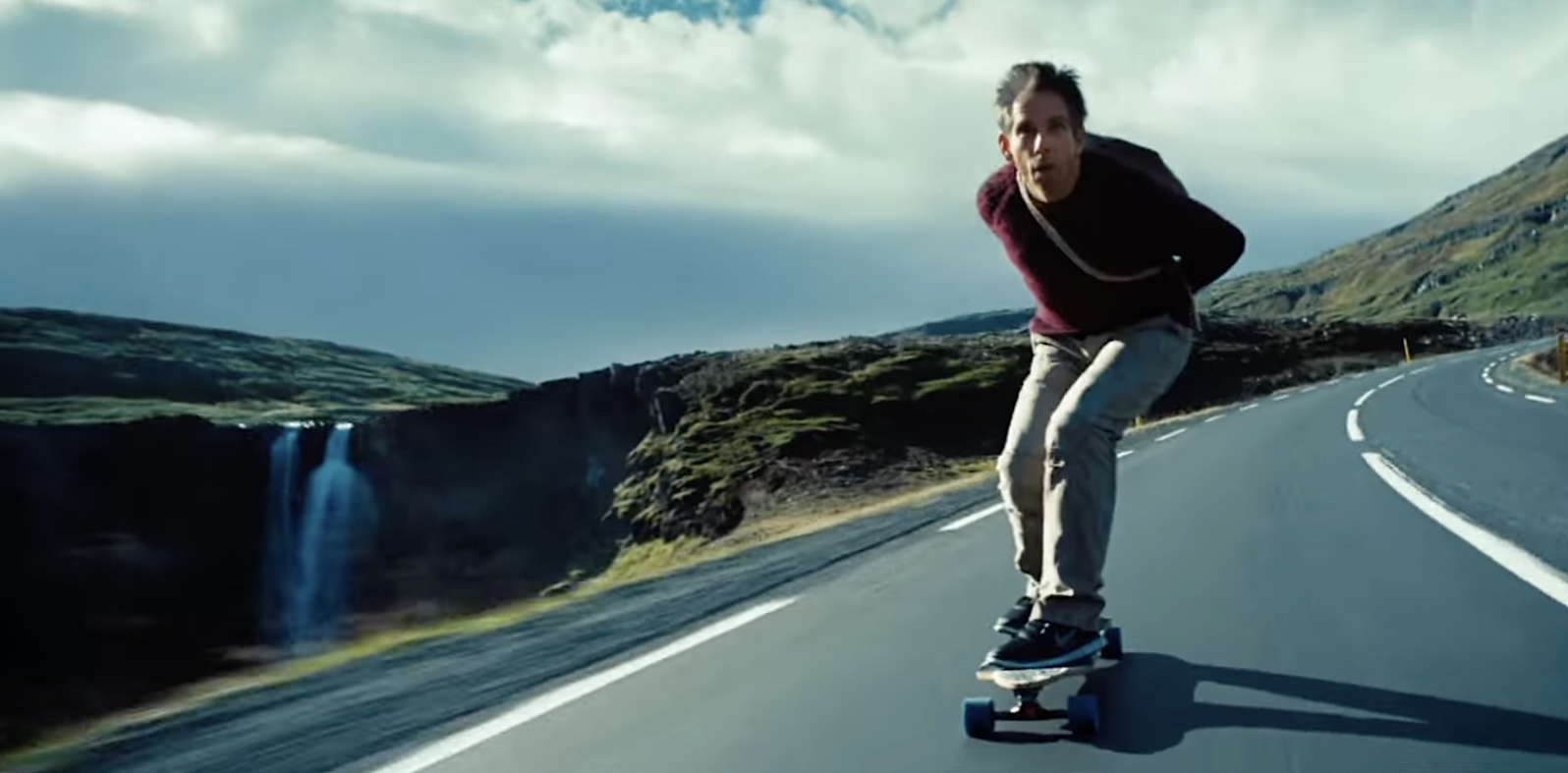
True sustainability in filmmaking expands beyond emissions to address social, cultural, and economic equity.
1. Location responsibility and local economies
Productions that invest in local crews, hire regionally, and respect land agreements contribute to economic sustainability. Conversely, shoots that displace communities or degrade ecosystems do lasting harm.
2. Infrastructure and design for sustainability
Internationally, the UK’s BAFTA-backed Albert initiative is one of the most widely adopted sustainability programs in film and television. It offers a carbon calculator, crew training, and a certification system to help productions measure and reduce their environmental footprint.
Some film studios are incorporating sustainability directly into the bones of their production facilities. New soundstages are being constructed with energy-efficient insulation, smart lighting systems, and stormwater management strategies. Rather than shipping in custom materials, some design teams are opting for local sourcing to reduce transport emissions. There’s also a shift toward using reusable set walls and scenic elements that can be stored and reconfigured instead of demolished after each shoot. Programs like the Producers Guild of America’s Clean Energy Initiative support these transitions by offering best practices and resources for incorporating renewable energy sources, battery storage, and emissions tracking into film infrastructure.
3. Material reuse and prop circulation
Film productions are increasingly exploring resource libraries where costumes, props, and set pieces can be checked out and returned, similar to a lending library. Some studios maintain in-house prop inventories that service multiple productions, reducing the need to fabricate new items from scratch. Wardrobe departments are also leaning into textile recycling and renting, especially for background costumes and accessories that are worn only briefly on screen. For productions aiming to meet verifiable environmental standards, the Environmental Media Association’s Green Seal offers certification based on criteria like waste reduction, efficient energy use, and sustainable sourcing across departments.
4. Smarter transportation logistics
Transportation remains one of the highest-impact categories in production. A report by the Sustainable Entertainment Alliance highlights that fuel use, encompassing both transportation and on-set generators, is often the primary contributor to a production’s carbon footprint. Some shows have begun clustering shoot locations to reduce the need for daily transport. Others are replacing gas-powered vehicles with electric vans and encouraging crew carpooling and public transit. Where flights are unavoidable, a few productions have implemented emissions tracking tools to better understand and reduce their carbon output over time.
5. Water and waste systems
From refillable water stations to composting food scraps on set, productions are rethinking daily resource use. Some have even created positions like “Sustainability Coordinator” to oversee these practices. These individuals work across departments to ensure recycling is sorted properly, leftover food is donated, and minimal-waste protocols are followed in catering and craft services.
Rethinking filmmaking for a sustainable future

The move toward sustainable filmmaking is not a constraint on creativity—it’s a provocation. When natural resources are finite, when emissions have consequences, and when global audiences demand accountability, filmmakers are pushed to think differently. In many ways, this moment mirrors past technological transitions—from black and white to color, silent to sound, analog to digital.
What could a cinema of sustainability look like? Maybe it’s a film that reuses old props with clever reinvention. Maybe it’s a story designed to unfold in a single, unbroken location. Maybe it’s a hybrid animated/live-action piece shot entirely on solar-powered rigs.
None of these ideas limit cinema—they expand it.
The ongoing journey toward sustainable filmmaking
There is no single roadmap for sustainable filmmaking. Every project will face unique trade-offs between scale, location, story, and technology. But the guiding question remains the same: How do we create stories that captivate without compromising the world we live in?
A more sustainable film industry isn’t just possible—it’s already taking shape. It’s not about choosing between the real and the rendered. It’s about knowing when each serves the story—and when the story should serve something greater.
 Blinter Magazine
Leave a comment