
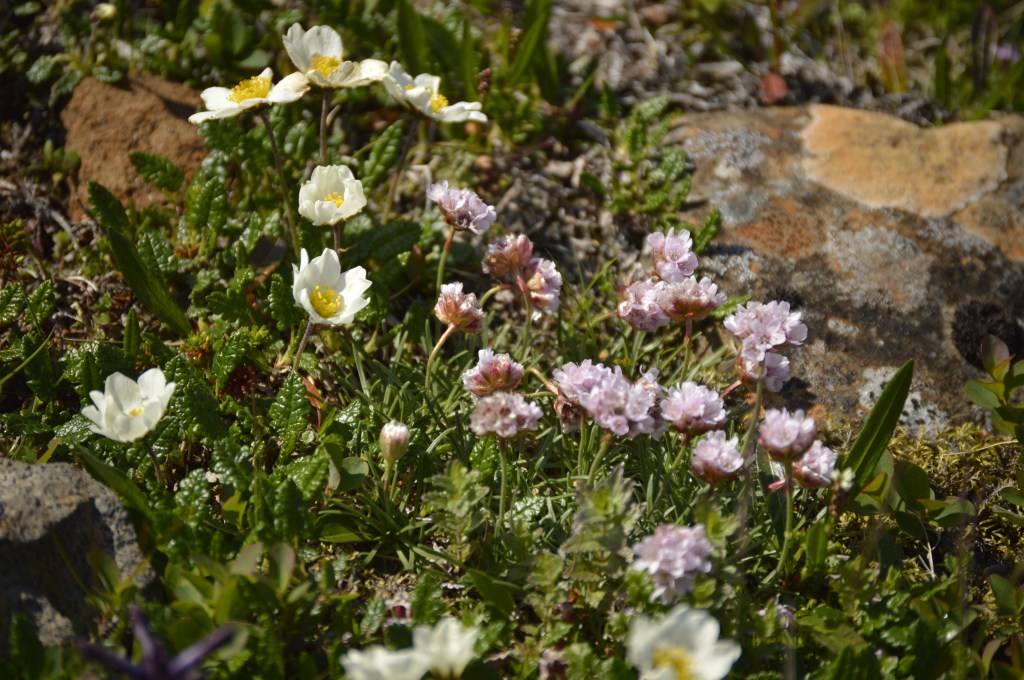
Understanding the importance of ecosystem changes that are altering flower reproduction and diversity trends can tell us more about our own human impact on the environment and how we will need to adapt to and mitigate climate change.
Flowering plants, or angiosperms, first sprouted during the Early Cretaceous Epoch, which ended 66 million years ago. Unlike grasses and trees, which pollinate by the wind, flowering plants’ coevolution with pollinators, like birds and insects, allowed them to spread and evolve abundantly across various habitats. They adapted their structures to attract pollinators, creating a mutualistic relationship.
Today, 90% of Earth’s plants are flowering. This dominance is through their quicker and easier germination process and the aid of pollinators. The spread of flowering plants changed ecosystems. As primary producers, they provided a new source of food to the web of ecosystem members, which encouraged more diversity within species evolution.
Biodiversity is the variation of life and is the word that comes up every time we talk about what is lost to climate change. We measure biodiversity by the levels of abundance and richness of all species in a given eco-community. For communities to function, all their members need a source of energy. For primary producers, that’s mainly the sun, but for plants it also includes the correct amount of water, appropriate soil, and healthy air. So it is no stretch to connect plant science to ways of learning about climate change.
Flowers’ ever-blooming meanings in our lives

Beyond looking pretty, being food for bees, and a gift for anniversaries, flowering plants have long held social and cultural significance in human culture. They are prominent art subjects and used in art therapy.
Flowers are part of ceremonies and rituals across the world, and of course, a symbol of peace and a historical, political metaphor. Consumption of flowers spreads from their edible and medical uses to the role of the floral industry in the world trade of cut flowers, tourism spots, and floral shows.
The crops and foods we eat are the fruit or root of flowering plants. We depend on flowers to be a foundation for growing life, and our flowering plants depend on pollinators and certain weather events to continue their own growth. With the consensus that climate change shifts the way natural interactions are happening at all levels of an ecosystem, one way to learn more is to get at the literal roots of the problem and study changes in plant behavior.
Metabolic changes in flowers

With the rise of higher temperatures, the distribution and duration of rainstorms and droughts alter. This has been shown to impact the flower’s phenological morphologies, meaning the floral organs that evolved in a way to attract pollinators.
Metabolic changes in flowers, which simply put, are the sourcing and conversion of food for energy, alter cross-species interactions. For plants that get their energy to grow from a specific combination of sun, soil, and water, the varying and unpredictable weather conditions hinder the plants’ life-sustaining reactions.
So as plants grow under global warming, their metabolic functions adjust to new environmental changes, which lead to their physical morphology or ‘look’ to be different.
The size, shape, and color of floral organs contribute to pollinator visitation, so those that produce irregularities receive fewer visitors. Additionally, a shorter flowering season from changes in the weather means a greater decline of pollinators, as their metabolic source, the flowers, are less abundant.
How climate change affects plant-pollinator interactions

The network of plant and pollinator life is a “mosaic of microclimate niches,” which means they are subject to significant alterations due to climate change.
The multitude of diverse species each respond to change in different ways, and the result is an adaptation and restructuring of communities that shifts interactions within and between trophic levels. These seemingly minor levels of species at work hold greater weight once recognized as the foundation for ecosystem functioning and stability.
Flowers and pollinators work hand in hand, so if one decreases in abundance, so will the other, and the relationship becomes mismatched. Mismatching decreases pollinator visitation, pollen transfer, and reproductive output of plant species. As animal species alter their behavior to temporal and spatial responses to climate change, this consequently alters the structure of flowering characters.
This variation draws on the importance of locality when tackling solutions to climate change. Plants and pollinators are the base of ecological communities, so knowing how and why they thrive in certain conditions will give insight into the life and behavior of higher trophic level beings.
Some evidence suggests that a few plant species are evolving reproductive strategies to reduce the need for pollinators. However, these self-pollinating strategies increase homozygosity and decrease effective population size, which alters the strength of selection needed in other eco-evolutionary processes. Ultimately, this leads back to biodiversity loss across all areas, since webs of life are built upon abundance and diversity.
Rethinking and working with flowers

The evolution of flowering plants to be more complex and diverse gives them the value they have today. Flowers are more resilient and resistant than given credit for. They grew and learned with the changes that each epoch brought. However, today there is a critical concern for the warming of the planet and the effect this will have on the health and well-being of all life. To address the two main environmental crises of climate change and biodiversity loss, the appreciation of plants as providers of solutions is crucial.
Conservation strategies include practices like planting ‘pollinator highways‘ in more urban spaces, restoration of natural areas, and heterogeneous farming as opposed to mono-cropping. Plants and their pollinators are unlikely to respond to environmental variables identically because of the microhabitats in which they live. However, the effects of climate change are large-scale, so studying flowering plant changes is not an end-all be-all. Rather, interpreting and symbolizing results must be with respect to the local and native environment.
Flowering plants meet our needs for sustenance. They are symbols of major life events, from birth, love, spirituality, and death. The ephemeral nature of flowers reminds us to remember our own and Nature’s life history and capacity.
Much like one’s own garden needs to be tended to and cared for, the flowers and plants of our earth’s greater gardens demand awareness. Knowing the effects of the environmental crisis on flowers is a call to appreciate the delicacy and resilience that comes with change, as well as to consider what stability means for communities of all scales, human and non-human.
Explore New York’s Botanical Garden digital archive here
Find a native plant society in your state here
Consider or learn about consumer floricultural sustainability here
 Blinter Magazine
Leave a comment