

Meet Marlén Garcia, Executive Director of Law & Policy at Earth Uprising, a nonprofit centered on expanding the worldwide youth climate movement.
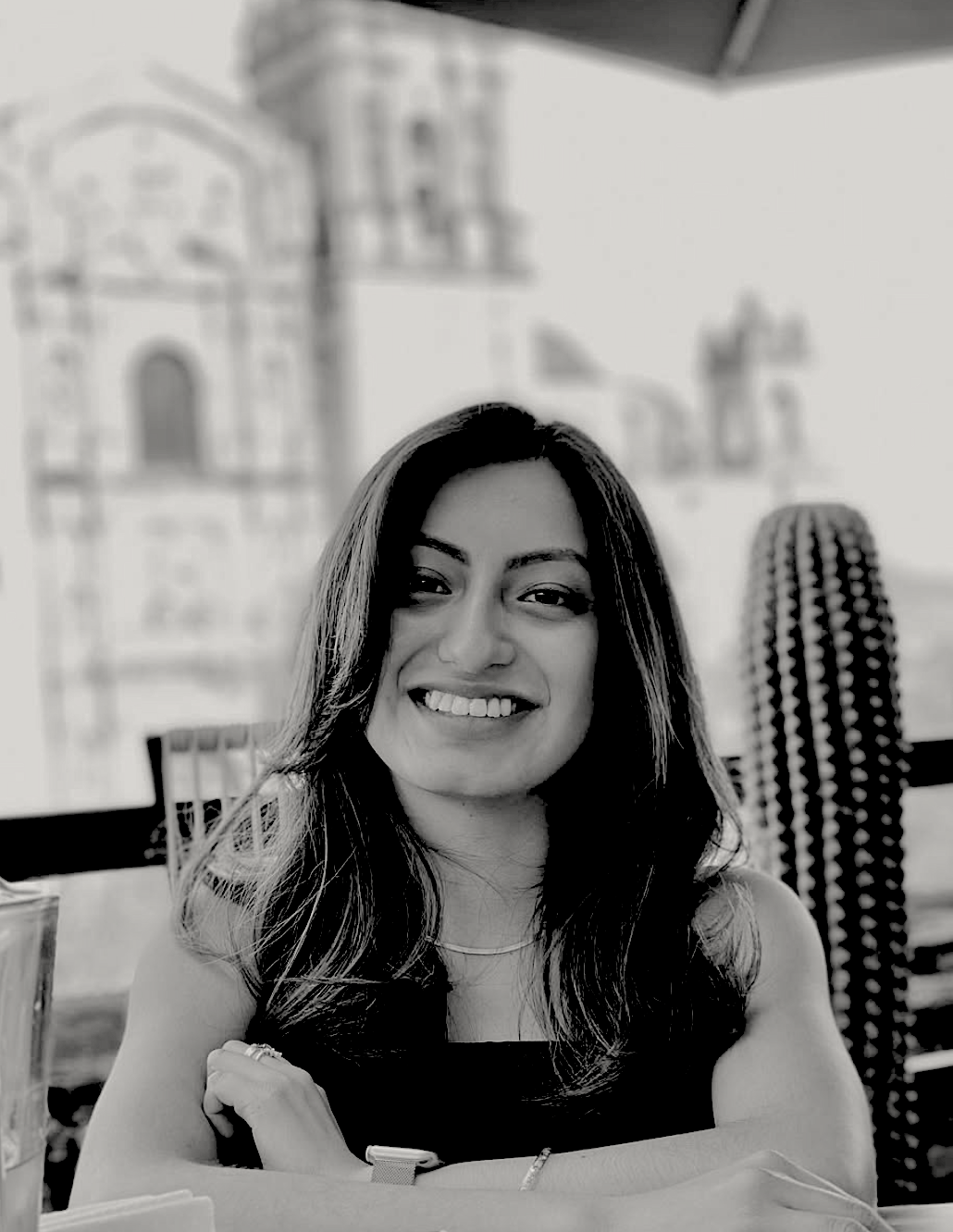
Our editorial team had the opportunity to chat with this climate activist, educator, and organizer (you can thank Marlén for the 2019 Davis Climate Strike). We got to learn more about Garcia’s path to environmentalism, time at UC David, and her vision of a green future. This conversation went as follows:
What made you first discover your passion for the climate crisis?
Back in 2019, when I moved out of my hometown, Fontana, California, I learned for the first time what climate change was; I didn’t even know what the climate crisis was or know it existed.
I also did not know about it justice when I was about to start college and Davis. I went to the interview. I had this resume, which really highlighted and reinforced my activist work around immigration reform and an internship that I did with local leaders in the interview.
They saw my resume and were like, “Hey, are you passionate about climate Justice and climate change?” I responded with “yeah,” I was trying to get the job, and I was in desperate need of the job. I had gotten an email from the University saying I had two or three grand in order to register and continue my admission at UCD.
At the time, my dad had suffered or experienced an accident that led him to fracture four ribs. In my family, he was our only main source of income, so that definitely brought a lot of stress onto my household of six, and so I was interested in the job.
I wanted the job, and I said, “I’m passionate about climbing justice,” truth be told, I did not even know what climate change was. So, I went home and did some research. It was truly an epiphany for me because I really connected and had so many thoughts with my experience as a low-income woman of color and from a Meso-American background to a family of immigrants; this is when I started to fully engage in the intersectional nature of the climate crisis and other injustices, social class, race, and justice.
It was a hard day for me, [but] this is where my passion really ignited, and I realized that you know, growing up in the town, the city with low socioeconomic status, the lack of opportunities and quality education alongside other systematic forms of discrimination like at the time that we were dealing with (some immigration issues with my dad) prevented me from learning about the climate crisis when I considered Fontana and maybe the entire Inland Empire that is highly sensitive to the destruction and the consequences of climate change. We have bad air quality, including high rates of pollution coming from Amazon’s center and industrial warehouses in central California.
Having made these connections and recognizing the intersectional nature of climate change really ignited that passion for me.
As a student at UC Davis, you earned a BA in Political Science and a BS in Community Regional development. What did you learn from each subject? Are there areas of commonality?
There is so much about the time crisis between these two areas of study.
With regard to political science, I really got a comprehensive understanding of how government and policy play a role in how we mitigate, adapt, and respond to the climate crisis and our governments on many levels. Especially on local, state, national, and international levels, we truly play a huge role in how we respond to the climate crisis and how much of a sense of urgency we give to this matter.
I gained a good understanding of how we can get involved with the politics of the climate crisis because, unfortunately, there are politics involved in the climate crisis. I am thinking about how politics, policies, and governments protect and enable corruption and their consistent projects that continue to harm the health and well-being of our planet.
In California, for example, our California Teacher Retirement (CalSTRS) funds go into fossil fuels.
And there [are] politics. I didn’t learn about the kind of crisis in that subject area. It was that one that was more community-oriented, community-based, political, and more community-based, which I truly loved. It was perhaps my favorite of the two subject areas because it gave more insight into approaching and seeing the climate crisis through a social justice lens… you develop and use activism and how community plays a role in mitigating and adapting to the climate crisis, but again through a social justice sense… class, race, socioeconomic status, you know, sexual orientation… different areas I don’t even know what to call it are part of this theme within the climate crisis.
This really further opened that pathway for me to continue to explore and discover.

You know, when you think about community, you think about family, you think about your background, you know who you are and your identity in relation to others. In exploring all these different paths and meanings behind the word community, you realize that there is so much that really types into the climate crisis.
That is not to say that everyday working-class people are responsible for the climate crisis. On the contrary, the climate crisis is a systemic issue, and it’s really the responsibility that should be held towards capitalism in the Imperial Industrial Complex and its corporations. It should be these people who take responsibility for the consequences and damages of the climate crisis.
The Community Regional Development study was the best way for me to understand the climate crisis. There was regional, local, state, national, or global, and so that’s where they commented: I need a developmental component of a community policy. The government was always a subject matter that we touched on because the progress of the community often depended on how politics and governments handled the development of the community, so that’s where most of the commonality happened. Specifically, the climate crisis, again, is how politics plays a role in the environmental development of a community. This was truly interesting to look into and study. I considered the commonalities between my classes related to political science and my classes related to the community region, also known as CRD.
Why is it important for future generations to pay attention to the climate crisis? What are some lessons that you have taken away while completing extensive research that future generations must continue applying in today’s society today?
This is a delicate question for me because I love nothing more than to get youth and the future to pay attention to the climate crisis, care about it, and do something about it. I would love nothing more, and I continue to love and try to show that love through the work that I do.
But there has also been a lot of responsibility on future generations to address the climate crisis with the urgency that it. That is not to say that we shouldn’t because we should by nature. A lot of young folks do because it’s our future, and that is where we draw the line. We all want a future that is healthy, equitable, diverse, and inclusive and that really focuses on the crisis component.
But it’s not fair that we are bearing [the] consequence generations of older generations as they are the ones that let us [get to] this point. Especially in terms of life expectancy on Earth and the climate crisis, they should bear more responsibility for their actions. It’s important because it’s our future that’s on the line.
Do we want a future that consists of communities having access to all the resources and living a long and healthy lifestyle? Or do we want a future that consists of climate disasters?
For example, most recently, the fires that happened in Los Angeles, where people lost their homes and air pollution have led to deaths of non-human and human nature. Other examples of floods are in Spain and Africa, which have experienced bipolar climates with really intense and starkly different weather conditions.
Africa’s bipolar climate experience has endured weather that is beyond dry more than one can ever imagine, but when it’s raining, the rain transforms into flooding into people’s lands. It’s very chaotic weather, and so this is where we think about why this is important to us and why you should be in position.
We must continue…having conversations to make space where we confront the climate crisis and, as a community, heal.
We should be uplifting and prioritizing the voices of those who are on the front lines who are some of the most vulnerable communities in the climate crisis. There are also correlations between being BIPOC and low income, which is also associated with low economic status, and lack of access to education, health, and medical resources, and so on.
The correlations are that the more someone belongs to all these different communities that are considered known, sensitive, and vulnerable to the climate crisis, the more their voices should be uplifted and rooted in talks and decision-making spaces, including the climate crisis and confronting the kind of crisis, which is the most important lesson in my extensive research.
We must uplift support and provide resources to our most vulnerable communities because not only do they understand firsthand the impacts of the climate crisis, but they also know Traditional Ecological Knowledge. [They] need the action plan to heal again from the climate crisis, not to mention historically, we were conquered by first world governments when Indigenous leaders were leading Indigenous communities and were coexisting with all other life on Earth.

When we were the stewards of the land, we didn’t have to worry about a climate crisis because of Mother Earth, and we understood our roles as human beings on this Earth. As receivers and givers, we took care of the lands and were stewards of the land in a way that showed how there’s a balance with everything that exists…That being said, it is a less exploitative way of living nowadays… out of that conditioned mindset and practice and way of living is definitely a way to restore what has been damaged and set ourselves for a path that is clean healthy and simply beautiful.
People and governments often underestimate the role of women in combating the climate crisis/climate revolution. Can you talk about an experience in which women came together to complete a climate initiative that benefitted a community or perhaps a region?
I love this question! I worked on oil in the Davis region of Yolo County in California, and it was led by a woman, and women came together for this project. Not only women but also members of our LGBTQ+ community and different identities, and it has been such a positive and successful experience.
The project is called YOLO Collective here in the Yocha Dehe Wintun Nation, and we worked on a story walk. There is this site called the Cache Creek watershed in space that was harmed by the mining and industrial practices of imperial capitalistic companies and big corporations over the years. The creator of this project, Diana, is a member of the Yocha Dehe Wintun Nation and one of our Indigenous Elders in the community and culture. Diana is such a powerhouse and has worked tirelessly to restore the conditions of the lands of the Cache Creek open space. She really just devoted herself to this dealership of this land.
The story walk of the Cache open space really uses art and storytelling as a way to bring awareness about how prioritizing the voices and supporting the work of our Indigenous Elders or Indigenous leaders. It really creates magic, and it is what will lead us and get us on the path to creating a healthier and more livable planet.
For this collective, we had a woman working on the translation component, but we were creating this audio story wax from English to Spanish. We had women working on the design aspects of this story walk, the maps, the paintings, and all other forms of art behind the story walk, not just audio art but the visual aspects as well. We had women and LGBTs keep this leading the audio because Diana spoke from her heart. There were no scripts because Diana just simply worked her magic and educated and promoted education around this work through her unique storytelling abilities. I hope and wish…that I could give a microphone where everyone could just sit down and listen to her. I would say she’s that powerful.
With this initiative, we are bringing awareness again to the community about how the climate crisis is being driven, as the climate crisis can look different from one community to another. The story walk was a way for people to learn about the story of the land and its significance in our community. The environmental educational experience includes walking through the lands and listening to the stories of the lands through an Indigenous elder and cultural lens.
I hope many know that BIPOC communities are normally the communities that have less access to recreational spaces. So when we create opportunities like this one, we break those barriers. It’s a systemic problem. It’s not something that’s done by choice, but we’re opening this and making this as accessible as possible to those who would normally not know about the climate crisis as I did when I was younger. That’s how it benefited the community and brought awareness to an issue that needs people over the into the movement that needs to bring more people into the movement.
I would say the work is still continuing there. The story work is just part one of this bigger picture; this bigger project. It is truly an example of how different parts of the world can benefit from the power of storytelling and the power of uplifting, uprooting, and supporting voices of member communities that are on the front lines of the climate crisis and the groups most impacted by the climate crisis.
In the past, you have worked closely with Alexandria Villasenor and the Earth Uprising NGO, which has succeeded and continues to fight for climate justice at the national and international levels. Why is it important that the public makes note of these female partnerships when combatting the climate crisis? How can this help debunk the stereotypes that women often compete in the areas of science/activism in the media?
Women create magic; we are powerful human beings, and I have always had this admiration and full respect for women who only work for the climate crisis and simply everything.
As women, we really take and give this nurturing perspective. The way we lead projects in regard to the climate crisis is through love and this wisdom that really considers not only yourself but also yourself because it’s less egotistic and more nurturing. By nature, women leading in the climate space are just for the benefit of everyone, not just women. So, when we create these female partnerships, we continue to expand the number of individuals who engage in the fight against the climate crisis.
Women are so much more capable than we can imagine, and what we’re able to do together is important. Because, together, we’re just able to do so much more.
As an example, we saw it with this revolutionary era where women were trying to get more rights in the 1900s and in 1919 when we first got the right to vote. It was a movement led by a woman, and we can see the same thing in the climate crisis: women are leading and partnering with each other. We see that the climate crisis is approached with a nurturing sense.
The next part of the question debunked the stereotypes of women often competing in the media and sciences; this is hard because you know there is a stereotype that women often compete in those areas, and a lot of it again is systemic. The stereotype exists to continue to divide women through the other interests of our identities.
Women aren’t just “women” but can be mothers, sisters, friends, and cousins. We have more than one role that is just under this umbrella of being a woman. So when we use those other rules within our identity of being a woman, we put ourselves against each other, again like media against scientists. Capitalism or capitalistic imperial systems are accomplishing their job. They are getting us lit up so that you know they don’t have to deal with the true power that happens when women come together; it is their way of making sure that we don’t break them. Because if we come together, I have no doubt in my mind that we can break the system and build something better.
So when we build these female partnerships, we come together and debunk these forms of division. We see the true power and magic of women working together, and I learned this most, and I recognize this most now that I have my baby. I know that I am a mother now, and my mindset shifted from “it’s my future” to “it’s my baby’s future.” I want to live in a world where it’s not just about my generation. It’s a new appreciation and recognition of the generations that come after us.
Are there any future projects that you are working on at the moment? How do you hope this inspires and empower the next generation of young women who are interested in this particular subject?
I do not have a straight answer for you regarding women and future projects. I am part of some projects, such as the Yolo community initiative and Earth Uprising; however, I have taken a step back from activism in the past months. A big part of it is because I really took a step back when I found out I was pregnant.
For many reasons, I wanted to take a different approach to the climate crisis and climate work. Specifically, a lot of the climate justice movement has been about “community, community, community,” and I truly love that. But I also thought that in this community-driven work, there wasn’t much time left for me to take part in individualistic work and care for my mental health. I really prioritize giving and caring for others, as well as contributing to this movement, but I was slowly not taking the time to contribute to my health and well-being.

Now, knowing that I had a life that depended on me really made me realize that I just needed to take a step back, and so really, I guess that’s the project or the future project that I’m working on.
There is more to come, and there is still a lot of work to be done with the Yocha Dehe Wintun Nation story. There’s also more to come with Earth Uprising as well; we saw a young woman whose voices have not been supported in the past as much, and now we are able to experience COP, a very highly recognized platform and space for international leaders and contribute to the decision-making process of international environmental policies.
So there’s there’s those future projects.
On the individual level, it’s me and my baby; on the community-based level, whether it’s local or international, it’s about creating a space and really working on the community engagement part where we bring in more people, more voices, more communities, and identities together. Especially for people who normally do not have access to recreational spaces.
With Earth Uprising, we are working on different models and ways to support young voices, and I hope this inspires and empowers the next generation of young women. I also consider myself a young woman, and I hope that you see me and say Alexandria and other voices out there of young women who are making change on so many levels through telling their own stories and the stories of their own communities and empowering their communities. Use this as a motivation to get involved themselves (younger generations).
Activism comes in many shapes and sizes, from organizing climate initiatives at beaches, completing beach cleanups, doing discussion sessions, creating movies, and all these visual public movements regarding the climate crisis and climate justice. There’s also the lower, more hidden sides of activism, where you’re simply meeting with the community and strategizing about your next strike or your next march.
Additionally, strategizing about who will take on what role is important, especially when people have different talents and skills. Some young women enjoy using social media and the power of digital media to tell others’ stories without necessarily making themselves the face of a campaign. Other women like to focus on writing fiction and nonfiction to combat the climate crisis. From applying for grants to conducting research, the possibilities are endless.
 Blinter Magazine
Leave a comment