

Cities are like any other considerably more “natural” ecosystems. They are spaces of processes and have growth in layers. Within the busyness of the urbanized, you can find pockets of nature (more in some cities than others), but no matter where green spaces offer benefits to human health and safety.
Beyond this, collectively urban green spaces provide a place for civic engagement which broadens these ecosystems, allowing urban ecology to flourish.
Green space is critical to social infrastructure
Whether they lean more private or public, urban green spaces all produce similar benefits to those who engage in what they offer.
Green spaces do more than provide habitats for birds and insects, they can improve the look of neighborhoods and businesses, reduce stormwater runoff, and cool streets and sidewalks, but even more importantly their part in public services and community development so residences and visitors can have a place to socialize.
Seattle is home to 382 parks and greenspaces, not counting smaller development projects, but all holding the potential for activities and human connection amidst the steel, concrete and brick environments.
Scenic views and public parks in Seattle
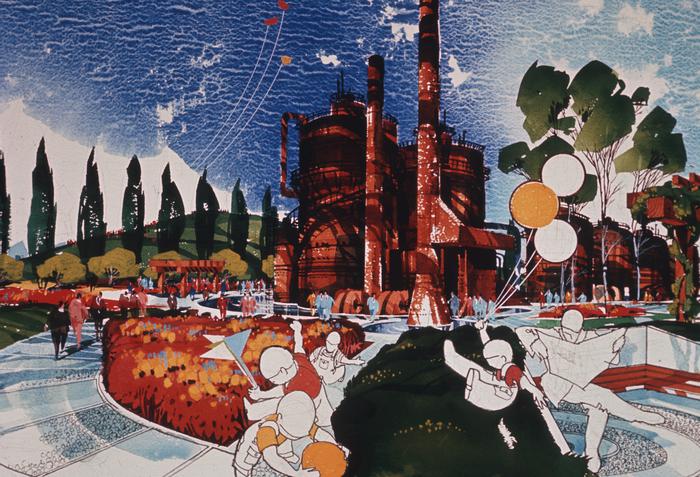
Gas Works Park
-2101 N Northlake Way, Seattle, WA 98103-
To start with an example of ecological planning and public engagement, Gas Works Park is a thriving urban reclamation project that started in 1974. From a place of production to a bio-remedy park, it offers views of downtown and Lake Union and parts of the site’s industrial bones from its previous life.
Seward Park and its Audubon Center
-5898 Lake Washington Blvd S. Seattle, WA 98118-
Offering several amenities like fishing, swimming, and walking trails, this old-growth forest land is home to more than just native plant life. It also holds a clay studio, an amphitheater built in 1953, and the Seward Park Audubon Center, where you can learn and explore urban green spaces through community science work, play, and volunteer opportunities.
Discovery Park
-3801 Discovery Park Blvd., Seattle, WA 98199-

Being the largest park in Seattle, it can’t go unnoticed on this list. This urban forest offers different loops and trails, sports courts, and playgrounds. There are views of Puget Sound and Mt. Rainier (if the weather permits), and vast forms of ecosystems from forests and meadows to tidal beaches and shorelines to take in. Historically Discovery Park was an integral place for various Native American Nations to meet and trade, and today Indigenous nations play a role in the park’s natural resources. Located within the park is the Daybreak Star Indian Cultural Center, where free admission can offer more learning about the area’s history.
Ballard (Hiram M. Chittenden) Locks
-3015 NW 54th St, Seattle, WA 98107-
If you’re up for the hike, you can walk (or bike) from Discovery Park to this historical locks and canal sight. Connecting the Puget Sound to Lake Washington, you can watch salmon migrate via a fish ladder and boats rise or dip to pass through the system. Although this might be considered more of a blue urban space, green is not far from it. Adjacent to the locks is the Carl S. English Jr. Botanical Garden which one can walk through, picnic at, or attend free concerts and events.
Greenlake Park
-7201 East Green Lake Dr N, Seattle, WA 98115-
Encased by the density and business of the city, this park has a multi-use paved path looping around its glacier-formed natural lake. There is also a wading pool, a skatepark, various fields and courts, and a boathouse, where you can rent, launch, or take classes with water-related crafts. The boathouse is also home to the Seattle Public Theater and connects up to the Seattle Woodland Zoo.
Volunteer Park
-1247 15th Ave E, Seattle, WA 98112-

Volunteer Park offers two additional amenities amidst its green space: a conservatory and water tower. The botanical garden amidst the native nature of Seattle is something of a living museum, as it houses’ a worldwide collection of plants for visitors to enjoy and learn about. The hundred-and-seven-stepped Water Tower Observation Deck provides sites of the Space Needle and Elliott Bay, and if a learning mood, it is covered with plaques on the history of Seattle’s park system.
Pipers Creek Natural Area
-950 NW Carkeek Park Rd., Seattle, WA 98177-
Here you can urban hike through Carkeek Park, which follows along creeks and trees, and before looping back around, there is access to Carkeek Beach. Additionally, urban green spaces don’t just need to end with city contributions, the area offers demonstration gardens and Piper’s Orchard. All provide a rich history of the park and space for neighborhood members to partake in the landscaping of native plants.
Seattle University’s taqᵂšǝblu Vi Hilbert Ethnobotanical Garden
-924 E Cherry St, Seattle, WA 98122-
Located in Seattle Univeristy, this smaller but educational green space manages native plants depicting four eco-regions of the greater PNW. The space is intended for visitors to connect with what sustainability and intimacy can mean in the care and use of plants.
Rainier Beach Urban Farm & Wetlands
-10915 51st Ave Seattle, WA 98178-
Situated between Be’er Sheva Park and Pritchard Island Beach, is a site dedicated to organic food production, distribution, and education. Co-opted between the Friends of Rainier Beach Urban Farm & Wetlands and Tilth Alliance, the area explores farming and wetlands restoration, provides classes and events, and offers a U-pick and farm stand. And while in the area, down the road is Kubota Gardens, a relaxing web of paths that blends Japanese gardening with native Northwest plants.
Seattle’s green city planning
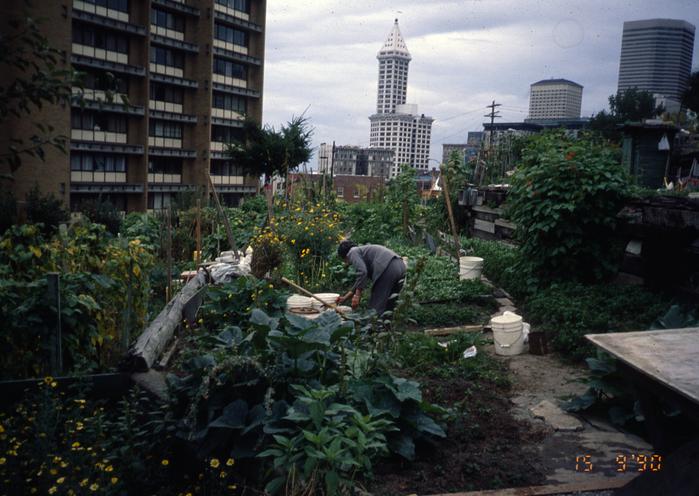
Community gardens are an impactful way for residents to engage with their community and civic life while reaping the benefits of working with the natural elements. Seattle’s Department of Neighborhoods oversees the P-patch program, where small plotted and community-managed gardens have begun to spread across the city.
Thanks to community voices and advocacy, cities are taking more sustainable initiatives and considering requirements for urban green spaces across various departments. Under Seattle’s Department of Construction, the Seattle Green Factor offers incentives to increase and improve landscaping and green infrastructure in new developments.
Under the Office of Planning and Community Development, “Outside Citywide” offers a Public Space Explorer, highlighting many green spaces and parks. The map shows networks of public spaces that allow the city to thrive and can be a tool to spatially recognize which neighborhoods can benefit from implementing public space projects. Under the Department of Parks and Recreation, they have a list of current parks where you can filter through amenities, as well as projects detailing community participation in their development and ongoing work.
Urban green spaces are an important response to spatial issues and organization within cities.
They are not limited in their function like some buildings, instead green spaces hold opportunities for various uses and allow people to create their own place-based connections. These urban sanctuaries become associated as spaces of equity and environmental resilience, and city planners and policymakers need to consider diversifying green space in their development goals.
 Blinter Magazine
Leave a comment