
By Teresa Gallo
The recent wildfires in Los Angeles have demonstrated that climate change does not spare anyone.
While the destruction of celebrity homes has gained huge attention in the media, every day, low-income communities worldwide silently lose their homes, livelihoods, and even their lives to climate-related events.
In a 2019 report, United Nations’s Phillip Alston warned about the risk of creating a climate apartheid with wealthy, high-emitting countries adapting to the changing climate and the poorest — but least emitting — countries suffering the consequences.
Yet, climate change and inequality already go hand in hand. For instance, data show that the richest countries emit over 80% of global CO2 emissions, while low-income countries less than 20%. This difference is even more pronounced when taking pro-capita emissions into account.
There is a widely-recognised nexus between poverty and climate change: one feeds into the other creating a self-perpetuating cycle. In fact, poor communities are at higher risk from climate change due to their reduced ability to adapt to climate-related threats and recover from shocks. High vulnerability to climate events, in turn, puts communities at high risk of poverty and financial instability.
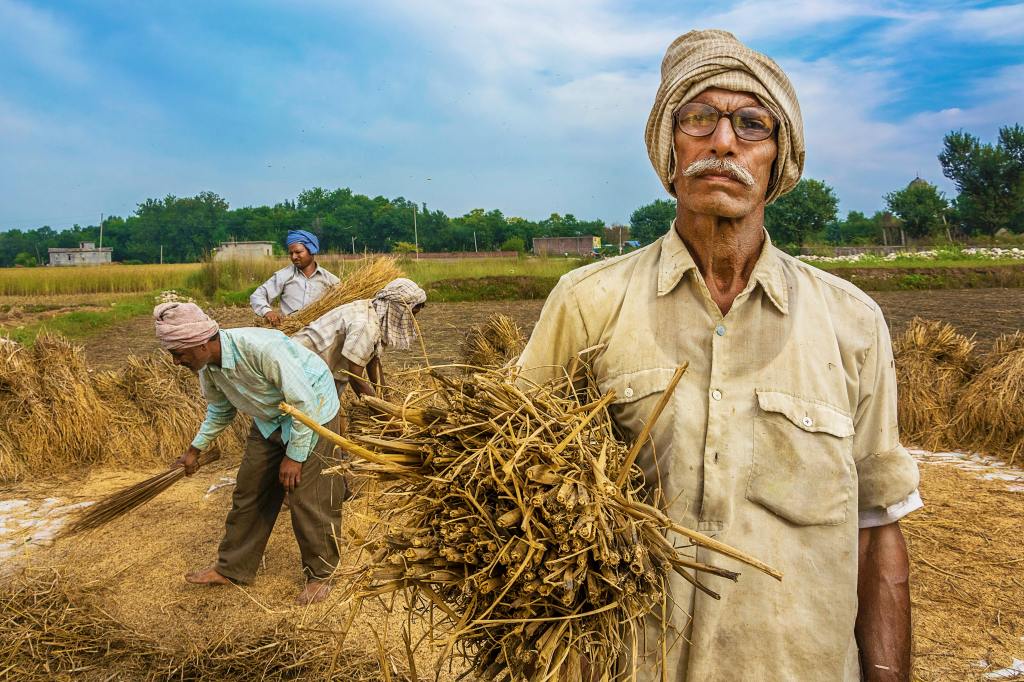
Communities around the world are feeling the weight of climate change, particularly in countries that are reliant on agricultural exports. Image courtesy of Vaneet Raj
Ending poverty has been a global priority for over a century. Yet, development schemes following the emission-heavy growth model of “rich” economies risk exacerbating the problem. This happens because, historically, when communities and populations become wealthier they start to consume more, produce more, and emit more, worsening climate change. As the climate impact intensifies, its consequences affect a greater number of people, globally.
Given the urgency of reducing emissions worldwide and lifting people out of poverty, climate mitigation and poverty reduction must be tackled together. To quote World Bank economist Stephane Hallegatte “(…) ending poverty and fighting climate change cannot be done in isolation – the two will be much more easily achieved if they are addressed together.”
This is something that the United Nations is pursuing through a set of objectives called Sustainable Development Goals (SDGs). In particular, SDG1 aims to “end poverty in all its forms everywhere” and SDG13 to “take urgent action to combat climate change and its impacts“.
How climate change affects the poor
Globally, around 345 million people have limited access to food. Further data indicates that 1 in 11 people worldwide suffers from food insecurity and 1 in 4 people has no access to clean, potable water.
Predictions suggest that these numbers are set to grow due to the increasingly severe impact of climate change on vulnerable communities and regions. On this account, William R. Sutton, World Bank’s Global Lead for Climate Smart Agriculture, warns that — without mitigation and adaptation strategies, failing crop yields will plunge an estimated 43 million Africans below the poverty line by 2030.
A 2024 study on the relation between climate action and poverty indicates that even accounting for future uncertainty, “unmanaged climate change would render many regions uninhabitable and would radically change lives across the world for the worse, especially those of poor people.“
Extreme weather events such as droughts and floods can have a devastating impact on food production, people’s health, and livelihoods. One example is the ongoing food crisis in Somalia, exacerbated by the combined effect of a 5-year-long drought and the effects of the Ukraine–Russia conflict on grain production and export.
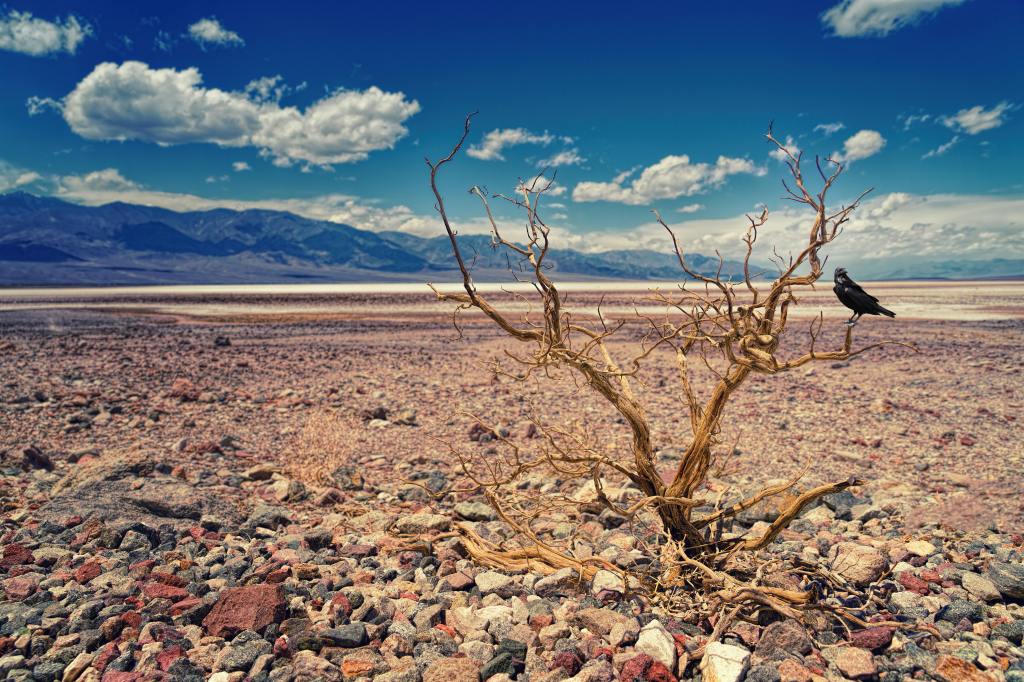 Droughts are destroying lush landscapes around the world, including those that humans are reliant on for resources. Image courtesy of Johannes Plenio
Water scarcity is a serious issue that can have both direct and indirect effects on communities, for instance lack of access to drinking water, vulnerability to diseases and crop yield failure.
Floods, on the other hand, can destroy crops and deprive small farmers of their livelihood forcing them to flee from their homes. Climate refugees — dubbed the forgotten victims of climate change — often end up in climate-vulnerable areas where access to work is scarce and tensions over resources can arise.
Raising temperatures, the increase of infectious diseases and malnutrition due to crop yield failure all have severe consequences on the health of millions, with women and children being the most vulnerable.
Although the populations most affected by poverty and climate events are located in sub-Saharan Africa, South and Southeast Asia, poor communities in the global North are also disproportionately affected by climate change.
How sustainable development can mitigate climate change
According to the World Bank, global poverty has been gradually decreasing since 2000. However, this positive trend started to reverse in 2019 due to the combination of worsening climate change, armed conflicts and the COVID-19 pandemic.
Development efforts aimed at economic growth run the risk of exacerbating emissions and fossil fuel consumption. Therefore, alleviating poverty without worsening climate change — and its impact on already vulnerable populations — can only work if development efforts are geared toward sustainability and low-carbon economies.
Even accounting for the climate-poverty nexus, sustainable development interventions must consider the differences between communities and various geo-political contexts. For instance, populations affected by floods have different needs than those affected by drought. Similarly, coastal communities face different climate-related risks compared to people living in inland areas. Given these differences, a one-size-fits-all approach cannot work.
In a 2019 report published by the United Nations Food and Agriculture Organization (FAO), experts recommended a multilevel approach that combines local and global action and includes policy, finance, and education. In any case, effective strategy design and implementation should include the opinions of minorities, Indigenous People, and women.
 Women around the world are facing more devastating impacts from climate change than their male counterparts. Image courtesy of Christian Alemu
In 2024, researchers at the Grantham Research Institute on Climate Change and Environment emphasized the need to tailor development strategies to the specific context. To ensure that no one is left behind, sustainable development schemes must promote low-carbon technologies, enact policies integrating mitigation and adaptation and ensure financial protection from climate-related damage and fossil fuels phase-out. The research makes it clear that sustainable development cannot succeed without also investing in education, health, the creation of green jobs and infrastructures.
Sustainable development can and should be harnessed to promote growth and, at the same time, increase resilience in vulnerable communities. However, to prevent a rebound effect, development should ditch its historical reliance to fossil fuels and embrace inclusive, climate-friendly, and low-carbon strategies.
 Blinter Magazine
Leave a comment