
By Keri Stewart
With all the cold and snow you might think that there is nothing to forage during the winter, but in reality that is quite the opposite.
There is certainly less to forage than there is during the warmer seasons. However, long-standing evergreens offer the chance to forage due to their ability to keep their leaves year-round. With the fluctuations in weather, especially considering our planet’s incremental climate change, you may even be able to find remnants of the fall harvest.
“Just because it’s winter doesn’t mean there isn’t any foraging to be done,” says Rebecca Lexa, a naturalist educator and guided nature tour guide.
“A few edible mushrooms, particularly yellowfoot (Craterellus tubaeformis) and hedgehogs (Hydnum repandum) grow well into winter, so keep your eyes on the ground for these little golden treasures.”
What to forage in the Pacific Northwest
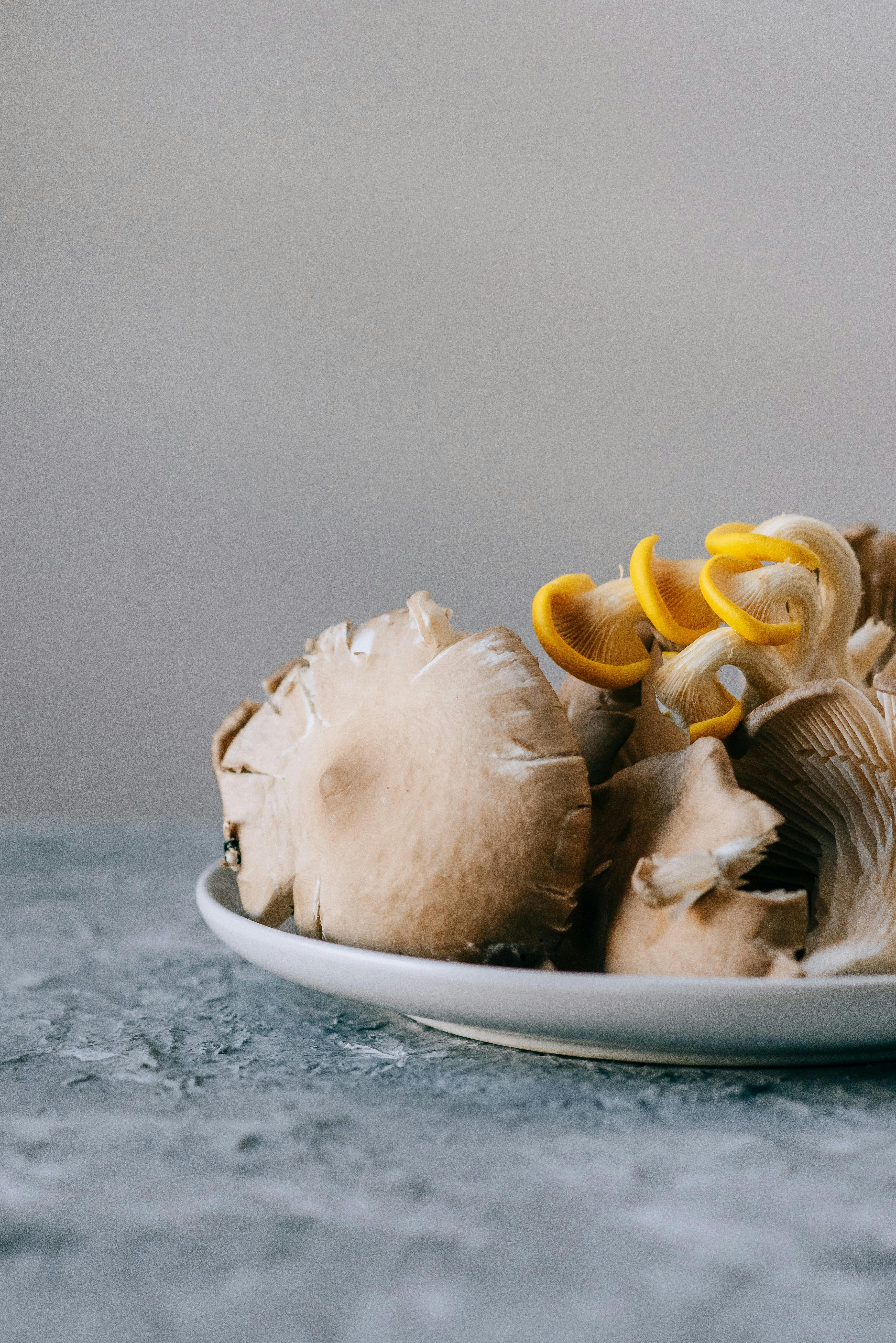
Oyster mushroom
While it isn’t the yellowfoot or hedgehog, this edible mushroom can be quite a treat whether sautéed, roasted, or served on the side of another dish. You can find the oyster mushroom commonly growing on dead trees in big clusters.
Even though the color of the mushroom can vary, its cap is always shaped like an oyster and features white gills (underneath of the cap that also runs down part of the stem).
Just remember to be cautious of any poisonous look-alikes, such as the angel wing mushroom, and remember to wash your harvest before cooking it.
Since this mushroom can be found in such abundance, you should have no problem with finding some older mushrooms to forage so as to leave the fruiting bodies preserved to keep the colonies intact.
Chanterelle mushroom
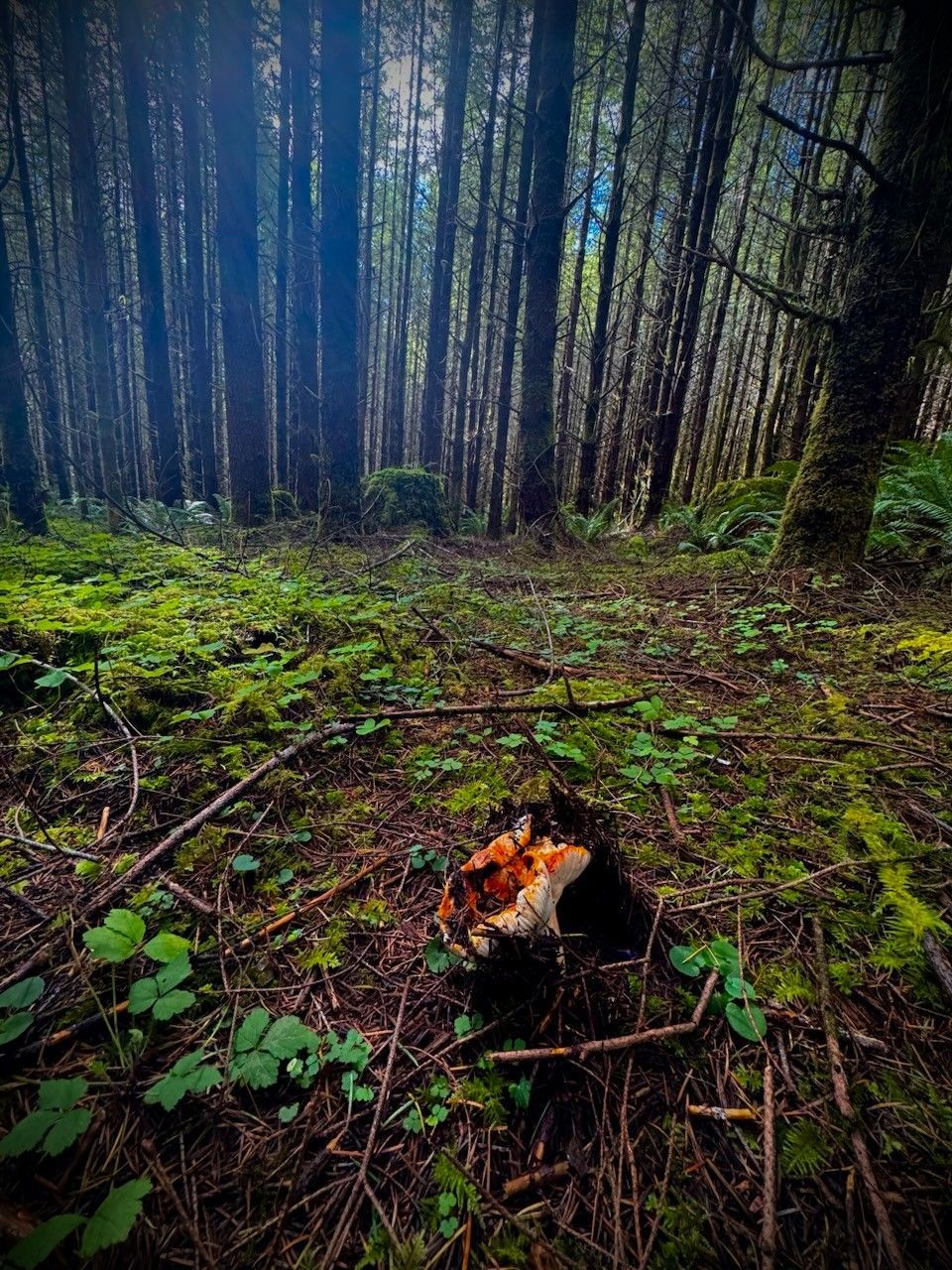
This golden beauty can be spotted from fall to winter if the temperatures are right.
Within the depths of a conifer forest, the Chanterelle can be identified by its forked gills under the cap. The twisting of their gills is not their only enticing attribute as this fungus holds a sweet aroma, making it easy for identification if you’ve got an observant nose.
Just make sure when you forage you don’t take all the mushrooms in one area. To preserve the ecosystem, leaving most of them untouched is important for their survival.
We want to be eco-friendly foragers which means following sustainable foraging methods: leaving some of the mushrooms untouched, harvesting from different areas and parts of the forest, and taking from the more mature growths so that the young mushrooms can grow.
Burdock roots
Besides species of mushrooms to harvest, there are myriad plants to forage whether it is the roots, the berries, or some other part of the plant.
“The more species I identified and learned about, the more of a collection of edible species I ended up with,” says Lexa.
By learning to identify the burdock root by its carrot-like shape and firmness, you can be sure to expand your foraging skills with a harvest of bitter, earthy flavor. While most of the plant prefers warmer conditions, the roots are able to survive even the coldest winters in the Pacific Northwest.
Upon harvests, make sure to peel the roots and then prepare them as desired: sautéed, fried, roasted, or even boiled.
Evergreen huckleberries
The evergreen huckleberries—also known as “winter huckleberries” due to ripening later in the season—have been harvested for many years.
Harriet V. Kuhnlein and Nancy J. Turner’s 1991 book Traditional Plant Foods of Canadian Indigenous Peoples: Nutrition, Botany and Use discusses how many tribes of the Pacific Northwest harvest them.
“They were eaten by the Sechelt, Comox, Straits, Halkomelem, and Lower Nlaka’pamux Salish, and by the Nuu-chah-nulth of Vancouver Island’s West Coast, as well as by the Quinault of Washington,” shares Kuhnlein and Turner in their book.
Upon identifying these berries, be sure to look for leathery leaves with sawed edges. The ripe berries will appear black or dark blue/purple in color.
This winter berry is often eaten raw or tossed in oil, but it can also be made into wonderful jams.
Perhaps you might find yourself utilizing their sweet, tart flavor in cooking. Some people have added them to the batter of scones and muffins.
Because these berries are frequently harvested by other animals, such as birds or chipmunks, it’s important for you to make sure to not harvest an entire shrub of them while foraging to ensure the wildlife is not disturbed.
Foraging conifers for tea
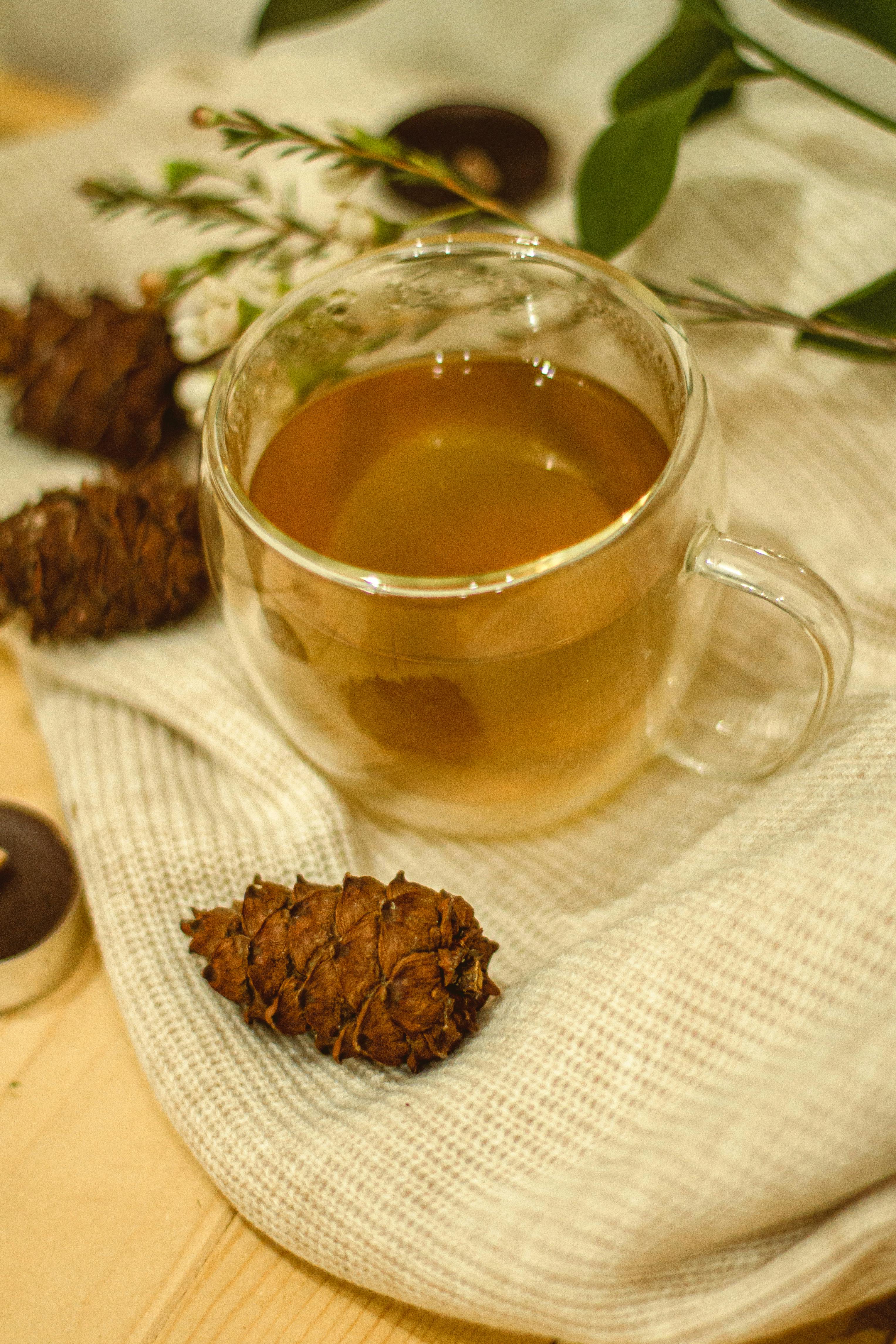
Nothing beats a hot cup of tea after a foraging adventure in the woods.
One of naturalist Rebecca Lexa’s favorite winter forage finds are the conifers used to make tea. “If you’re a fan of tea, the needles of Douglas fir (Pseudotsuga menziesii) or spruce trees (Picea spp.) snipped and steeped make a nice dose of vitamin C in your cup,” explains Lexa.
Why you need to be careful foraging
“My biggest goal is to help people forage safely by emphasizing accurate species IDs, though collecting tasty things to eat is also a bonus!” shares Lexa.
Though foraging has its benefits of exploring nature and harvesting a tasty treat, it is important to acknowledge that many plants and mushrooms have poisonous look-alikes.
For instance, the oyster mushroom can be confused with the poisonous angel wing mushroom.
Key differences
1. Shape: oyster is oyster/shell-shaped; angel wing is shaped like a thin wing
2. Size: oyster is 2-10 inches; angel is 1-4 inches
3. Color: oyster can vary, but angel wings are a bright white
4. Growth: oysters prefer hardwoods but can grow on conifers; angel wings prefer conifers
Be sure that you are carefully identifying each species by its characteristics and only foraging them if you are 100% certain of what it is.

 Blinter Magazine
Leave a comment