

By Nate Smith
When you think of Cod, I’m sure you think of a delicate white fish that is popular in fish and chips and easy weeknight dinner. Cod has been a cornerstone in trade around the world for centuries. Even here in the United States, there’s a reason Cape Cod in Massachusetts is called Cape Cod.

You can find this fish swimming in the seas from the Pacific to the Atlantic. The type of cod in each is different, but in Norway, Atlantic Cod is local, having been a staple in the country’s dining for centuries. Not only has it been a cornerstone of many Norwegian meals, but it has helped the country in trade and holds vast significance even in the country’s culture.
But just why does this seemingly simple fish mean so much to Nordic culture? And what can we learn from this fish in its staple of the Norwegian diet? Let’s take a look back through the history and legacy of the Atlantic cod and its importance in Norwegian culture.
Cod: A brief history
The history of this fish in Nordic culture ranges back thousands of years, even to the time of the Vikings!
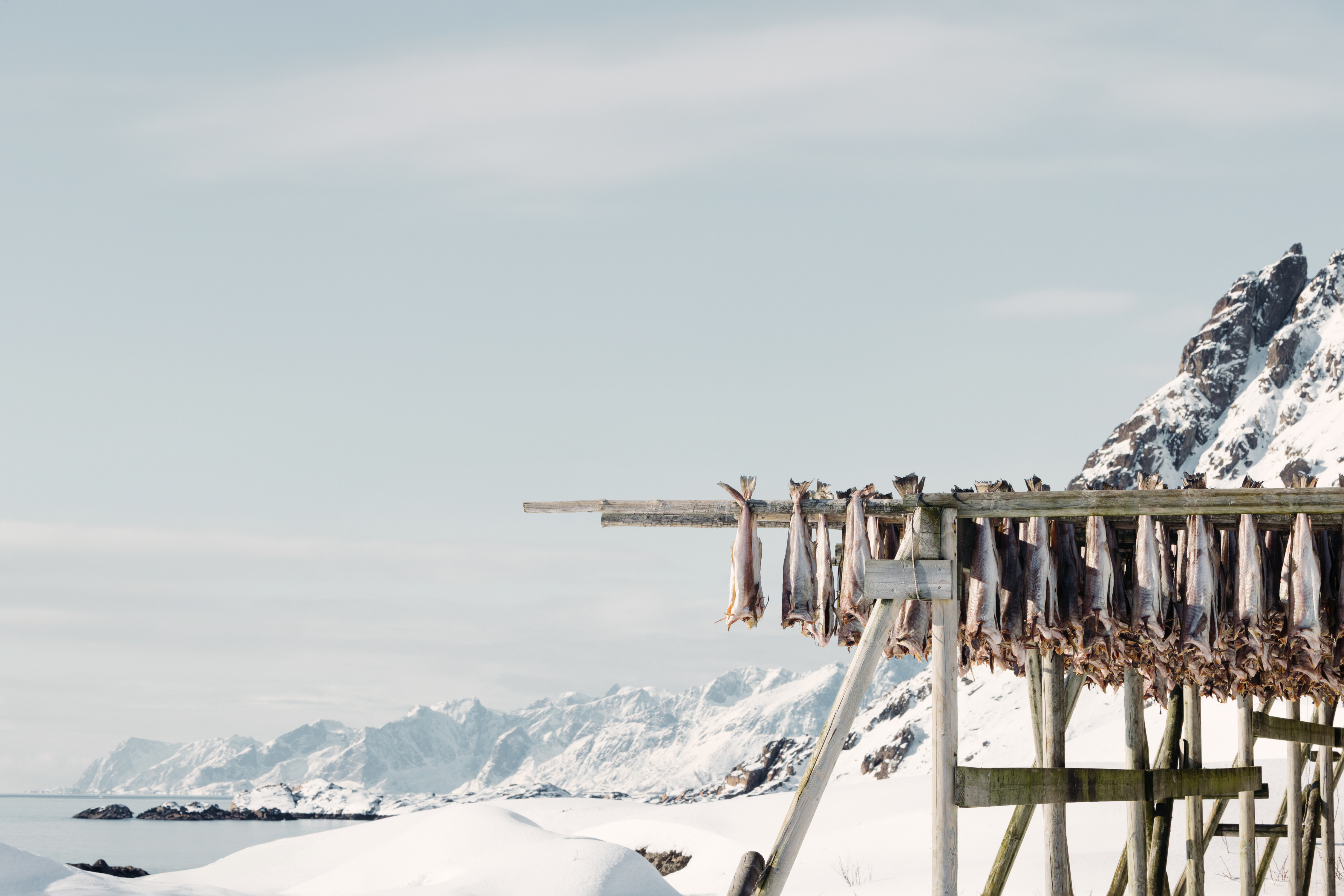
In a practice that is still done today, rows of cod are dried and stored for the long and cold winter months. Villages are even known to be covered in the stench of the drying fish. Probably a small price for the amount of food the fish provided in the harsh arctic winter.
What is so captivating about this historic preservation method is how almost every part of the fish is used in some way or another! Even thousands of years ago, Norwegians were thinking about how to eat sustainably and to the fullest.
Cod is still a massive part of Nordic culture today.
Eating this staple fish is one thing, but it is also invaluable when it comes to trade in Norway.

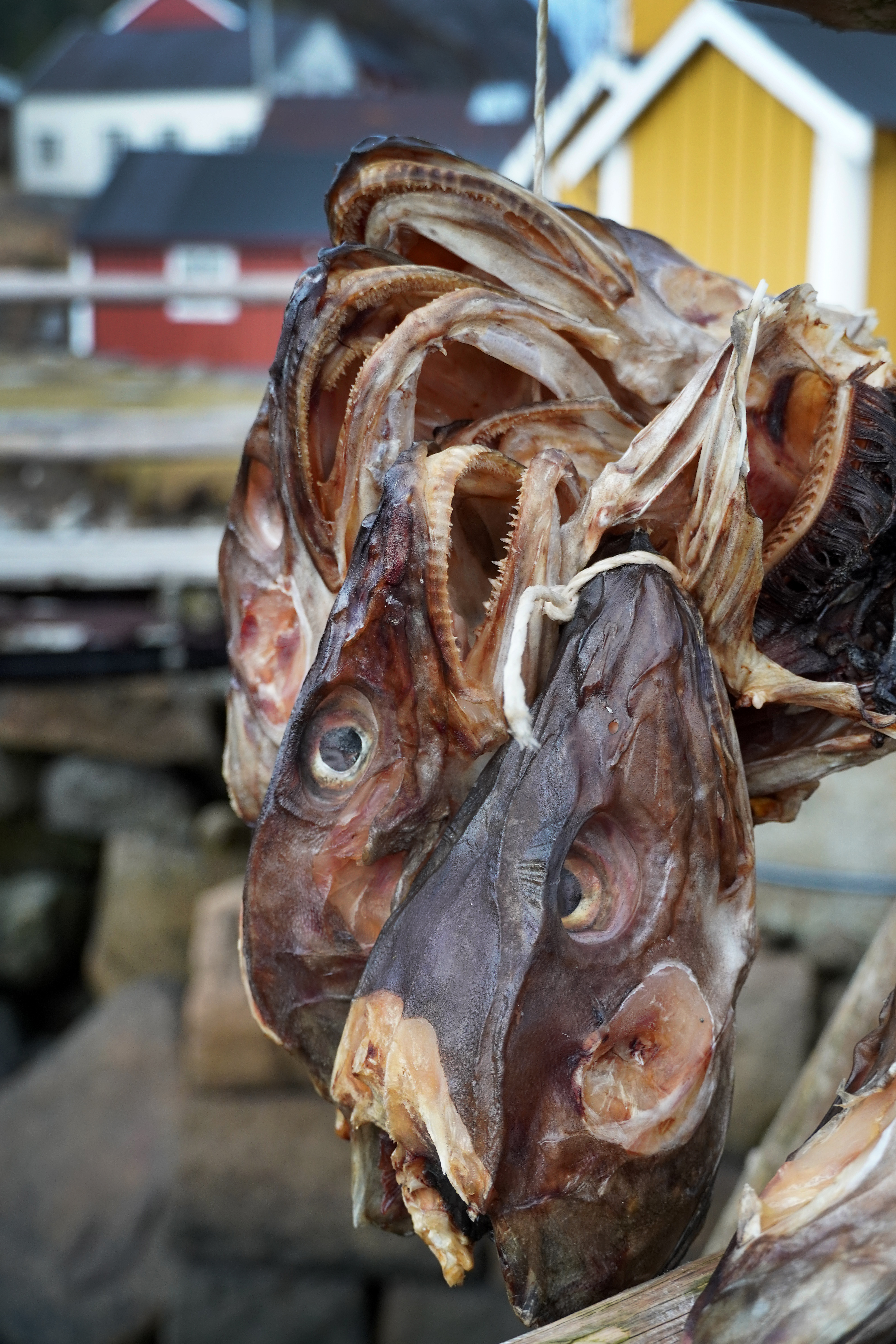
The country trades and exports cod heads to other countries to be used in their own local cuisine. This ranges from kitchens in Jewish, Chinese, and African communities– now that’s using your head! It’s not just the head of the fish that is economically valuable in trade.
According to data from 2023, Norway exported 49,000 tons of fresh cod, 62,300 tons of frozen cod, and 84,500 tons of dried cod!
But just how is the entirety of the cod used?
Let’s start with the head!
Once thoroughly dried and salted, the head of the cod is placed in many stews as a sort of flavor amplifier. While less adventurous eaters might steer clear of this part of the fish, the head still holds economic value as seen above.
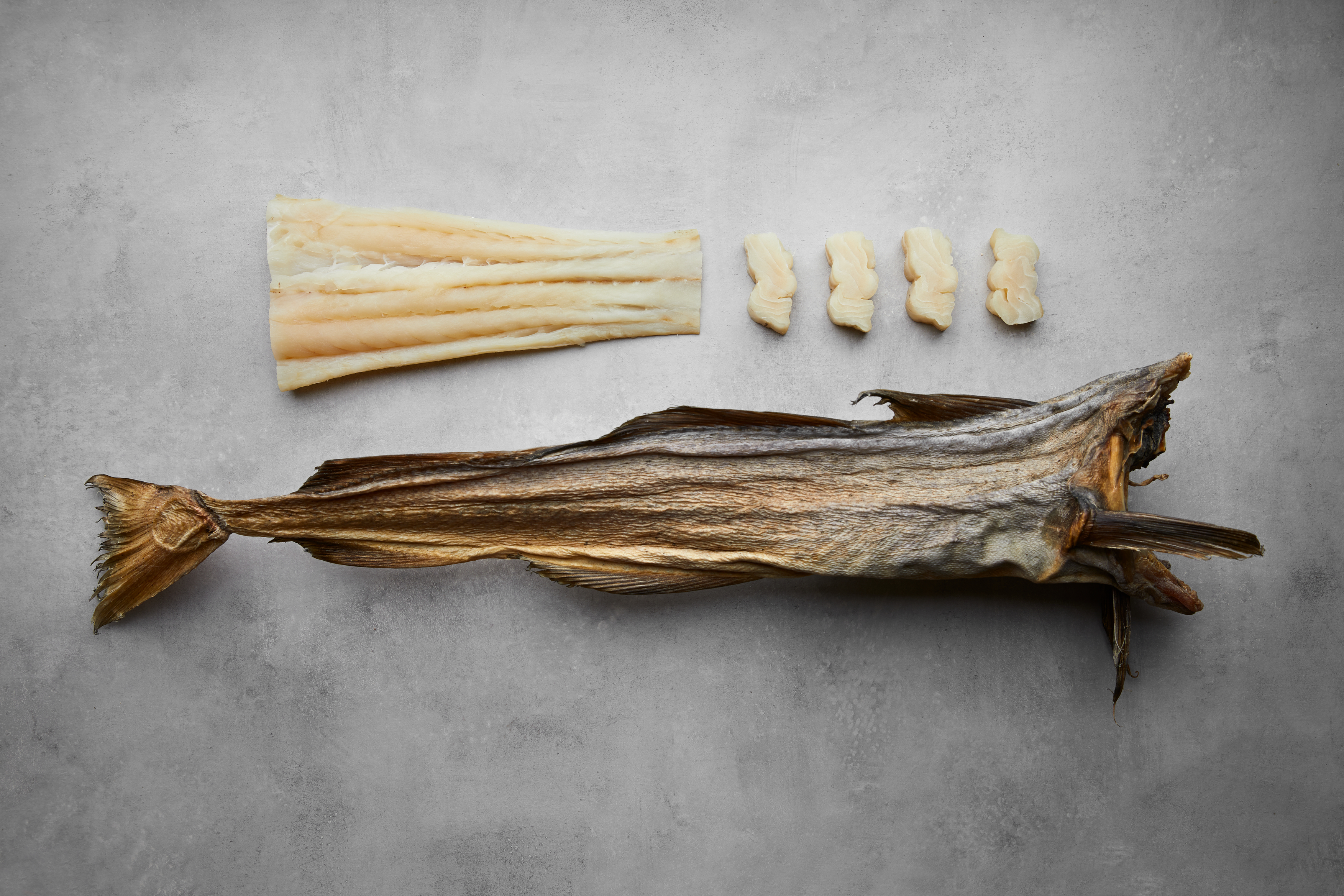
Next comes the fillet or main section of the cod.
This is easily the most popularly eaten part of the fish. The versatile white fillets can be used in all styles of cooking. Like before, fish and chips are a popular route, but you can also pan-sear or even add this protein-rich fillet to a stew.
Even the bones in between the fillets can be used to create stock that is essential to any good soup or stew.
The organs of the fish are valuable to Nordic dishes. A popular (and historic) way of getting the most bang for your buck from the entirety of this fish in Nordic cuisine is in a traditional stew.
With the head and fillets come the pink roe of the fish. This can be eaten stand-alone, or on a cracker as a fancy snack. It is also used in a traditional Nordic stew.
Finally comes the cold liver.
Cut up and cooked in its own oils, the liver becomes a sort of delicate sauce for the all-in-one cod stew. Cold liver is full of vitamins and healthy omega fatty acids. Today, this part of the fish is even used in supplements such as fish oil pills. These pills have gained in popularity over the years because of their brain and joint benefits.
Cod in our modern world
The mastery of the Atlantic cod as seen in Nordic history through its cuisine shows us just how easy it can be to use so much of one animal as food.
But in the 21st century, Norway is doing even more to keep cod sustainable. The Norwegian Seafood Council manages cod through fisheries. Using fisheries keeps the cod population in check while minimizing ecological damages by overfishing the cold waters that surround Norway.
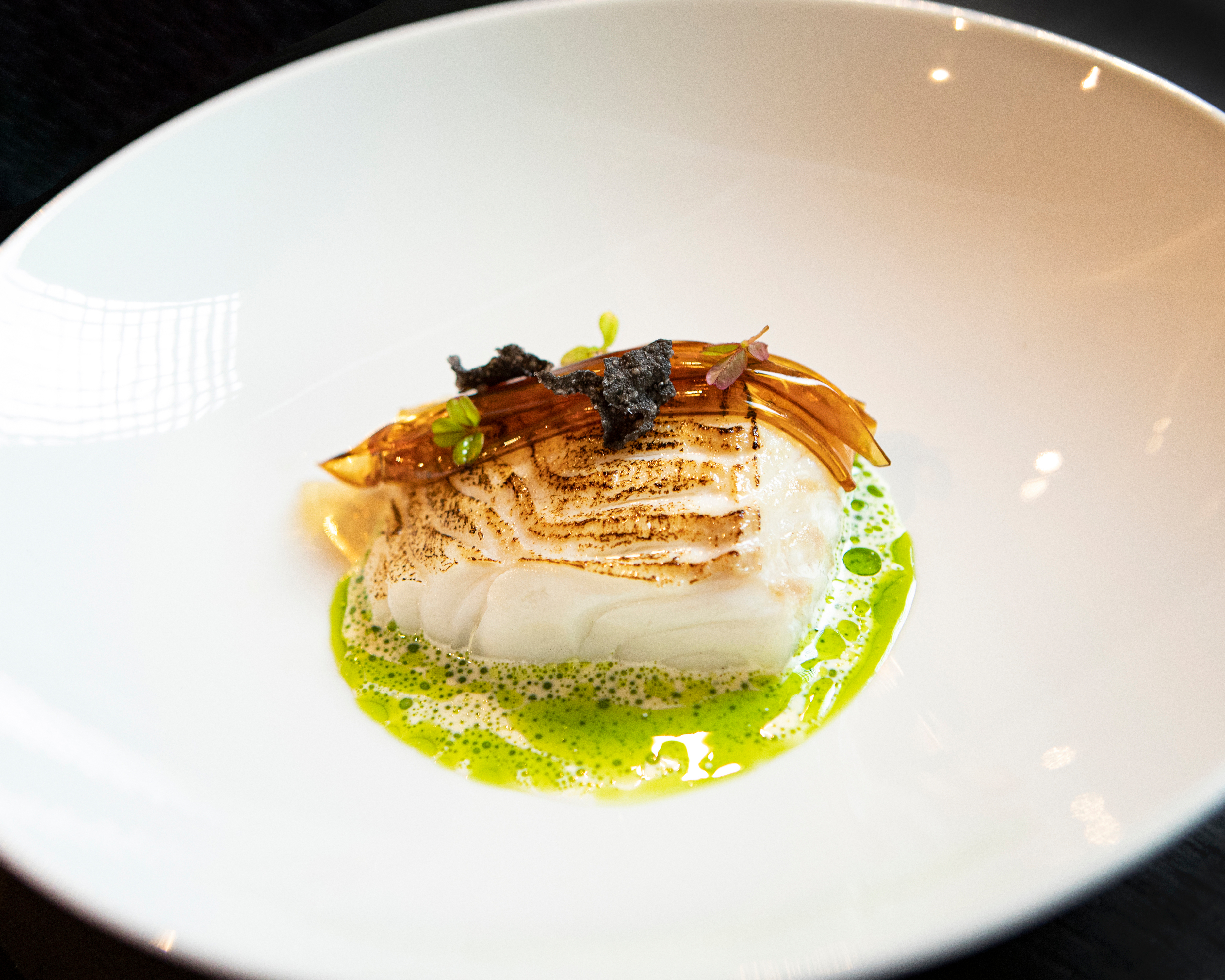
Through the Nordic use of cod, maybe we can all be inspired to eat more and be more conscious of the many uses the animals we choose to eat have. Next time you’re at your local supermarket, and picking up a fresh cod fillet, think of how you can incorporate these nordic practices into your next meal!
 Blinter Magazine
Leave a comment